Heerodden Heliport: A History of Aviation in Barentsburg
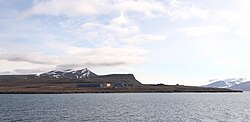
Located in the rugged landscape of Svalbard, the Heerodden heliport has served as a critical transportation hub for the mining community of Barentsburg. Established during the Cold War era, the facility evolved from a modest landing site into a sophisticated aviation base, reflecting the complex geopolitical relationship between the Soviet Union and Norway.
The heliport was constructed in 1961 by Arktikugol, the state-owned mining company. In its early years, the facility primarily supported flights within Barentsburg and provided essential connectivity to the heliport at Pyramiden. The initial fleet consisted of Mil Mi-4 helicopters, which could transport up to eleven passengers.
Infrastructure Expansion and Regulatory Conflict
As operations grew, Arktikugol expanded the site's infrastructure, beginning with a hangar spanning 700 square meters (7,500 sq ft). Between 1961 and 1974, the company operated under a concession from the Ministry of Transport and Communications, adhering to the Aviation Act—the set of laws governing flight operations in Svalbard.
However, by 1974, the Soviet Union challenged these regulations. They argued that requiring a Norwegian operating concession violated the Svalbard Treaty, which guarantees free shipping and commercial activity for signatory nations.
The Longyear Airport Connection
In 1971, the Soviet Union agreed to the construction of Svalbard Airport in Longyearbyen, provided the facility could accommodate Aeroflot flights to Moscow. This agreement increased the strategic importance of the Heerodden heliport, as it became the primary link for transporting passengers from Barentsburg to the main airport in Longyearbyen.
To meet this increased demand, a major upgrade began in 1975. By 1978, the facility featured a new terminal building, additional hangars, and a radar system. At its peak during this period, Heerodden supported a dedicated staff of 65 people, including 20 pilots, 25 mechanics, and 20 support employees.
Geopolitical Tensions and Speculation
The expansion of the heliport did not go unnoticed. Following a 1976 article by Jon Michelet in Klassekampen, the Norwegian press began questioning the nature of the installation. Speculation grew that the site was an illegal military installation capable of being converted into a full air base.
Several factors fueled these suspicions:
- The heliport's capacity far exceeded the needs of the five helicopters in use.
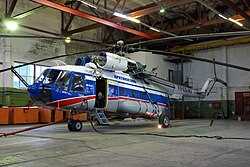
- Arktikugol utilized the military version of the Mil Mi-8 helicopter rather than the civilian model.
- A lack of initial inspections by Norwegian authorities.
- The strategic location of the facility.
While the Governor's surveillance section suspected the presence of agents from the Main Intelligence Directorate, no concrete evidence ever surfaced to prove the site was a military base or that there were plans to build a full-length runway for fixed-wing aircraft.
The Hopen Accident and Formalization
Tensions peaked on August 28, 1978, following the Hopen Accident, where a Soviet Air Forces Tupolev Tu-16 crashed at Hopen. This event prompted the Norwegian public to question whether the government maintained control over Soviet activities on the archipelago. Consequently, the Civil Aviation Administration conducted inspections in 1979 and officially granted an operating permit on August 1, 1980.
Decline and Current Status
The collapse of the Soviet Union in 1991 led to a sharp decrease in subsidies and resources for Arktikugol. By 1993, the fleet had dwindled to just two helicopters, and all staff were relocated from Heerodden to live in Barentsburg. Operations were further scaled back in 1998 following the closure of the settlement at Pyramiden.
Key Facts
- Established: 1961 by Arktikugol.
- Peak Staff: 65 employees (including 20 pilots and 25 mechanics) by 1978.
- Primary Aircraft: Mil Mi-4 (11 passengers) and later Mil Mi-8 (28 passengers).
- Mi-8 Range: 375 kilometers (233 mi).
- Regulatory Shift: Transitioned from a contested concession to a formal permit in 1980.
| Aircraft Model | Passenger Capacity | Primary Era | Notes |
|---|---|---|---|
| Mil Mi-4 | 11 | Early 1960s | Initial fleet used for local flights. |
| Mil Mi-8 | 28 | Mid-1970s onwards | Military version used; 375 km range. |
Frequently Asked Questions
Who built the Heerodden heliport?
The heliport was built in 1961 by the mining company Arktikugol.
Why was there suspicion that the heliport was a military base?
Suspicions arose because Arktikugol used military-version Mil Mi-8 helicopters, the facility had a capacity larger than its active fleet required, and there were few initial Norwegian inspections.
What was the impact of the Hopen Accident on the heliport?
The 1978 crash of a Soviet Tupolev Tu-16 at Hopen increased pressure on Norwegian authorities to monitor Soviet activities, leading to official inspections in 1979 and a formal operating permit in 1980.
How did the dissolution of the Soviet Union affect the facility?
The dissolution led to reduced subsidies and resources, resulting in a smaller fleet of only two helicopters by 1993 and the relocation of staff to Barentsburg.
What was the purpose of the 1975 upgrades?
The upgrades, which included a new terminal, hangars, and radar, were designed to handle increased passenger traffic between Barentsburg and the newly constructed Svalbard Airport in Longyearbyen.