heavy metalmetal subgenresNWOBHMthrash metaldeath metal

Heavy Metal: The History, Evolution, and Culture of a Global Phenomenon

Heavy Metal: The History, Evolution, and Culture of a Global Phenomenon Heavy metal is more than just a music genre; it is a sprawling cultural movement defined by its intensity, power, a...

Heavy Metal: The History, Evolution, and Culture of a Global Phenomenon

Heavy metal is more than just a music genre; it is a sprawling cultural movement defined by its intensity, power, and a distinct sonic identity. Emerging from the intersection of blues rock, psychedelic rock, and hard rock in the late 1960s, heavy metal has evolved from a niche sound in the United Kingdom and United States into a global phenomenon with a vast array of subgenres and a dedicated worldwide following.

At its core, the genre is characterized by distorted guitar tones, emphatic rhythms, and a sense of sonic weight that separates it from its rock ancestors. From the industrial landscapes of Birmingham to the forests of Scandinavia, heavy metal has consistently pushed the boundaries of musical expression.
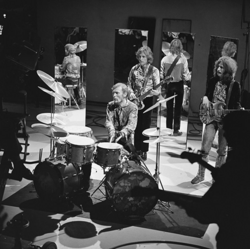
The band Cream is shown playing on a TV show. From left to right are drummer Ginger Baker (sitting behind a drumkit with two bass drums) and two electric guitarists.
Cream performing on the Dutch television program Fanclub in 1968

Key Facts

Female musician Enid Williams from the band Girlschool and Lemmy Kilmeister from Motörhead are shown onstage. Both are singing and playing bass guitar. A drumkit is seen behind them.
Enid Williams from Girlschool and Lemmy from Motörhead live in 2009. The ties that bind the two bands started in the 1980s and were still strong in the 2010s.
  • Origins: Developed in the late 1960s, primarily in the UK and US.
  • Foundational Styles: Rooted in blues rock, acid rock, and psychedelic rock.
  • Core Elements: Heavy use of distortion, power chords, and palm-muted rhythmic patterns.
  • Global Reach: Significant scenes exist in Finland, Germany, Brazil, Japan, Indonesia, and beyond.
  • Cultural Markers: Known for the "devil horns" hand gesture and a distinct fashion subculture.

The Musical Language of Metal
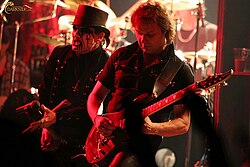
Two members from the band King Diamond are shown at a concert performance. From left to right are the singer and an electric guitarist. The singer has white and black face makeup and a top hat. Both are wearing black.
King Diamond, known for writing conceptual lyrics about horror stories

The distinct sound of heavy metal is built upon specific musical characteristics that emphasize power and aggression. Central to this is the use of distortion and power chords (chords consisting of a root note and a fifth), which provide the genre's signature thickness.

Rhythmically, metal often employs palm-muting—a technique where the guitarist rests the edge of the picking hand on the strings to create a chunky, percussive sound. This is frequently paired with driving drum patterns to create a high-energy wall of sound.
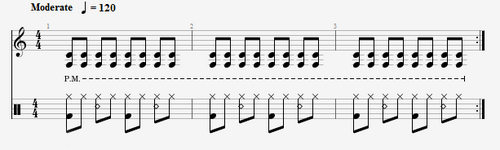
An example of a rhythmic pattern used in heavy metal. The upper stave is a palm-muted rhythm guitar part. The lower stave is the drum part.

Harmony and Classical Influence

While rooted in the blues, many metal artists have integrated elements of classical music. This is particularly evident in neoclassical metal, where guitarists utilize scales and structures reminiscent of Baroque and Classical eras to perform complex, virtuosic solos.
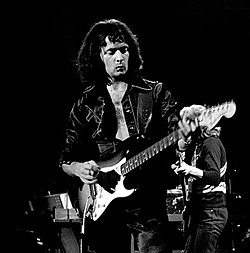
A guitarist, Ritchie Blackmore, is shown playing a Fender electric guitar onstage. He has long hair.
Ritchie Blackmore, founder of Deep Purple and Rainbow, known for the neoclassical approach in his guitar performances.

The Evolution of the Genre

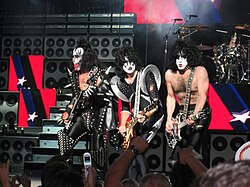
The band Kiss is shown onstage at a concert. From left to right are the bassist Gene Simmons, two electric guitarists and the drummer, who is at the rear of the stage. Simmons is wearing spiked clothing and his tongue is extended. All members have white and black face makeup. Large guitar speaker stacks are shown behind the band.
Kiss performing in 2004, wearing makeup

The Early Years (1950s–1970s)

The seeds of metal were sown in the late 1950s and 60s through the amplification of blues and psychedelic rock. By the early 1970s, bands like Black Sabbath—often cited as the architects of the genre—began incorporating darker themes and heavier riffs, reflecting the industrial atmosphere of their home in Birmingham, England.
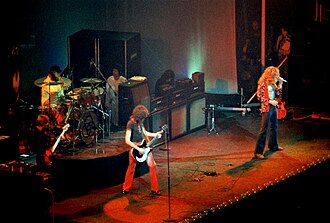
A colour photograph of the four members of Led Zeppelin performing onstage, with some other figures visible in the background. The band members shown are, from left to right, the bassist, drummer, guitarist, and lead singer. Large guitar speaker stacks are behind the band members.
Led Zeppelin performing at Chicago Stadium in January 1975

Mainstream Rise and the NWOBHM (1980s)

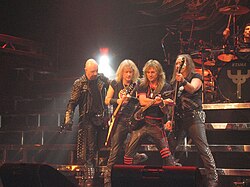
The late 1970s and 1980s saw the rise of the New Wave of British Heavy Metal (NWOBHM), which streamlined the sound and increased the tempo. Bands like Iron Maiden and Judas Priest brought the genre into the mainstream, introducing more complex song structures and theatrical stage presence.
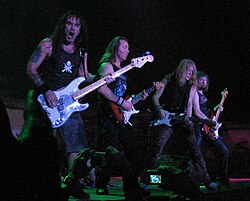
Four members of Iron Maiden are shown in concert. From left to right are a bass guitarist and then three electric guitarists. All members shown have long hair.
Iron Maiden, one of the central bands in the new wave of British heavy metal

The band Judas Priest are onstage at a concert. From left to right are the singer, two electric guitarists, the bass player, and the drummer, who is seated behind a drumkit. The singer is wearing a black trenchcoat with metal studs.
Judas Priest performing in 2005

The Diversification of Subgenres (1980s–2000s)

As the genre grew, it splintered into numerous specialized styles. Thrash metal combined the speed of hardcore punk with the precision of metal, while Death metal and Black metal pushed the boundaries of extremity through guttural vocals and dissonant harmonies.
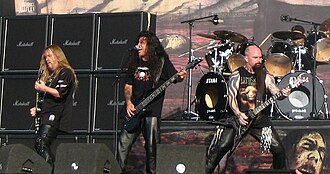
The band Slayer is shown at concert. From left to right are an electric guitarist, a bass player (also singing), an electric guitarists, and a drummer. The first guitarist and bassist have long hair. The right-most guitarist has a bald head. The drummer has two bass drums.
Thrash metal band Slayer performing in 2007 in front of a wall of speaker stacks

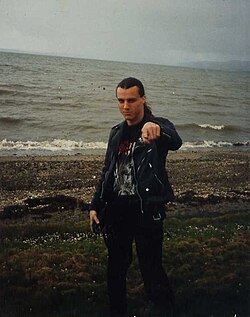
A man, Chuck Schuldiner, is shown on a dark shoreline. He has long hair, black pants and a black shirt, and a black leather jacket.
Death's Chuck Schuldiner, "widely recognized as the father of death metal"[226]

Other directions included Power metal, characterized by epic themes and soaring vocals, and Doom metal, which slowed the tempo to create a crushing, atmospheric weight.
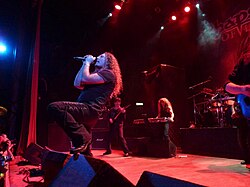
Italian band Rhapsody of Fire performing in Buenos Aires in 2010

Modern Fusions and Recent Styles

The 1990s and 2000s introduced fusion genres. Alternative metal and Nu metal blended heavy riffs with elements of grunge, funk, and rap. More recently, the 2010s and 2020s have seen the rise of Djent—a microgenre focused on high-gain, palm-muted, polyrhythmic guitar work—and a continued global expansion of the scene.

A male singer, Layne Staley, performs onstage with Alice in Chains. He holds the microphone with both hands and his eyes are closed as he sings.
Layne Staley of Alice in Chains, one of the most popular acts identified with alternative metal, performing in 1992

Culture, Image, and Global Impact

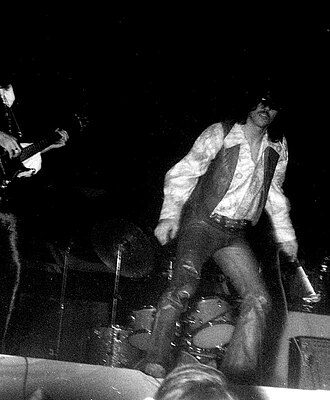
Two performers from Steppenwolf are shown in an onstage performance. From left to right are an electric guitarist (only the instrument is shown) and singer John Kay, who is swinging the microphone.
John Kay of Steppenwolf

Heavy metal is as much about identity as it is about music. The subculture is known for its specific fashion—often involving leather, studs, and black clothing—and physical gestures, most notably the "devil horns" sign used by fans at concerts.
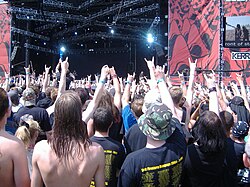
Fans raise their fists and make the "devil horns" gesture at a concert

The genre's reach is truly global. While it began in the West, it has found massive popularity in places like Finland, where it is deeply integrated into the culture, and Indonesia, where all-female groups like Voice of Baceprot are breaking traditional barriers.

All-female Indonesian group Voice of Baceprot performs at Valkhof Festival 2022.

Despite its success, the genre has faced challenges, including allegations of sexism and political persecution in various regions, such as East Germany during the Cold War.

Summary of Heavy Metal Subgenres
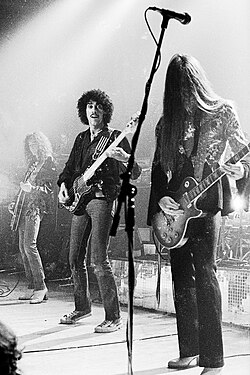
Three members of the band Thin Lizzy are shown onstage. From left to right are a guitarist, bass player, and another electric guitarist. Both electric guitarists have long hair.
Brian Robertson, Phil Lynott and Scott Gorham of Thin Lizzy performing during the Bad Reputation Tour, 24 November 1977
Common Heavy Metal Subgenres and Characteristics
Subgenre Key Characteristics Example Focus
Thrash Metal Fast tempo, aggressive rhythms Precision and speed
Death Metal Guttural vocals, low-tuned guitars Extreme intensity
Black Metal High-pitched screams, atmospheric Darkness and dissonance
Power Metal Melodic, epic themes, high vocals Fantasy and heroism
Doom Metal Slow tempo, heavy atmosphere Melancholy and weight
Nu Metal Fusion with rap, funk, and grunge Rhythmic versatility

Frequently Asked Questions

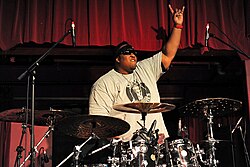
The drummer from the band Suicidal Tendencies, Eric Moore, is shown behind his drumkit. One hand is raised with the index finger and pinky extended.
Drummer Eric Moore from crossover thrash band Suicidal Tendencies
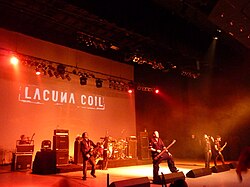
Italian gothic metal band Lacuna Coil performing in 2010
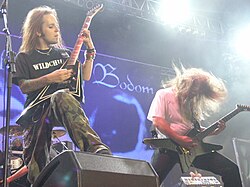
A color photograph of two members of the group Children of Bodom standing on a stage with guitars, drums are visible in the background. Both electric guitarists have "flying V" style guitars and they have long hair.
Children of Bodom, performing at the 2007 Masters of Rock festival
Giada Etro from Frozen Crown (left) and Federica Lanna from Volturian (right) during a joint concert.

Where did heavy metal originate?

Heavy metal originated in the late 1960s, primarily in the United Kingdom and the United States, evolving from blues rock, psychedelic rock, and hard rock.

What are the "devil horns"?

The "devil horns" is a prominent hand gesture used by fans and musicians within the heavy metal subculture as a sign of solidarity and appreciation during performances.

What is the difference between Thrash and Death metal?

Thrash metal focuses on fast tempos and aggressive, precise riffing, while Death metal is characterized by more extreme elements, such as guttural vocals and a heavier, lower-tuned sound.

Is heavy metal popular outside of the US and UK?

Yes, heavy metal has a massive global presence with significant regional scenes in countries such as Finland, Germany, Brazil, Japan, and Indonesia.

What is Neoclassical metal?

Neoclassical metal is a style that blends heavy metal with the structures and scales of classical music, often featuring highly technical and virtuosic guitar solos.

References

  1. Pearlman goes on to say, "A mechanically hysterical audience is matched to a mechanically hysterical sound. Side two of the album is a metal side. Most mechanical ... the to-date definitive metal song: 'Have You Seen Your Mother, Baby, Standing in the Shadow?,' as hysterical and tense as can be ... A sloppy performance—but never flaccid. Some bad detail, but lots of tension. It's a mechanical conception and realization (like all metal songs)—with the instruments and Mick's voice densely organized into hard, sharp-edged planes of sound: a construction of aural surfaces and regular surfaced planes, a planar conception, the product of a mechanistic discipline, with an emphasis upon the geometrical organization of percussive sounds."[97]
  2. "Grunge". AllMusic. Archived from the original on 21 August 2013. Retrieved 9 January 2022.
  3. Havers, Richard (29 March 2022). "Heavy Metal Thunder: The Origins of Heavy Metal". udiscovermusic. Archived from the original on 30 April 2021. Retrieved 2 October 2022.
  4. Tom Larson (2004). History of Rock and Roll. Kendall/Hunt Pub. pp. 183–187. ISBN 978-0-7872-9969-9.
  5. "Heavy Metal Music Genre Overview Archived 18 May 2012 at the Wayback Machine". AllMusic. Retrieved 9 January 2022