Hatay State: The Transitional Journey from French Mandate to Turkey
The Hatay State (Turkish: Hatay Devleti) was a short-lived transitional nation that existed between September 2, 1938, and June 29, 1939. Located in the territory formerly known as the Sanjak of Alexandretta, this entity served as a diplomatic and political bridge, eventually leading to the region's incorporation into the Republic of Turkey.
The state's existence was the culmination of intense geopolitical maneuvering during the interwar period, involving the French Mandate of Syria, the League of Nations, and the strategic ambitions of Turkey's founding father, Mustafa Kemal Atatürk.
Key Facts
- Duration: September 2, 1938 – June 29, 1939.
- Capital: Antakya (Antioch).
- Government: Unitary parliamentary republic.
- Key Figures: President Tayfur Sökmen and Prime Minister Abdurrahman Melek.
- Outcome: Annexed by Turkey as the Hatay Province in July 1939.
- Official Language: Turkish (with Levantine Arabic widely spoken).
Historical Background: The Sanjak of Alexandretta
Originally part of the Ottoman Empire's Aleppo Vilayet, the Sanjak of Alexandretta was occupied by France following World War I and became part of the French Mandate of Syria. Between 1921 and 1923, the region maintained an autonomous status under the Franco-Turkish Treaty of Ankara due to its diverse population of Turks, Arabs, and Armenians.
Mustafa Kemal Atatürk viewed the region as an ancestral Turkish homeland and refused to accept its permanent inclusion in the Syrian Mandate. As the French mandate neared its 1935 expiration, Turkish policy focused on annexation. Local Turkish communities began implementing reforms modeled after Atatürk's modernization efforts to strengthen the push for union with Turkey.
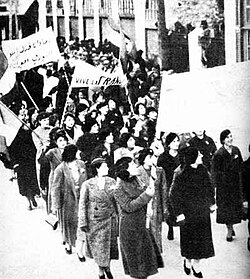
By 1936, political tensions peaked. Elections that returned two Syrian independentist members of parliament sparked communal riots and heated debates in the press, influenced by figures such as Arab nationalist Zaki al-Arsuzi.
The "Issue of Hatay" and the League of Nations
To resolve the conflict, the Turkish government introduced the name Hatay—a reference to the ancient Hittites—and brought the "Issue of Hatay" (Hatay Meselesi) before the League of Nations. A commission comprising representatives from France, the United Kingdom, the Netherlands, Belgium, and Turkey drafted a new constitution.
In November 1937, a new statute declared the region "distinct but not separated" from Syria. While diplomatically linked to Syria, it relied on France and Turkey for military security. This paved the way for the formal proclamation of the Hatay State on September 2, 1938.
Governance and Demographics
The Hatay State operated as a parliamentary republic. Its legislature, the Hatay State People's Assembly, consisted of 40 members: 22 Turks, nine Alawites, five Armenians, two Orthodox Greeks, and two Sunni Arabs. The state's constitution and economic institutions were closely mirrored after those of Turkey.
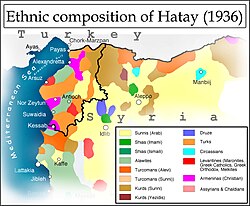
The demographic landscape was complex. According to 1936 French High Commission estimates, the population of 220,000 was divided among several ethno-religious groups. While Turks were the largest single group, Arabic speakers (including Sunni and Alawite Arabs) were more numerous in total.
| Ethnoreligious Group | Inhabitants | Percentage |
|---|---|---|
| Turks | 85,800 | 39% |
| Alawite Arabs | 61,600 | 28% |
| Armenians | 24,200 | 11% |
| Sunni Arabs | 22,000 | 10% |
| Other Christians (Melkites, Greeks) | 17,600 | 8% |
| Circassians, Jews, Kurds | 8,800 | 4% |
| Total | 220,000 | 100% |
Annexation and Aftermath
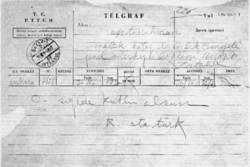
On June 29, 1939, following a referendum, the legislature voted to disestablish the Hatay State and join Turkey. The referendum remains controversial; critics describe it as "rigged," alleging that the Turkish government registered thousands of non-resident Turks to ensure a favorable outcome. France encouraged the annexation to incentivize Turkey to remain neutral or avoid an alliance with Nazi Germany.
The transition was finalized on July 7, 1939, when the Grand National Assembly of Turkey established the Hatay Province. By July 23, 1939, French authorities had fully departed Antakya.
The annexation triggered a significant exodus. Many Arabs and Armenians fled to Syria. The Armenian population, fearing Turkish sovereignty due to the history of the Armenian genocide, largely migrated to Aleppo or founded the town of Anjar in Lebanon.
Frequently Asked Questions
What was the Hatay State?
The Hatay State was a transitional government that existed from 1938 to 1939 in the territory of the Sanjak of Alexandretta, serving as a precursor to the region's annexation by Turkey.
Why did France allow the annexation of Hatay?
France encouraged the annexation in hopes that it would persuade Turkey to reject a potential alliance with Nazi Germany during the lead-up to World War II.
Who were the leaders of the Hatay State?
The state was led by President Tayfur Sökmen and Prime Minister Abdurrahman Melek.
What happened to the Armenian population after 1939?
Due to fears of Turkish prosecution and sovereignty, almost the entire Armenian population migrated to the French Mandate of Syria (specifically Aleppo) or to Lebanon.
How was the Hatay State's government structured?
It was a unitary parliamentary republic with a 40-member legislature called the Hatay State People's Assembly, with a constitution and economic system modeled after Turkey's.