Hard Rock: The Evolution of a High-Voltage Genre
Hard rock is a powerful evolution of rock and roll, characterized by its aggressive sound, distorted guitars, and driving rhythms. Emerging in the mid-1960s across the United States and the United Kingdom, the genre blended the raw energy of garage rock with the complexity of psychedelic and acid rock. Over the decades, it has shifted from blues-based improvisations to the polished spectacle of the 1980s and the raw intensity of the 1990s.
A lasting symbol of the genre is the Gibson SG guitar, a staple for legendary players such as Angus Young, Frank Zappa, and Tony Iommi.
Key Facts
- Origins: Developed in the mid-1960s in the US and UK from blues rock, psychedelic rock, and rock and roll.
- Pivotal Bands: Led Zeppelin, Deep Purple, and Black Sabbath are credited with bridging the gap between hard rock and heavy metal.
- Commercial Peak: The 1980s saw a massive surge in popularity via the glam metal scene and the rise of MTV.
- Defining Sound: While heavy metal often explores darker, more menacing themes, hard rock typically maintains a more exuberant, "good-time" energy.
The Birth of a Sound: The 1960s
By the late 1960s, a distinct hard rock identity began to form. Led Zeppelin played a crucial role by mixing early rock with a hard-edged blend of acid rock and blues rock, most notably on their first two self-titled albums in 1969.
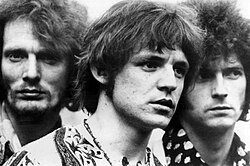
Simultaneously, Deep Purple transitioned from progressive rock—a style emphasizing technical skill and complex structures—to a heavier sound, achieving a commercial breakthrough with Deep Purple in Rock (1970). Another cornerstone was Black Sabbath's Paranoid (1970), which introduced dissonance and themes of Gothic horror and the occult.
![Drum notation for a backbeat[4]](/images/33/66/33664a9b1ad2d198a82a6372e0e5d49813bb1bb2e3ec566f01426ba398bd3771.png)
Expansion and Dominance in the 1970s
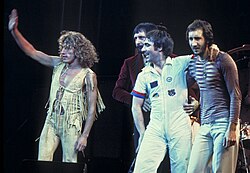
The 1970s saw hard rock become a dominant force in popular music. The era was defined by a diverse array of acts, including The Who, Led Zeppelin, and Deep Purple, alongside Alice Cooper, Aerosmith, Kiss, Queen, AC/DC, Thin Lizzy, and Van Halen.
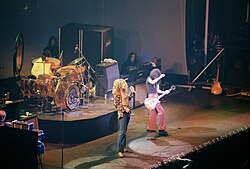
During this period, the genre expanded its reach, blending high-energy performances with massive stadium tours.
The Glam Metal Era of the 1980s
In the 1980s, hard rock underwent a stylistic shift. Def Leppard's 1981 album High 'n' Dry blended glam rock with heavy metal, setting the stage for the decade. Their subsequent release, Pyromania (1983), became a massive hit, propelled by the emergence of MTV.
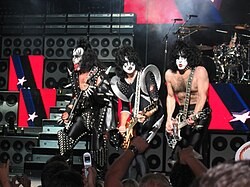
This success fueled the Californian glam metal scene, leading to the rise of bands like Mötley Crüe, Ratt, White Lion, Twisted Sister, and Quiet Riot. Notably, Quiet Riot's Metal Health (1983) was the first glam metal album to reach number one on the Billboard charts.
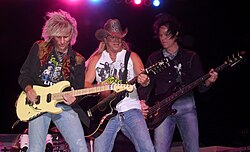
The late 1980s marked a commercial zenith. In 1988, hard rock albums held the number one spot on the Billboard 200 for 18 out of 20 consecutive weeks, featuring works by Van Halen, Def Leppard, Guns N' Roses, and Bon Jovi.
Transition: Grunge, Britpop, and the 2000s
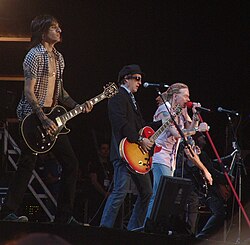
Hard rock entered the 1990s as a commercial powerhouse, with multi-platinum releases from AC/DC, Guns N' Roses, and Ozzy Osbourne. However, the landscape shifted with the rise of grunge—a raw, distorted style from the Pacific Northwest—alongside Britpop, hip-hop, and R&B.
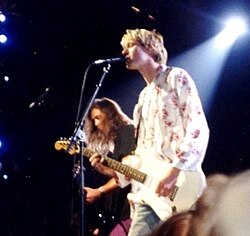
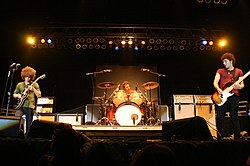
While the pure glam metal sound faded, many post-grunge bands adopted hard rock elements. The 2000s brought a renewed interest in established legacy acts and a few new bands attempting to revive the classic sound.


Hard Rock Summary
| Era | Key Characteristics | Notable Artists |
|---|---|---|
| 1960s (Origins) | Blues rock, acid rock, distorted riffs | Led Zeppelin, Deep Purple, Black Sabbath |
| 1970s (Expansion) | Stadium rock, high energy, diverse styles | Queen, AC/DC, Kiss, Aerosmith |
| 1980s (Glam Metal) | Polished production, MTV influence, pop-rock blend | Mötley Crüe, Bon Jovi, Def Leppard, Poison |
| 1990s (Shift) | Competition with Grunge and Britpop | Guns N' Roses, Nirvana (Grunge), The Black Crowes |
| 2000s (Revival) | Post-grunge, legacy act tours | Foo Fighters, various revival bands |
Frequently Asked Questions
What is the difference between hard rock and heavy metal?
While both share similar roots, hard rock generally remains more exuberant and "good-time" music. Heavy metal typically accentuates intensity, often exploring darker, more menacing, or occult themes.
Which bands were most influential in the 1960s?
Led Zeppelin, Deep Purple, and Black Sabbath were pivotal. They blended early rock with hard-edged blues and acid rock, laying the groundwork for both hard rock and heavy metal.
What was glam metal?
Glam metal was a 1980s subgenre that mixed heavy metal with glam rock. It was characterized by polished production, a strong pop-rock influence, and a heavy visual presence on MTV.
Why did hard rock lose popularity in the 1990s?
The genre faced stiff competition from the commercial success of grunge, Britpop, hip-hop, R&B, and urban pop, which shifted the musical preferences of the general public.
Which guitar is most associated with hard rock?
The Gibson SG is a common symbol of the genre, used by influential guitarists such as Tony Iommi and Angus Young.