Hard Bop: The Soulful Evolution of Modern Jazz
Hard bop is a dynamic subgenre of jazz that emerged as an extension of bebop. Developing in the mid-1950s, it represented a shift in the jazz landscape, integrating the raw energy of rhythm and blues (R&B), the spiritual depth of gospel music, and the foundational elements of the blues. This style was particularly evident in the phrasing and improvisation of saxophone and piano players.
Historian David H. Rosenthal suggests that hard bop was the natural creative output of a generation of African-American musicians who grew up immersed in both bebop and R&B. By blending these influences, hard bop musicians sought to create a sound that was more accessible and grounded than the complex abstractions of earlier bebop.
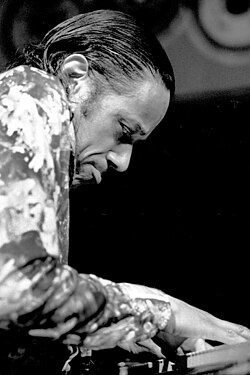
Key Facts
- Origins: Emerged in the mid-1950s, primarily in New York City and Detroit.
- Core Influences: Bebop, blues, gospel music, and rhythm and blues.
- Defining Groups: Art Blakey and the Jazz Messengers were pivotal in establishing the style.
- Key Label: Blue Note Records played a critical role in recruiting and promoting hard bop artists.
- Legacy: Led to derivative forms such as soul jazz, post-bop, and neo-bop.
Stylistic Characteristics and Cultural Context
Hard bop is often viewed as a reaction to cool jazz and West Coast jazz. Some critics argued that the instrumentation and compositional techniques of cool jazz were mere gimmicks. In contrast, hard bop emphasized a driving, aggressive energy. Drummer Shelly Manne suggested this difference was geographic: the relaxed nature of California inspired cool jazz, while the hectic pace of New York City fueled the driving rhythms of hard bop.
Beyond geography, some writers, including James Lincoln Collier, argue that hard bop was a conscious effort to reclaim jazz as a primary form of African-American expression. Regardless of the intent, the style's infectious groove attracted musicians of all racial backgrounds.
The History and Rise of Hard Bop
Origins in New York and Detroit
The term "hard bop" is attributed to music critic and pianist John Mehegan. While the Jazz Messengers, led by Art Blakey, are often credited with the genre's birth, Detroit also served as a vital hub. Musicians like Barry Harris and Kenny Burrell, along with the presence of Miles Davis in the city between 1953 and 1954, helped anchor the scene. Tenor saxophonist Billy Mitchell further solidified Detroit's role through his residency at the Blue Bird Inn.
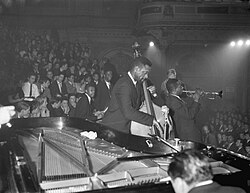
A Shift Toward the Audience
Michael Cuscuna notes that Art Blakey and Horace Silver intentionally moved away from the "Birdland scene" of the early 1950s, where musicians often played unplanned standards and blues without rehearsal. To expand the jazz audience, Silver and Blakey focused on memorable, planned compositions with universal appeal, drawing heavily from gospel and blues. A turning point was Silver's hit "The Preacher," which succeeded despite initial hesitation from Blue Note head Alfred Lion, who feared it was too "old-timey."
Mainstream Success and Key Figures
By the mid-1950s, hard bop entered the mainstream. The transition to 33 rpm records allowed for the longer solos that became a hallmark of the genre. Blue Note Records became the premier label for this "classy" sound. A landmark recording, A Blowin' Session (1957), featured a powerhouse lineup including John Coltrane, Hank Mobley, and Johnny Griffin, showcasing the virtuosity and "jazz masculinity" of the era.
Other essential contributions include:
- The Jazz Messengers: Their album Moanin' (1958) pioneered the soul jazz movement.
- Lee Morgan: His album The Sidewinder blended hard bop with Latin boogaloo and R&B.
- John Coltrane: Masterpieces like Blue Train exemplified the hard bop style before he moved toward free jazz.
- Miles Davis: While transitioning toward modal jazz with Kind of Blue, Davis retained hard bop elements like call-and-response themes.
Decline and the Neo-Bop Revival
By the late 1960s, hard bop began to lose momentum. The rise of commercial rock, the emergence of jazz fusion, and the avant-garde movement led many musicians away from the style. Miles Davis led the charge into fusion, while others, like Donald Byrd, moved toward smooth jazz with the commercially successful Black Byrd (1973).
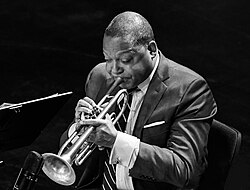
However, the style saw a major resurgence in the 1980s known as neo-bop. Led by figures such as trumpeter Wynton Marsalis, this revival restored hard bop as the foundation of modern acoustic jazz.
Summary of Hard Bop Influence
| Category | Details |
|---|---|
| Primary Influences | Bebop, Gospel, R&B, Blues |
| Key Cities | New York City, Detroit |
| Defining Albums | Moanin', Blue Train, A Blowin' Session |
| Derivative Styles | Soul Jazz, Post-Bop, Neo-Bop |
| Major Label | Blue Note Records |
Frequently Asked Questions
What is the difference between bebop and hard bop?
While hard bop is an extension of bebop, it incorporates more influences from gospel, R&B, and blues, resulting in a more soulful, driving sound that was often more accessible to audiences than the complex nature of early bebop.
How did hard bop relate to cool jazz?
Hard bop is often seen as a response to cool jazz. While cool jazz was characterized by a relaxed, understated approach (often associated with California), hard bop emphasized intensity, driving rhythms, and a more aggressive delivery associated with New York City.
Who were the most influential musicians in hard bop?
Key figures include Art Blakey, Horace Silver, John Coltrane, Miles Davis, Clifford Brown, and Lee Morgan. Art Blakey's Jazz Messengers were particularly influential in defining and spreading the style.
What is neo-bop?
Neo-bop is a revival of the bop and hard bop styles that occurred in the 1980s. Wynton Marsalis was a leading proponent of this movement, which helped re-establish acoustic jazz in the modern era.
Which record label was most important to hard bop?
Blue Note Records was central to the genre, recruiting top talent and promoting a "classy" hard bop sound between 1952 and 1967.