Hanyu Pinyin: The Standard Romanization System for Chinese
Hanyu Pinyin, often simply called pinyin, is the official system used to transcribe the sounds of Standard Chinese into the Latin alphabet. Developed to bridge the gap between spoken Mandarin and written characters, it has become the global standard for teaching Chinese and for international communication. By using an alphabet to represent phonetic sounds, pinyin provides a vital tool for learners and a standardized method for digital input and linguistic study.

Key Facts
- Creator: Developed by the Pinyin Committee, with Zhou Youguang often recognized as the "Father of Pinyin."
- Official Status: Adopted by China in 1958 and recognized by the United Nations in 1986.
- Purpose: A phonetic system used to transcribe Standard Mandarin sounds.
- Standardization: Governed by international standards like ISO 7098.
- Components: Consists of initials (consonants), finals (vowels and nasal sounds), and tone marks.
The History and Global Adoption of Pinyin
The development of pinyin was a significant milestone in Chinese linguistic history. Formally published in 1958, the system was designed to improve literacy and standardize the pronunciation of the Chinese language. During the Cold War, the use of pinyin outside of mainland China was sometimes viewed through a political lens, often seen as an identification with the mainland government over older systems like Wade–Giles.
However, the landscape shifted in the late 1970s. Following the 1979 Joint Communiqué between the United States and China, Western publications began transitioning to pinyin. This momentum led to its adoption by major international bodies, including the ISO in 1982 and the United Nations in 1986. Today, it is the standard used by the Singaporean government, the Library of Congress, and various international academic institutions.
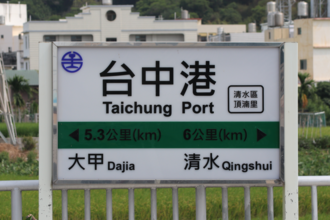
Understanding the Mechanics: Syllables, Initials, and Finals
In the pinyin system, a syllable is typically composed of an initial (the starting consonant sound) and a final (the vowel or vowel-consonant combination that follows). Some syllables may consist of a final alone.
Initials
Initials are categorized by their place of articulation (where in the mouth the sound is made) and manner of articulation (how the air is released). For example, sounds like b, d, and g are unaspirated plosives, while p, t, and k are aspirated. Other categories include nasals (m, n), fricatives (f, s), and liquids (l, r).
Finals
Finals are more complex and can be divided into front, central, and back vowels. They may include medials (semi-vowels like i, u, or ü) that lead into the main vowel. A unique feature of pinyin is the ü sound, which is pronounced similarly to the German "ü" or French "u"—essentially an "ee" sound made with rounded lips.
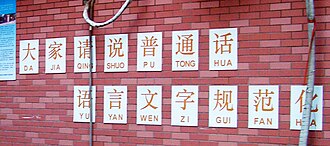
The Importance of Tones
Mandarin is a tonal language, meaning the pitch at which a syllable is spoken changes its fundamental meaning. Pinyin uses diacritics (accent marks) placed above vowels to indicate these four distinct tones, plus a neutral tone.
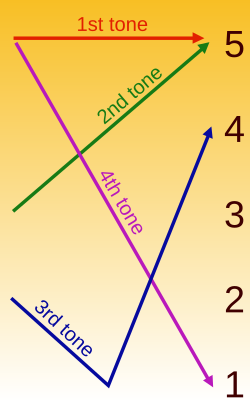
The four primary tones are:
- First Tone: High-level and flat (e.g., ā).
- Second Tone: Rising or high-rising (e.g., á).
- Third Tone: Falling-rising or low (e.g., ǎ).
- Fourth Tone: Falling or high-falling (e.g., à).
- Neutral Tone: A syllable without a specific pitch contour (e.g., a).
To ensure accuracy, pinyin follows specific rules for tone placement. Generally, the mark is placed on the vowel a or e if present; if not, it is placed on o. In combinations like iu or ui, the mark is placed on the second vowel.
Summary of Pinyin Components
| Component | Description | Example |
|---|---|---|
| Initial | The starting consonant sound | m in "ma" |
| Final | The vowel or ending sound | a in "ma" |
| Tone | The pitch contour of the syllable | má (rising tone) |
| Syllable | The combination of initial, final, and tone | mǎ |
Frequently Asked Questions
How does pinyin differ from Wade–Giles?
Wade–Giles is an older romanization system that was widely used before pinyin became the international standard. While Wade–Giles often uses apostrophes to distinguish aspirated sounds, pinyin uses specific letter combinations (like q, x, and zh) to represent these phonetic differences more clearly for modern learners.
What is the "ü" sound in pinyin?
The ü sound is a close front rounded vowel. It is often described as pronouncing the English "ee" sound while rounding your lips as if you were going to whistle or say "oo." In pinyin writing, it is often written simply as u after the letters j, q, or x.
Why are tone marks important in pinyin?
Because Mandarin uses pitch to distinguish meaning, the same sequence of letters can represent entirely different words depending on the tone. For example, mā (mother) is different from mǎ (horse). Without tone marks, the intended meaning of a word can be lost.
Is pinyin used in Taiwan?
While mainland China uses Hanyu Pinyin as its official script, Taiwan has used various systems, including Bopomofo and Tongyong Pinyin. However, Hanyu Pinyin has seen increased use and recognition in various contexts in Taiwan as well.
How is pinyin used for computer input?
Pinyin is the primary method for typing Chinese characters on digital devices. Users type the phonetic pinyin using a standard Latin keyboard, and a software interface provides a list of corresponding Chinese characters for the user to select.