Hanover District: Towns, Municipalities, and Demographic Trends
The Hanover district is a diverse region characterized by a blend of urban centers and smaller rural municipalities. From the sprawling capital of Hanover to the quiet landscapes of Neustadt am Rübenberge, the area serves as a vital hub of population and political activity in Germany.
The district is organized into two primary administrative categories: towns, which typically serve as larger economic or administrative centers, and municipalities, which manage smaller local jurisdictions. Together, these entities form the structural backbone of the region's governance and community life.
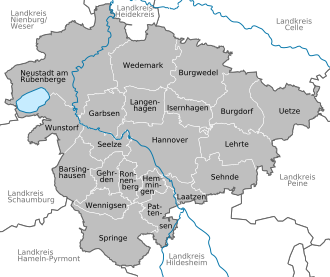
Key Facts
- Largest City: Hanover, with a 2015 population of 532,163.
- Largest Area: Neustadt am Rübenberge, covering 357 km².
- Population Growth: The total resident count grew from 1,122,038 in 2001 to 1,157,624 by 2018.
- Political Landscape: The SPD and CDU have historically been the dominant parties in the Regional Assembly.
- Voter Turnout: Recent election turnout has fluctuated, reaching 54.7% in 2021.
Administrative Divisions: Towns and Municipalities
The district is composed of numerous towns and municipalities, each varying significantly in size and population density. While Hanover dominates the population statistics, other towns like Langenhagen and Garbsen provide critical residential and industrial support to the region.
Towns of the District
The towns within the district range from small centers like Pattensen to the massive urban expanse of Hanover. The following table provides a detailed breakdown of these areas based on 2015 data.
| Entity | Area (km²) | Population (2015) |
|---|---|---|
| Hanover | 204.01 | 532,163 |
| Garbsen | 79.31 | 60,590 |
| Langenhagen | 71.99 | 53,323 |
| Neustadt am Rübenberge | 357.00 | 43,931 |
| Lehrte | 127.00 | 43,639 |
| Wunstorf | 126.60 | 41,251 |
| Laatzen | 34.05 | 40,939 |
| Barsinghausen | 102.65 | 33,608 |
| Seelze | 54.00 | 33,283 |
| Burgdorf | 112.26 | 30,147 |
| Springe | 159.78 | 28,682 |
| Ronnenberg | 37.78 | 23,752 |
| Sehnde | 103.44 | 23,489 |
| Burgwedel | 151.96 | 20,654 |
| Hemmingen | 31.65 | 18,793 |
| Gehrden | 42.97 | 14,624 |
| Pattensen | 67.00 | 14,324 |
Municipalities of the District
In addition to the towns, the district includes several municipalities that maintain a more rural or suburban character:
- Wedemark: 173 km² with 29,358 residents.
- Isernhagen: 59.72 km² with 23,792 residents.
- Uetze: 140.56 km² with 20,103 residents.
- Wennigsen: 53.78 km² with 14,036 residents.
Regional Assembly Election Trends
The political landscape of the Regional Assembly has shifted over the last two decades. The SPD (Social Democratic Party of Germany) and CDU (Christian Democratic Union) have traditionally held the most seats, though their percentages have declined as other parties have gained traction.
Notably, the Grüne (Alliance 90/The Greens) have seen significant growth, rising from 9.1% of the vote in 2001 to 21.3% in 2021. Other parties, including the FDP, AfD, and Die Linke, as well as smaller associations like Volt and the Pirate Party, also hold representation in the 84-seat assembly.
Voter Participation
Voter turnout has remained relatively stable, though it dipped to a low of 47.0% in 2006 before recovering to 54.7% in the 2021 elections.
Population Growth (2001–2018)
The district has experienced steady population growth over the last 17 years. This upward trend suggests a consistent attraction to the region for residents and workers.
- 2001: 1,122,038 residents
- 2005: 1,128,543 residents
- 2010: 1,132,130 residents
- 2015: 1,144,481 residents
- 2017: 1,153,063 residents
- 2018: 1,157,624 residents
Frequently Asked Questions
Which is the most populous town in the district?
Hanover is the most populous town, with a population of 532,163 as of 2015.
Which town covers the largest geographical area?
Neustadt am Rübenberge is the largest by area, covering 357 km².
How has the population of the district changed since 2001?
The population has grown steadily, increasing from 1,122,038 in 2001 to 1,157,624 in 2018.
Which political party had the highest percentage of votes in 2021?
The SPD (Social Democratic Party of Germany) had the highest percentage in 2021 with 29.9% of the vote.
What was the voter turnout in the most recent recorded election?
The voter turnout for the 2021 election was 54.7%.