Hambantota Infrastructure and Economic Development
Hambantota is undergoing a significant transformation, evolving from a region known for its natural salt plains into a strategic hub for international trade, energy, and industry. By leveraging its geographic location, the area is integrating large-scale transportation networks and industrial zones designed to stimulate national economic growth.
Key Facts
- Strategic Port: The Port of Hambantota is designed to be the largest in South Asia upon full completion, capable of berthing 33 vessels.
- Aviation Hub: Mattala Rajapaksa International Airport (MRIA) serves as Sri Lanka's second international airport.
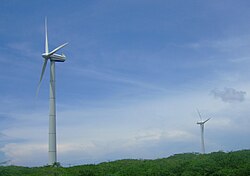
- Renewable Energy: Home to the country's first wind farm, serving as a pilot project for wind power generation.
- Industrial Growth: A proposed 6,100-hectare Special Economic Zone (SEZ) aims to house refineries, LNG plants, and factories.
- Global Investment: A 70% stake in the port was leased to China Merchants Port Holdings for $1.12 billion.
Economic Development and Industry
The economic landscape of Hambantota is characterized by a blend of traditional production and modern industrialization. The town remains a major producer of salt, utilizing its prominent salt plains. To diversify the economy, the government is establishing cement grinding and bagging factories, as well as fertilizer bagging plants.
A massive Special Economic Zone (SEZ)—an area with liberal economic laws to attract foreign investment—of 6,100 hectares (15,000 acres) has been proposed. Approximately 500 hectares (1,235 acres) of this zone are located in Hambantota, dedicated to the construction of refineries, LNG (Liquefied Natural Gas) plants, and factories, with the remainder spread across Monaragala, Embilipitiya, and Matara. To support this industrial shift, a Vocational Training Center was opened in 2017 in partnership with China to prepare the local workforce.
Transportation Networks
Air Travel
The region is served by the Mattala Rajapaksa International Airport (MRIA), located 18 km north of Hambantota. Opened in March 2013, it is the second international airport in Sri Lanka. Additionally, the Weerawila Airport provides further aviation capacity in the vicinity.
Road and Rail
Connectivity is facilitated by the A2 highway, which links Colombo to Hambantota via Galle and Matara. Furthermore, the Southern Expressway, running from Kottawa to Matara, connects to the town through Beliatta.
In the rail sector, the Matara-Kataragama Railway Line project began construction in 2006. This broad gauge railway is being implemented with an estimated investment of $91 million.
Energy and Power Infrastructure
Hambantota is a pioneer in Sri Lankan renewable energy, hosting the nation's first wind farm. This pilot project tests the viability of wind power, though development has faced challenges including an unstable power grid and poor road access.
To resolve these issues, the Ceylon Electricity Board (CEB) is developing a transmission network that includes the first 220kV grid substation in Hambantota, scheduled for connection to the National Grid by 2022. This project, managed by main contractor CHINT Electric and national contractor Minel Lanka, features six 83.33 MVA power transformers from Tirathai, handling a total of 500 MVA.
The Port of Hambantota
The Port of Hambantota is a cornerstone of the region's infrastructure. The first phase was completed in November 2010 at a cost of $360 million. The project includes a $550 million tax-free port zone that has attracted interest from companies in Dubai, Russia, China, and India for warehousing, ship-repair, and shipbuilding facilities.
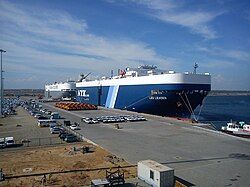
The port's bunkering facility consists of 14 tanks (8 for oil, 3 for aviation fuel, and 3 for LP gas) with a total capacity of 80,000 m³. Despite its scale, the port initially struggled with low traffic; in 2012, only 34 ships berthed compared to 3,667 at the port of Colombo.
Due to debt obligations to China, a 70% stake in the port was leased to China Merchants Port Holdings in 2017 for $1.1 billion on a 99-year lease, integrating the port into the Belt and Road Initiative. This move sparked geopolitical debate regarding China's "String of Pearls" strategy, though some analysts argue the port's exposed nature limits its military value. In November 2019, President Gotabaya Rajapaksa expressed intent to undo the lease and return to the original loan schedule, though the lease remained in place as of August 2020.
Infrastructure Summary
| Sector | Project/Facility | Key Detail |
|---|---|---|
| Maritime | Port of Hambantota | Capacity for 33 vessels; 99-year lease to China |
| Aviation | Mattala Rajapaksa Int. Airport | Opened 2013; 2nd international airport in Sri Lanka |
| Energy | Hambantota Wind Farm | First wind power pilot project in Sri Lanka |
| Industry | Special Economic Zone | 6,100 hectares proposed for factories and refineries |
| Rail | Matara-Kataragama Line | Broad gauge railway; $91 million estimated cost |
Frequently Asked Questions
What is the significance of the Port of Hambantota?
It is designed to be the largest port in South Asia upon completion, capable of berthing 33 vessels and featuring a massive tax-free zone for shipbuilding and warehousing.
Why was the port leased to China?
Sri Lanka struggled to service the debt incurred during the port's construction due to low initial vessel traffic, leading to a 99-year lease of a 70% stake to China Merchants Port Holdings for $1.1 billion.
What is the purpose of the Special Economic Zone (SEZ)?
The SEZ is intended to attract foreign investment for the construction of factories, refineries, and LNG plants to boost industrial production.
How is Hambantota advancing in renewable energy?
The region hosts Sri Lanka's first wind farm and is constructing a 220kV grid substation to better integrate wind power into the National Grid.
Which airports serve the Hambantota area?
The area is served by the Mattala Rajapaksa International Airport (MRIA) and the nearby Weerawila Airport.