Hama: The Historic City of Norias and Syrian Heritage
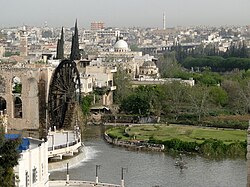
Situated on the banks of the Orontes River in west-central Syria, Hama is a city where ancient engineering meets deep historical layers. Located 213 kilometers north of Damascus and 46 kilometers north of Homs, it serves as the provincial capital of the Hama Governorate. Known as the "Mother of Norias" and the "City of Abulfeda," Hama is one of Syria's four largest urban centers, celebrated for its unique water wheels and a rich cheesemaking tradition that produced the famous local dessert, Halawet el Jibn.
Key Facts
- Location: West-central Syria, on the Orontes River.
- Famous For: The Norias (massive ancient water wheels).
- Population: Estimated between 600,000 and 800,000 (2026 projection).
- Elevation: 305 meters (1,001 ft).
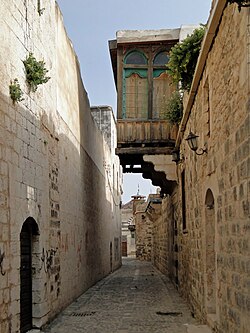
- Key Landmarks: Al-Azm Palace, Great Mosque of Hama, and Khan Rustem Pasha.
- Climate: Semi-arid (BSk), characterized by hot summers and mild winters.
A Journey Through Time: From Antiquity to the Modern Era
Ancient Roots and Roman Influence
Hama's history stretches back to the 15th century BCE. During the Roman period, the city became part of the Roman province of Syria after Pompey's invasion in 64 BC. Interestingly, Hama's influence reached as far as northern Britain; the Cohors Prima Hamiorum Sagittaria, a unit of 500 Hamian archers, was stationed at Hadrian's Wall starting in AD 120, with evidence of their presence found in military diplomas and altars dedicated to Syrian goddesses.
The Early and Middle Islamic Periods
Muslim forces conquered Hama in 638 or 639 AD under Abu Ubayda ibn al-Jarrah. The city evolved into a walled trading hub under the Abbasids, notably defeating the Qarmatians at the Battle of Hama in 903 AD. Following a period of instability and raids by the Byzantines and Mamluks, the city entered a golden age of stability under the Ayyubid dynasty from 1175 to 1342.
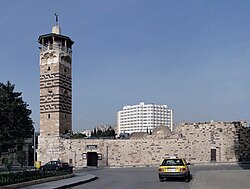
This era saw the construction of the Great Mosque in 1172 by Nur al-Din, featuring its iconic square minaret. Despite a devastating series of earthquakes in 1157 that collapsed much of the town, the city was resiliently rebuilt.
Ottoman Rule and Administrative Growth
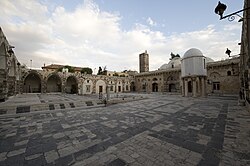
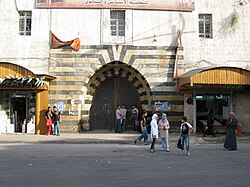
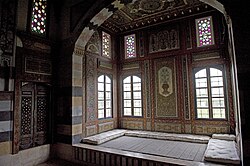
In 1516, Hama transitioned to Ottoman rule. It became a vital center for trade routes connecting the Mediterranean coast to Asia. The Ottomans constructed several khans (caravansaries), such as Khan Rustum Pasha (1556), to facilitate the storage and distribution of cotton, wool, and seeds. In the 18th century, the Azem family, governors of Damascus, left a lasting architectural mark with the construction of the opulent Al-Azm Palace and Khan As'ad Pasha.
Architectural Marvels and Main Sights
The Norias of Hama
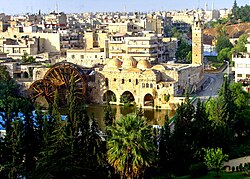
The most iconic symbols of the city are the 17 Norias—massive wooden water wheels dating back to Byzantine times. These wheels, some reaching 20 meters in diameter, were designed to lift water from the Orontes River into aqueducts for urban and agricultural use. The al-Mamunye (1453) and the al-Muhammediye (14th century) are among the largest and most famous.
Other Notable Landmarks
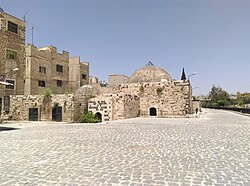
- Al-Azm Palace: A sumptuous 18th-century residence reflecting Ottoman-era luxury.
- Hammam Al-Sultan: A traditional public bathhouse.
- Mamluk al-Izzi Mosque: A 15th-century architectural gem.
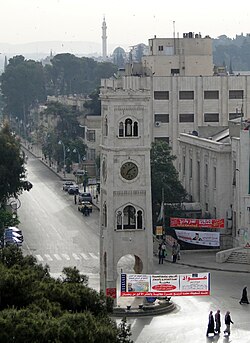
- The Clock Tower: A prominent landmark in the city center.
City Overview and Climate
Hama experiences a semi-arid climate with significant temperature swings. Summers are intense, with record highs reaching 45.2°C, while winters remain cool with average lows around 12.8°C. Precipitation is concentrated in the winter months, peaking in December and January.
| Category | Details |
|---|---|
| Coordinates | 35°08′06″N 36°45′00″E |
| Primary River | Orontes River |
| Key Ethnicities | Syrians |
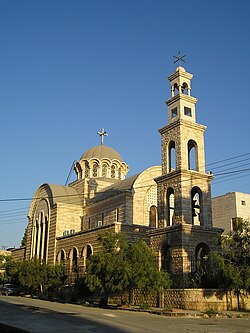
| Major Religions | Sunni Islam, Syriac Orthodox, Greek Orthodox |
| Annual Precipitation | 352.7 mm (Average) |
| Notable Figure | Abu al-Fida (Historian and Geographer) |

Frequently Asked Questions
What are the Norias of Hama?
The Norias are ancient, large wooden water wheels used to lift water from the Orontes River into aqueducts. They are the city's most famous landmark and date back to the Byzantine era.
Who was Abu al-Fida?
Abu al-Fida was a Kurdish historian, geographer, and Ayyubid prince who served as the governor of Hama from 1310 to 1332.
What is Halawet el Jibn?
Halawet el Jibn is a signature local dessert from Hama, reflecting the city's long-standing tradition of cheesemaking.
Did Hama have a connection to Roman Britain?
Yes. A unit of 500 archers from Hama, known as the Cohors Prima Hamiorum Sagittaria, was stationed at Hadrian's Wall and other forts in Britain during the 2nd century AD.
Which dynasty provided the most stability for Hama?
The Ayyubid dynasty provided a significant era of stability and prosperity, ruling the city almost continuously from 1175 until 1342.