Gwangju: The Legacy and Evolution of a South Korean Metropolis
Gwangju, located in the Honam region of South Korea, has long served as a pivotal center of culture, politics, and industry. Known for its resilient spirit and deep historical roots, the city evolved from an ancient administrative hub into one of the nation's largest metropolises. In a significant administrative shift in July 2026, Gwangju was merged with South Jeolla Province to form a new provincial-level city known as Jeonnam-Gwangju.
Before this merger, Gwangju operated as a designated metropolitan city under the direct control of the central government. It previously served as the capital of South Jeolla Province until 2005, when the provincial office relocated to Namak in Muan County.
Key Facts
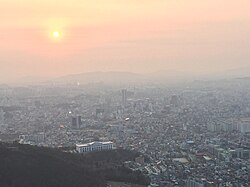
- Recent Status: Merged into Jeonnam-Gwangju in July 2026.
- Population: 1,401,235 (as of February 2026).
- Economy: Nominal GDP of KRW 52 trillion (US$ 42 billion) in 2023.
- Political Identity: A historic stronghold for liberal and progressive politics in South Korea.
- Global Recognition: Home to Nobel Prize winner Han Kang and a major hub for the arts.
A Journey Through History
Established in 57 BC, Gwangju was an essential administrative center for the Baekje kingdom during the Three Kingdoms period. Its history is marked by a recurring theme of resistance and a drive for independence.
Colonial Resistance and Industrial Growth
During the period of Imperial Japanese rule, the city was renamed Kōshū. In 1929, it became the epicenter of the Gwangju Student Independence Movement, a student-led demonstration that sparked nationwide uprisings against colonial cruelty. Following this era, the city modernized rapidly with the construction of a railway to Seoul and the establishment of breweries, rice mills, and cotton textile industries. By 1967, a designated industrial zone accelerated growth, particularly within the automobile sector.
The Gwangju Uprising
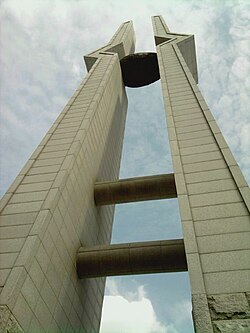
One of the most defining moments in modern Korean history occurred in May 1980. Peaceful demonstrations against the military coup led by Chun Doo-hwan were met with a violent crackdown by elite Special Operations Command units. This escalated into the Gwangju Uprising, where civilians armed themselves in defense. The conflict resulted in hundreds of civilian deaths. Following the restoration of civilian rule in 1987, a national cemetery was established to honor those who fought for democracy.
City Profile and Demographics
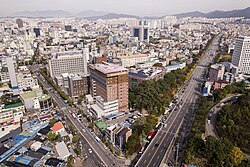
Gwangju's administrative structure consisted of five districts (Gu): Buk, Dong, Gwangsan, Nam, and Seo. The city's population grew steadily from under 500,000 in 1970 to over 1.4 million by 2020.
Culture and Religion
The city is characterized by a diverse spiritual landscape. According to 2015 census data, 61% of the population is irreligious, while 28.7% follow Christianity (comprising 20% Protestantism and 8.7% Catholicism) and 9.5% follow Buddhism.
| Year | Population | Growth Rate (%) |
|---|---|---|
| 1970 | 493,634 | — |
| 1980 | 727,600 | +47.4% |
| 1990 | 1,139,003 | +56.5% |
| 2000 | 1,352,797 | +18.8% |
| 2010 | 1,475,745 | +9.1% |
| 2020 | 1,477,573 | +0.1% |
Infrastructure and Education
Transportation in Gwangju is anchored by the Gwangju Subway and a robust bus system. The city is served by Gwangju Airport and two KTX high-speed rail stations, with Gwangju Songjeong Station serving as the primary transit hub. A second orbital loop line for the subway is scheduled to open in 2026.
Education is a cornerstone of the city, with 593 schools including 9 universities. Notable private institutions include Chosun University and Honam University. As of 2009, students made up approximately 28.5% of the city's population.
Tourism, Sports, and Arts
Gwangju is a vibrant center for international events and athletic achievement. It has hosted the 2002 FIFA World Cup, the 2015 Summer Universiade, and the 2019 World Aquatics Championships.
Key Landmarks and Attractions
- Gwangju Biennale: A prestigious modern art festival held every two years since 1995.
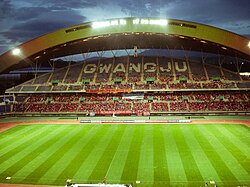
- Gwangju World Cup Stadium: Famous for the 2002 match where South Korea defeated Spain 3-5 to reach the semi-finals.
- Gwangju Hyanggyo: A traditional Confucian school dating back to the start of the Joseon period in 1392.
- 5.18 Road: A historical course commemorating the 1980 Democracy Movement.
Professional Sports
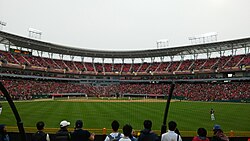
The city is the home of the Kia Tigers (KBO League), Gwangju FC (K League), and the Gwangju AI Peppers (V-League).
Notable Figures
Gwangju has produced world-renowned talent across various fields:
- Literature: Han Kang, author of The Vegetarian and winner of the 2024 Nobel Prize in Literature.
- Entertainment: J-Hope (BTS), Suzy, and Park Shin-hye.
- Science: Yi So-yeon, the first South Korean astronaut.
- Sports: Olympic archer An San and badminton player An Se-young.
Frequently Asked Questions
What happened to Gwangju Metropolitan City in 2026?
In July 2026, Gwangju Metropolitan City was dissolved and merged with South Jeolla Province to create a new provincial-level city called Jeonnam-Gwangju.
What is the significance of the Gwangju Uprising?
The May 1980 uprising was a pivotal pro-democracy movement where citizens protested against the military coup of Chun Doo-hwan, eventually leading to the reinstatement of civilian rule in 1987.
Which famous author is from Gwangju?
Han Kang, the winner of the 2024 Nobel Prize in Literature and author of Human Acts and The Vegetarian, is from Gwangju.
What major sports teams are based in Gwangju?
Gwangju is home to the Kia Tigers (baseball), Gwangju FC (football), and the Gwangju AI Peppers (volleyball).
What is the Gwangju Biennale?
Launched in 1995, the Gwangju Biennale is a major international modern art festival held every two years.