Gulls: Biology, Behavior, and Taxonomy of the World's Most Resilient Seabirds
Commonly known as seagulls, gulls are highly adaptable birds belonging to the family Laridae. These birds have existed since the Early Oligocene and are found across diverse global habitats. From the small, agile little gull to the massive great black-backed gull, these birds are recognized for their intelligence, opportunistic feeding habits, and complex social structures.
Key Facts
- Size Range: Varies from the little gull (120g, 29cm) to the great black-backed gull (1.75kg, 76cm).
- Dietary Flexibility: Capable of shifting from marine prey like sardines to crustaceans or human refuse.
- Breeding: Incubation typically lasts between 22 and 28 days.
- Taxonomy: Comprises 54 species across 11 genera.
- Physical Traits: Characterized by webbed feet, heavy hooked bills, and generally rounded tails.
Morphology and Physical Characteristics
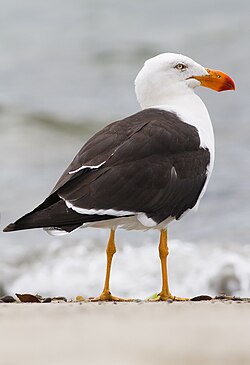
Gulls generally share a uniform body plan consisting of heavy bodies, long wings, and moderately long necks. Their legs are moderately long—longer than those of the similar terns—and feature fully webbed feet for swimming. The bill is typically heavy and slightly hooked, with larger species possessing stouter bills than smaller ones. Bill coloration varies: larger white-headed species often have yellow bills with a red spot, while smaller species may have red, dark red, or black bills.
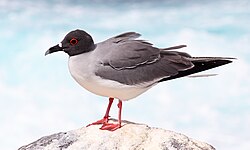
While most gulls have rounded tails, there are notable exceptions. The swallow-tailed gull and Sabine's gull possess forked tails, and Ross's gull has a wedge-shaped tail.
Diet and Adaptive Behavior
Gulls are opportunistic feeders whose diets shift based on environmental availability. Human activity, particularly overfishing, has significantly impacted these patterns. For example, yellow-legged gulls (Larus michahellis) off the coast of Spain have shifted from eating sardines to crustaceans due to fish stock depletion and the closure of open-air landfills.
Research on Berlenga Island, Portugal, showed that yellow-legged gull populations grew from 2,600 to 44,698 individuals between 1974 and 1994. These birds utilized a mix of natural prey, such as Henslow's swimming crab (Polybius henslowii), and human refuse. This ability to switch between marine and terrestrial food sources allows adults to maintain consistent chick health even when local prey is scarce.
Gulls can also exhibit aggressive feeding behaviors, such as stealing food from other birds or humans. Some species have been observed eating the eyeballs of baby seals or pilfering milk directly from the teats of elephant seals.
Breeding and Development
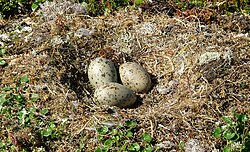
The breeding process begins with the laying of eggs, where incubation starts after the first egg is laid but does not become continuous until the second egg arrives. This timing ensures that the first two chicks hatch nearly simultaneously, with a third typically hatching a day later.
Hatching periods are relatively consistent across species, ranging from 23–25 days for the little gull to 27–28 days for the great black-backed gull. During the first one to two weeks, parents brood the chicks. While both parents provide food, the male typically handles most of the feeding in the early stages, while the female focuses on brooding and guarding.
Taxonomy and Classification
The family Laridae was first introduced as Laridia by Constantine Samuel Rafinesque in 1815. Modern taxonomy has evolved significantly; while most gulls were once placed in the genus Larus, researchers discovered this arrangement was polyphyletic (meaning the group did not share a single common ancestor). This led to the establishment of several other genera, including Ichthyaetus, Chroicocephalus, Leucophaeus, Saundersilarus, and Hydrocoloeus.
There has been ongoing debate regarding the relationship between gulls and terns. While some classifications merged them into one family, 2022 molecular phylogenetic analysis by Černý et al. clarified that noddies are basal only to other terns, not the entire group. Consequently, gulls and terns are recognized as separate monophyletic groups, though they remain subfamilies within a broad Laridae in some classifications.
Summary of Gull Diversity
| Genus | Example Species | Distinctive Feature |
|---|---|---|
| Creagrus | Swallow-tailed gull | Forked tail; endemic to Galapagos |
| Hydrocoloeus | Little gull | Smallest size (120g) |
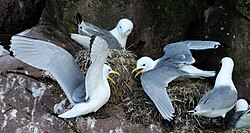
| Rissa | Black-legged kittiwake | Colonial nesting |
| Larus | Great black-backed gull | Largest size (1.75kg) |
| Xema | Sabine's gull | Forked tail |
Frequently Asked Questions
What is the difference between a gull and a tern?
While both are in the broader Laridae group, gulls generally have heavier bodies, stouter bills, and longer legs compared to the more slender terns.
How do gulls adapt to the loss of natural food sources?
Gulls are highly resilient and can shift their diet from marine prey (like sardines) to crustaceans or human-related food sources, such as landfill refuse, to survive and raise their young.
Do all gulls have rounded tails?
No. While most do, the swallow-tailed gull and Sabine's gull have forked tails, and Ross's gull has a wedge-shaped tail.
How long does it take for a gull egg to hatch?
Hatching typically occurs between 22 and 28 days, depending on the species. For example, the little gull hatches in 23–25 days, while the great black-backed gull takes 27–28 days.
Why was the genus Larus split into multiple genera?
Genetic research revealed that the original genus Larus was polyphyletic, meaning it contained species that did not share a single immediate common ancestor, necessitating the creation of genera like Ichthyaetus and Chroicocephalus.