Guerrilla Warfare: Tactics, History, and Strategic Theory
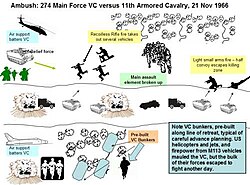
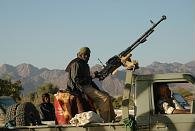
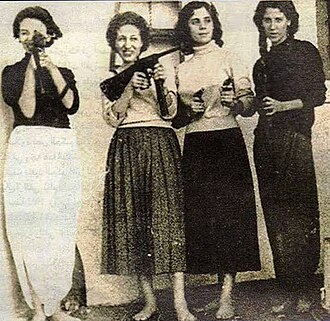
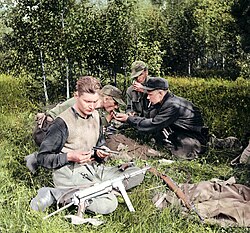
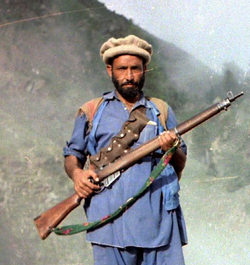
Guerrilla warfare is a form of unconventional warfare where small, irregular military groups—such as rebels, partisans, paramilitaries, or armed civilians—engage in conflict against a larger, traditional military force, police, or rival insurgents. Rather than meeting a superior enemy in a direct, head-on confrontation, guerrilla forces utilize hit-and-run tactics, ambushes, sabotage, and raids to wear down their adversary.
The primary objective of this strategy is attrition: exhausting the enemy's resources, morale, and will to fight until they are forced to withdraw. Because they typically possess inferior weaponry and fewer personnel, guerrilla groups rely heavily on the support of the local population or foreign backers for intelligence, supplies, and sanctuary.
Key Facts
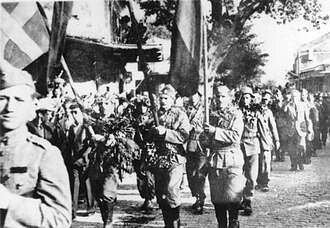
- Core Strategy: Avoids direct battles in favor of limited skirmishes and attrition.
- Combatants: Comprised of irregulars, including partisans and armed civilians.
- Tactics: Focuses on ambushes, sabotage, and rapid withdrawal.
- Dependencies: Highly reliant on civilian support or external foreign aid.
- Legal Status: Recognized as lawful combatants under the 1977 Geneva Conventions if weapons are carried openly, though feigning civilian status is prohibited.
Historical Evolution of Irregular Tactics
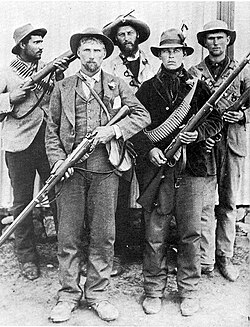
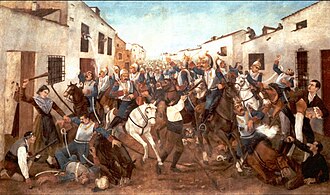
While the term "guerrilla" (meaning "little war" in Spanish) was coined during the 19th-century Peninsular War, the tactics themselves are ancient. As early as the 6th century BC, Sun Tzu advocated for guerrilla-style approaches in The Art of War. Similarly, the Roman general Quintus Fabius Maximus Verrucosus developed the "Fabian strategy," which emphasized avoiding decisive battles to wear down the enemy.
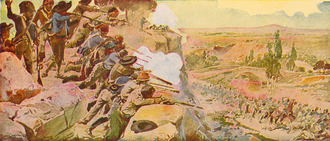
Throughout history, these methods have been adapted to various terrains and political goals:
- The Dominican Restoration War (1863–1865): Insurgents intercepted supply trains and burned towns to deny Spanish forces access to shelter and weapons.
- The Rif War (1920): Berber leader Abd el-Krim integrated tunnel warfare with modern guerrilla tactics against Spanish and French colonial forces.
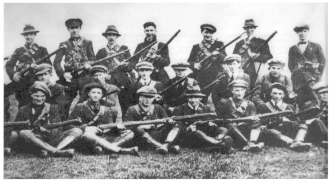
- The Irish War of Independence (1919–1921): Michael Collins pioneered urban guerrilla warfare in Dublin using small units that vanished into crowds, while Tom Barry utilized "flying columns"—larger rural units—to engage British forces in brief, intense battles.
Theoretical Frameworks of Insurgency
Maoist Thought and the Three-Phase Model
Mao Zedong developed a systematic approach to revolutionary warfare, which was later adapted by North Vietnamese leaders Ho Chi Minh and Võ Nguyên Giáp. This model typically progresses through phases of political mobilization, guerrilla warfare, and eventually, conventional warfare.
![The classic "3-phase" Maoist model as adapted by North Vietnam's Ho Chi Minh and Võ Nguyên Giáp.[38]](/images/b1/ca/b1ca497912e279ef12ea2d2fc0c3beb550b37ee95d23dddece59f36698c95533.jpg)
Foco Theory (Foquismo)
Developed by Che Guevara in the 1960s and later formalized by Régis Debray, foco theory suggests that a small, fast-moving paramilitary vanguard can create a "focus" (foco) for popular discontent. This action is intended to trigger a general insurrection against a sitting regime, moving from rural strongholds into urban centers.
Nasution's Fundamentals
In 1953, Abdul Haris Nasution published Fundamentals of Guerrilla Warfare, reflecting the doctrines of the Indonesian army. Nasution's work is unique because he had experience leading both guerrilla and counter-guerrilla operations, providing a pragmatic perspective on "people's war" without the ideological hyperbole found in other revolutionary texts.
Operational Tactics and Organization
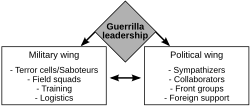
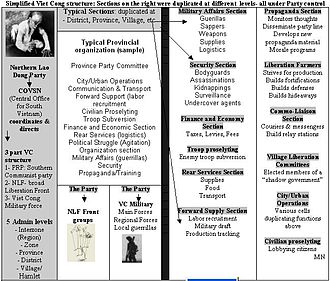
Guerrilla organizations are often structured to maximize security and flexibility. Functions such as propaganda, intelligence, and security are frequently duplicated at every level of the hierarchy to ensure the movement survives the loss of any single leader.
Common tactical applications include:
- Ambushes: Surprise attacks from concealed positions.
- Sabotage: Destroying critical infrastructure to disrupt enemy logistics.
- Intelligence Gathering: Recruiting sympathizers within the state to provide internal data.
- Withdrawal: Rapidly exiting the battlefield to avoid counter-attacks.
Counter-Guerrilla Warfare
Defeating a guerrilla force is challenging because they blend into the civilian population. Sir Robert Thompson, an expert on the Malayan Emergency, emphasized that successful counter-insurgency requires a commitment to the rule of law and better governance to alienate the guerrillas from their popular support.
However, history shows that some governments have ignored these principles, instead resorting to mass murder, torture, and genocide in an attempt to crush insurgencies through terror.
Summary of Guerrilla Warfare Characteristics
| Feature | Guerrilla Warfare | Regular Warfare |
|---|---|---|
| Force Size | Small, irregular groups | Large, organized armies |
| Primary Goal | Attrition and exhaustion | Decisive victory/territorial control |
| Tactics | Ambushes, hit-and-run | Frontal assaults, pitched battles |
| Support Base | Local population/Foreign backers | State infrastructure/Government |
| Uniforms | Often non-uniformed | Standardized uniforms |
Frequently Asked Questions
What is the difference between guerrilla warfare and terrorism?
While both use unconventional methods, guerrilla warfare is typically a strategic military effort to exhaust a larger army and achieve political goals, often involving a structured military organization and a territorial base of support.
Are guerrilla fighters protected by international law?
Under Article 44 of the 1977 First Additional Protocol to the Geneva Conventions, non-uniformed combatants are recognized as lawful if they carry their weapons openly during military operations. However, feigning civilian status (perfidy) is strictly prohibited.
What is a "flying column"?
A flying column is a mobile, rural guerrilla unit, such as those used by the IRA during the Irish War of Independence, designed to engage enemy forces in short, intense battles before quickly relocating.
How does foco theory differ from Maoist theory?
Maoist theory emphasizes a long-term process of political mobilization and gradual expansion. Foco theory suggests that a small, active vanguard can spark a revolution immediately by creating a focal point of resistance.
Why is civilian support critical for guerrillas?
Civilians provide essential logistics, including food, shelter, and intelligence. Without a supportive population, guerrilla forces are easily isolated and destroyed by the superior firepower of regular armies.