Group of Twenty (G20): Shaping Global Economic Governance
The Group of Twenty (G20) is a premier international organization established to foster global economic stability and cooperation. Formed on September 26, 1999, the G20 brings together the world's largest economies to coordinate policy and address systemic financial challenges. By integrating both industrialized and emerging economies, the group serves as a critical forum for international financial regulation and sustainable growth.
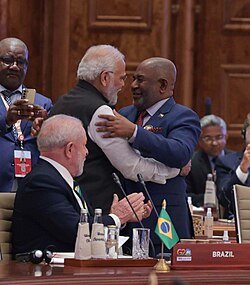
Unlike some international bodies, the G20 operates through a rotating presidency, ensuring that different regional perspectives lead the global agenda. Its membership has evolved to be more inclusive, recently incorporating regional blocs to better represent the Global South.
Key Facts
- Founded: September 26, 1999.
- Membership: 21 members, including 19 individual countries and the African Union and European Union.
- Current Chairman: Donald Trump, President of the United States.
- Purpose: International economic cooperation and financial stability.
- Structure: Rotating presidency among member states.
Membership and Organization
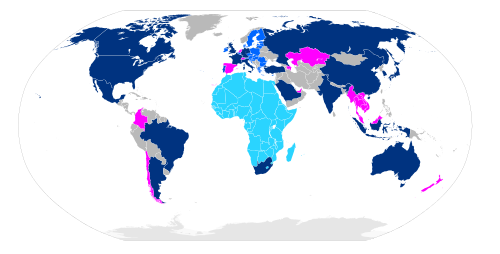
The G20 consists of 21 members. This includes 19 sovereign states and two regional organizations: the European Union (EU) and the African Union (AU). The membership is designed to cover the vast majority of global GDP and trade.
Member Nations
The individual member countries are Argentina, Australia, Brazil, Canada, China, France, Germany, India, Indonesia, Italy, Japan, Mexico, Russia, Saudi Arabia, South Africa, South Korea, Turkey, the United Kingdom, and the United States.
Governance Structure
Each member is represented by its head of state or government, a finance portfolio minister, and a central bank governor. This tripartite representation ensures that political leadership, fiscal policy, and monetary policy are all aligned during summits.
Economic Profile of Member States
The G20 represents a diverse array of economic classifications, ranging from Advanced economies (such as the US, Japan, and Germany) to Emerging economies (such as India, Brazil, and Indonesia). The group's collective influence is reflected in its massive combined Nominal GDP and Purchasing Power Parity (PPP)—a measure of GDP that adjusts for price level differences between countries.
| Member | Nominal GDP (mil. USD 2026) | Population (2026) | HDI (2023) | Classification |
|---|---|---|---|---|
| United States | 32,383,920 | 349,035,494 | 0.938 | Advanced |
| China | 20,851,593 | 1,412,914,089 | 0.797 | Emerging |
| India | 4,153,191 | 1,476,625,576 | 0.685 | Emerging |
| Japan | 4,379,253 | 122,427,731 | 0.925 | Advanced |
| European Union | 23,034,637 | 447,890,473 | 0.915 | Advanced (majority) |
| African Union | 3,555,435 | 1,583,746,277 | 0.577 | Emerging |
Summits and Chair Rotation
The G20 does not have a permanent secretariat; instead, it relies on a rotating chair. The presidency moves through different regional groups, including Latin America, Western Europe, and East/Southeast Asia. Recent and upcoming hosts include Brazil (2024) and South Africa (2025).
Permanent Guest Invitees
To ensure a comprehensive approach to global governance, the G20 regularly invites leaders from key international organizations, including:
- International Monetary Fund (IMF)
- World Bank Group (WBG)
- World Trade Organization (WTO)
- United Nations (UN)
- World Health Organization (WHO)
- International Labour Organization (ILO)
- Organisation for Economic Co-operation and Development (OECD)
Frequently Asked Questions
What is the primary purpose of the G20?
The G20 serves as the premier forum for international economic cooperation, focusing on financial stability, sustainable growth, and the coordination of global economic policy.
Who are the current members of the G20?
The G20 consists of 19 countries (Argentina, Australia, Brazil, Canada, China, France, Germany, India, Indonesia, Italy, Japan, Mexico, Russia, Saudi Arabia, South Africa, South Korea, Turkey, UK, and USA) plus the European Union and the African Union.
How is the G20 leadership decided?
The leadership is managed through a rotating presidency. Member countries take turns hosting the annual summit and setting the agenda for the year.
Does the G20 have a permanent headquarters?
No, the G20 does not have a permanent secretariat. It operates through the rotating presidency of its member states.
Which international organizations are regularly invited to G20 meetings?
Permanent invitees include the heads of the IMF, World Bank, WTO, UN, WHO, ILO, and OECD, ensuring that technical and humanitarian expertise informs economic decisions.