Ground Stations: The Essential Links for Space Communication
Communication between Earth and the vastness of space requires a sophisticated infrastructure known as a ground station (also referred to as an Earth station or Earth terminal). These terrestrial radio stations serve as the critical ground segment of a spacecraft system, enabling humans to send commands to distant probes and receive vital data from the cosmos.
Whether they are receiving signals from a deep-space probe or tracking a low-Earth orbit satellite, ground stations act as the bridge between planetary operations and extraplanetary exploration. They are also utilized for the reception of radio waves from astronomical radio sources, expanding our understanding of the universe.
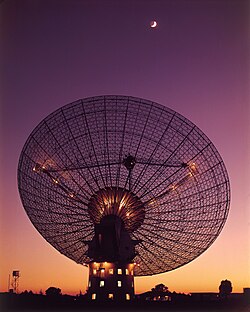
How Ground Stations Communicate
To establish a telecommunications link, ground stations transmit and receive waves across specific frequency bands. Most stations utilize the Super High Frequency (SHF) or Extremely High Frequency (EHF) bands, which typically involve microwaves. In more advanced setups, Optical Ground Stations (OGS) are used for laser communication, utilizing optical bands instead of radio waves.
The primary hardware component used to focus these signals is the parabolic antenna, a dish-shaped device designed to concentrate radio waves into a narrow beam for precise targeting of spacecraft.
Types and Classifications of Earth Stations
Ground stations are not one-size-fits-all; they are categorized based on their mobility, purpose, and the targets they track.
Stationary vs. Mobile Stations
Depending on their operational needs, ground stations may have a fixed position or be itinerant (mobile). The International Telecommunication Union (ITU) Radio Regulations, specifically Article 1 § III, define the various types of stationary and mobile ground stations and how they interact.
Specialized Roles
- Satellite Earth Stations: These are primarily used to communicate with communications satellites.
- Space Tracking Stations: Also known as ground tracking stations, these focus on receiving telemetry data (remote measurements and status reports) or following space missions and satellites that are not in geostationary orbit.
- General Spacecraft Stations: These facilitate communication with either crewed space stations or uncrewed space probes.
The Concept of Line of Sight and Visibility
For a ground station to communicate with a spacecraft, it must have a clear line of sight. When this condition is met, the station is said to have a "view" of the spacecraft, an event often referred to as a pass.
Communication is not limited to a single point of contact. A spacecraft can communicate with multiple ground stations simultaneously. When two different ground stations share an unobstructed, simultaneous line-of-sight contact with the same spacecraft, they are said to have the spacecraft in mutual view.
Key Facts
- Ground stations can be located on the Earth's surface or within its atmosphere.
- They use SHF, EHF (microwaves), or optical bands (lasers) for data transmission.
- The parabolic antenna is the central device for signal transmission and reception.
- Tracking stations are specifically used for non-geostationary satellites and telemetry.
- The ITU provides the international regulatory framework for stationary and mobile stations.
| Station Type | Primary Frequency/Band | Primary Purpose |
|---|---|---|
| Standard Ground Station | SHF / EHF (Microwaves) | General spacecraft telecommunication |
| Optical Ground Station (OGS) | Optical Bands (Lasers) | High-speed laser communication |
| Tracking Station | Radio Waves | Telemetry and non-geostationary tracking |
Frequently Asked Questions
What is the difference between a ground station and an Optical Ground Station?
A standard ground station uses radio waves in the SHF or EHF bands (microwaves), whereas an Optical Ground Station (OGS) uses optical bands for laser-based communication.
What is a "pass" in the context of space communication?
A pass occurs when a spacecraft or satellite moves into the line of sight of a ground station, allowing the station to have a "view" and establish a communication link.
What is telemetry data?
Telemetry data consists of measurements and information transmitted from a spacecraft back to a ground tracking station to monitor the mission's status and health.
Can a spacecraft talk to more than one ground station at once?
Yes, a spacecraft can communicate with multiple stations simultaneously. If two stations see the spacecraft at the same time, it is called mutual view.
Who regulates the types of ground stations used globally?
The International Telecommunication Union (ITU) defines the types and interrelationships of stationary and mobile ground stations through its Radio Regulations.