Grit Magazine: The Rise of a Rural American Publication
The story of Grit is a classic tale of American entrepreneurship and resilience. What began as a modest Saturday supplement in a small Pennsylvania town evolved into a powerhouse of rural media, driven by the vision of a German immigrant who believed in the power of positivity and human interest.
The Early Life of Dietrick Lamade
The trajectory of Grit was shaped by the life experiences of Dietrick Lamade. Born on February 6, 1859, in Gölshausen, Baden-Württemberg, Southern Germany, Lamade was one of nine children. His family emigrated to Williamsport, Pennsylvania, in 1867. Tragedy struck in 1869 when his father, Johannes, died of typhoid fever, forcing Dietrick and his siblings to leave school to support the household.
Lamade's career in printing began at the age of ten, working as an errand boy for a German-language weekly called Beobachter (meaning Observer), where he earned $3 per week. By age 18, he had ventured into independent printing, producing theater programs and a four-page advertising brochure known as the Merchants' Free Press. His experience grew further in 1880 when he produced Camp News for the Pennsylvania National Guard.
The Birth and Growth of Grit
In 1882, Lamade joined the Daily Sun and Banner as an ad compositor and assistant composing room foreman. During this time, he typeset the publication's Saturday edition, which was titled Grit. After a brief and unsuccessful attempt to launch a daily version of the Times, Lamade found himself unemployed with two children. In 1885, at age 25, he partnered with two associates to purchase the equipment of the Times along with the name and goodwill of Grit for $1,000.
Starting in a single third-floor room, Lamade's business grew rapidly. Within the first year, he established a circulation of 4,000. By 1886, the operation moved to a storefront, and by 1887, weekly circulation had surged to 20,000.
Technological and Creative Expansion
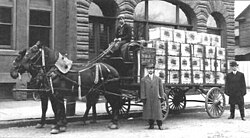
As the publication expanded, so did its infrastructure. In 1892, the offices received a wagon delivery of Remington typewriters to keep up with demand. The publication also became a breeding ground for talent; in 1894, a 16-year-old named C. W. Kahles worked in the art department. Kahles would later achieve fame as the creator of the long-running comic strip Hairbreadth Harry.
Editorial Philosophy and Market Success
Grit found its niche by targeting rural America. Lamade implemented a strict editorial policy designed to uplift its readership. During an employee banquet, he outlined a vision to avoid pessimism, fear, and discontent, instead focusing on peace, goodwill, and providing readers with the courage and strength needed for their daily tasks.
To reach a wider audience, Lamade introduced innovative distribution methods, including direct mail and national newsboy delivery. He diversified the content to include a mix of news, human interest stories, puzzles, and serial fiction in the "Grit Story Section." He also leaned heavily into comic strips, which sometimes occupied up to ten pages of the publication.
This strategy proved immensely successful. By 1900, weekly circulation reached 100,000, and by 1916, it had climbed to 300,000.
Key Facts
- Founder: Dietrick Lamade, a German immigrant.
- Founded: 1882 (as a supplement); purchased as an independent entity in 1885.
- Purchase Price: $1,000 for the name and equipment.
- Circulation Growth: From 4,000 in the first year to 300,000 by 1916.
- Core Audience: Rural America.
- Notable Alumnus: C. W. Kahles, creator of Hairbreadth Harry.
| Year | Weekly Circulation | Key Milestone |
|---|---|---|
| 1885 | 4,000 | First year as independent publication |
| 1887 | 20,000 | Move to storefront location |
| 1900 | 100,000 | Focus on rural American demographics |
| 1916 | 300,000 | Expansion of newsboy and direct mail delivery |
Frequently Asked Questions
Who was Dietrick Lamade?
Dietrick Lamade was a German immigrant and entrepreneur who purchased the Grit name in 1885 and grew it from a small local supplement into a major national publication for rural America.
What was the editorial goal of Grit?
The publication aimed to be a source of positivity and strength. Lamade's policy was to avoid pessimism and discontent, instead promoting happy thoughts, cheer, and goodwill toward others.
How did Grit distribute its papers to reach more people?
Lamade utilized innovative distribution methods for the time, specifically national newsboy delivery and direct mail services.
What kind of content was featured in Grit?
Grit combined news and human interest articles with puzzles, serial fiction in the "Grit Story Section," and extensive comic strips.
What was the significance of C. W. Kahles to Grit?
C. W. Kahles started in Grit's art department at age 16 in 1894 and later became famous for creating the comic strip Hairbreadth Harry.