Greenwich Mean Time: The History and Science of the World's Prime Meridian
For centuries, the concept of a unified global time has been essential for navigation, science, and international coordination. At the heart of this system lies Greenwich Mean Time (GMT), the local mean time at the Royal Observatory in Greenwich, London. While often used interchangeably with modern time standards, GMT carries a rich history involving maritime exploration, astronomical precision, and the evolution of how humanity measures the rotation of the Earth.
Defining Greenwich Mean Time
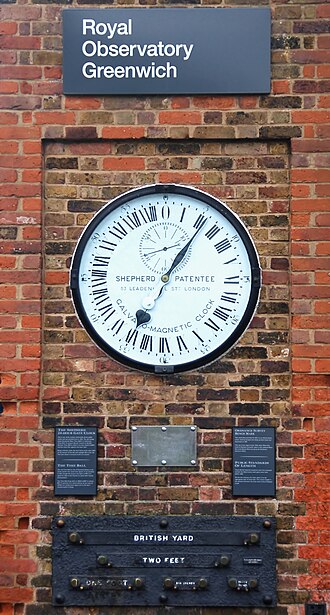
Greenwich Mean Time is defined as the local mean time at the Royal Observatory, calculated from midnight. The term "mean" is critical here; it refers to the arithmetic mean (an annual average) of the moment the Sun crosses the Greenwich Meridian. Because of the Earth's axial tilt and its elliptical orbit, the Sun does not cross the meridian at exactly 12:00:00 GMT every day. This discrepancy, known as the equation of time, can cause the actual solar noon to occur up to 16 minutes before or after the GMT noon.
Historically, there was a distinction between how astronomers and the general public viewed the start of a day. Astronomers often considered a day to begin at noon, whereas the civil convention—dating back to the Roman Empire—starts at midnight. To resolve this ambiguity, the term Universal Time (UT) was introduced in 1928 to denote GMT as counted from midnight.
The Evolution from Solar Time to Atomic Precision
The transition from observing the stars to using high-precision technology has fundamentally changed how we define time. In the past, GMT was tied to the Earth's rotation. However, because the Earth's rotation is irregular and gradually slowing, it is not a perfectly stable timebase. This led to the development of Coordinated Universal Time (UTC), which is maintained by an ensemble of highly accurate atomic clocks around the world.
While GMT is often used as a synonym for UTC in casual English, they are not identical in scientific contexts. For navigation, GMT is considered equivalent to UT1 (the modern form of mean solar time at 0° longitude), but it can differ from UTC by up to 0.9 seconds. Therefore, GMT should not be used for tasks requiring extreme precision.
Key Facts
- Definition: GMT is the local mean time at the Royal Observatory in Greenwich, London.
- UTC Offset: GMT is equivalent to the UTC+00:00 time zone.
- Legal Status: In the United Kingdom, GMT is the basis for civil time under the Interpretation Act 1978.
- Scientific Distinction: GMT is an average of solar time, whereas UTC is based on stable atomic clocks.
- Historical Use: British mariners used GMT on chronometers to calculate longitude at sea.
A Maritime and Legal Legacy
The global dominance of Greenwich as a time standard began with the rise of the United Kingdom as a maritime power. British sailors used marine chronometers set to GMT to determine their longitude. This practice, combined with the methods of Nevil Maskelyne regarding lunar distances, established Greenwich as a worldwide standard. By the 1884 International Meridian Conference, the Greenwich meridian was adopted as 0° longitude.
The adoption of "railway time" in Great Britain followed in the mid-19th century, as railway companies synchronized their schedules using GMT. Eventually, GMT became legally recognized throughout Great Britain in 1880, followed by Ireland in 1916 and other territories like the Isle of Man and the Channel Islands.

Global Time Zone Distribution
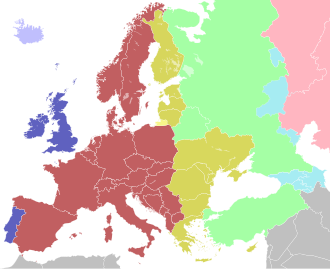
Today, many countries use GMT as their standard time or define their local time in relation to it. For example, several West African nations, such as Ghana and Senegal, use UTC+00:00 as their standard time all year round. In contrast, the United Kingdom and Ireland use GMT in the winter but shift to British Summer Time (BST) or "Standard Time" (UTC+01:00) during the summer months.
| Standard/Term | Common Usage | Primary Basis |
|---|---|---|
| GMT | Civil time in UK/Ireland (Winter) | Mean solar time at Greenwich |
| UTC | Global scientific/civil standard | Atomic clocks |
| BST | UK Summer time (UTC+1) | Daylight saving shift |
| UT1 | Navigation/Astronomy | Earth's rotation (Mean solar time) |
![Time in Africa: Light Blue Cape Verde Time[a] (UTC−1) Blue Greenwich Mean Time (UTC) Red Central European TimeWest Africa Time (UTC+1)[b] Yellow Central Africa TimeEastern European TimeSouth African Standard Time (UTC+2) Ochre Egypt Standard Time (UTC+2) Egypt Summer Time (UTC+3) Green East Africa Time (UTC+3) Turquoise Mauritius Time[d]Seychelles Time[d] (UTC+4) a The islands of Cape Verde lie west of the African mainland. b In September 2026, Morocco will switch permanently to Greenwich Mean Time. d Mauritius and the Seychelles lie to the east and northeast of Madagascar, respectively.](/images/23/7f/237f2054e4b913e77b34e8c640379fc2fbb2ccdd72fda11d41022f61e56d55fd.webp)
Frequently Asked Questions
Is GMT the same as UTC?
In everyday conversation, they are often used as synonyms. However, scientifically, UTC is a more precise standard based on atomic clocks, while GMT is a solar-based time. They can differ by nearly a second.
Why is it called "Mean" time?
It is called "mean" time because it represents the arithmetic average of solar time throughout the year, accounting for the fact that the Sun's position relative to the meridian varies daily.
Does the Prime Meridian still pass through the Royal Observatory?
While the historic meridian is located in the Observatory's courtyard, the modern "IERS Reference Meridian" is a statistical solution used by international bodies. The physical line in the courtyard differs from the modern mathematical prime meridian by only a few meters.
How did sailors use GMT to find their location?
By keeping a chronometer set to GMT, mariners could compare the time at Greenwich to their local solar noon. The difference between these two times allowed them to calculate their longitude.
What are the "six pips"?
The "six pips" are the Greenwich Time Signal broadcast by the BBC. While named after the original signal from the Royal Greenwich Observatory, the modern signal is calibrated to UTC.