Greater London Railway Network
The railway infrastructure of Greater London is a complex, integrated system designed to move millions of passengers across the capital and its surrounding suburbs. The network comprises 368 railway stations situated within the London fare zones. While most stations are located within Greater London, the zoning system extends into neighboring counties; for instance, Chigwell in Essex falls within zones 4–6, and stations like Amersham and Shenfield are located in zones 6–9. Conversely, some nearby locations such as Esher and Staines remain outside the zoning system entirely.
To simplify travel, London utilizes an integrated ticketing system. Passengers can use the Travelcard, Oyster card, or contactless payments across various modes of transport, including buses, the Docklands Light Railway (DLR), suburban rail, trams, the London Underground, and the London Overground.
Unlike other major global cities such as Paris, Sydney, or Liverpool, London's suburban rail is managed by several different operators. However, all these services are part of the National Rail system, ensuring ticketing remains seamless. While some operators hold government contracts and others, like Southeastern, are state-owned, Transport for London (TfL) aims to eventually bring more of these suburban lines under its direct control. This strategy focuses on lines terminating near the Greater London boundary, with a priority on south and south-east London to increase service frequency and homogenize patterns.
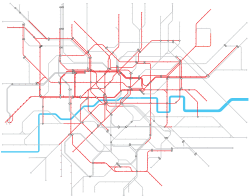
Key Facts
- Total Stations: 368 stations are located within the London fare zones.
- Ticketing: Fully integrated via Oyster, contactless, and Travelcards.
- Busiest Hubs: London Waterloo is the busiest station by passenger volume, while Clapham Junction is the busiest by trains per hour.
- Service Frequency: Most stations are served at least every 20 minutes, with many routes offering six or more trains per hour.
- Governance: A mix of state-owned, contracted, and TfL-managed services.
Major Rail Operators and Services
Elizabeth line
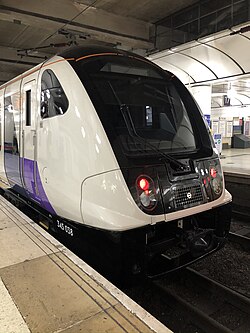
The Elizabeth line began as TfL Rail, operating on existing tracks between Liverpool Street and Shenfield, and Paddington to Heathrow Terminal 4, replacing previous services by Greater Anglia and Great Western Railway. Following the opening of the central tunnel, it was rebranded as the Elizabeth line, providing a high-capacity link from Heathrow and Paddington through central London to Liverpool Street and Shenfield.
London Overground
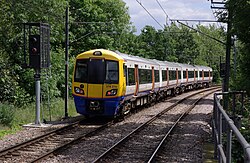
Operated by First Rail London under a TfL concession, the London Overground consists of the Lioness, Mildmay, Windrush, Weaver, Liberty, and Suffragette lines. It is one of only three National Rail services featured on the London Underground map, alongside the Elizabeth line and Thameslink. Service frequency is at least every 30 minutes, though the Windrush line between Dalston Junction and Surrey Quays sees up to 16 trains per hour in each direction.
South Western Railway (SWR)
Operating out of London Waterloo via Clapham Junction, SWR manages the busiest network in the UK. Its suburban reach extends to Windsor, Reading, Alton, Guildford, and Dorking. Most suburban stations see at least four trains per hour, with high-frequency hubs like Vauxhall receiving 26 trains per hour. SWR also provides long-distance services to the South Coast and manages the 8.5-mile Island Line on the Isle of Wight.
Southeastern and Southern
Southeastern covers a vast 741 km network in south-east London, Kent, and East Sussex, utilizing termini such as Charing Cross, Victoria, and London Bridge. Most of its stations enjoy a frequency of 4–6 trains per hour. Southern operates similarly in South London and the South Coast, managing 167 stations. Its services from London Victoria and London Bridge generally run at least every 30 minutes during the work week.
Thameslink and Great Northern
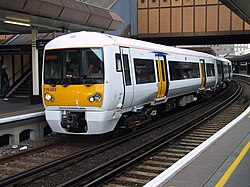
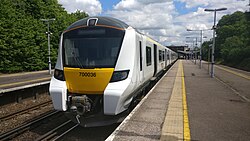
This network connects Brighton to Bedford and central London to Norfolk. Great Northern operates from King's Cross and Moorgate, serving suburbs like Alexandra Palace and Enfield Chase. Thameslink, which completed a major upgrade in 2020, links Luton Airport, St Pancras, Gatwick Airport, and London Blackfriars. Central London stations on this route are served every 15 minutes for each service.
Greater Anglia and c2c
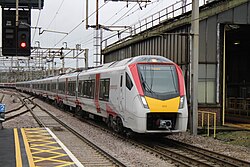
Greater Anglia runs services from Liverpool Street to destinations including Ipswich, Clacton-on-Sea, and Braintree, as well as the Stansted Express to Stansted Airport. Meanwhile, c2c operates from London Fenchurch Street through east London to Southend Central and Shoeburyness, serving eight stations within Greater London.
Great Western Railway (GWR) and London Northwestern Railway
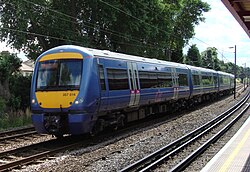
GWR operates from Paddington to the west London suburbs, including Ealing Broadway and Slough, as well as long-distance routes to South Wales and Western England. London Northwestern Railway (under West Midlands Trains) operates semi-fast services from London Euston to Tring, Milton Keynes Central, and Birmingham New Street. By the end of 2025, Class 730 electric trains are expected to be deployed across the entire LNR network.
Chiltern Railways
Operating from Marylebone, Chiltern Railways serves Aylesbury, Oxford, and High Wycombe. It includes Sudbury & Harrow Road, the city's least used station. There is a proposal for a "Chiltern Metro Service" between Marylebone and West Ruislip, which would increase frequency to 4+ trains per hour and require new passing loops and reversing facilities.
Network Summary Table
| Operator | Primary London Termini | Key Destinations/Areas | Notable Feature |
|---|---|---|---|
| Elizabeth line | Paddington, Liverpool Street | Heathrow, Shenfield | High-capacity central tunnel |
| South Western Railway | London Waterloo | Windsor, Reading, Guildford | Busiest UK network |
| London Overground | Various (Orbital) | Dalston, Surrey Quays | TfL concession |
| Thameslink | St Pancras, Blackfriars, London Bridge | Bedford, Brighton, Gatwick | North-South cross-city link |
| Southeastern | Victoria, Charing Cross, Cannon St | Kent, East Sussex | Extensive SE London coverage |
| Greater Anglia | Liverpool Street | Ipswich, Stansted Airport | Great Eastern Main Line |
Frequently Asked Questions
How does the London fare zone system work?
The system divides the city and surrounding areas into concentric zones. While most are within Greater London, some stations in Essex (like Chigwell) or Buckinghamshire (like Amersham) are included in the zones to integrate suburban travel with the city center.
Which is the busiest railway station in London?
London Waterloo is the busiest station in terms of total passenger numbers, while Clapham Junction is the busiest in terms of the number of trains passing through per hour.
Can I use one ticket for different rail operators in London?
Yes. Although multiple companies operate the suburban lines, they are all part of the National Rail system and integrated into a single ticketing framework via Oyster, contactless, or Travelcards.
What is the Elizabeth line's relationship with GWR and Greater Anglia?
The Elizabeth line took over several pre-existing routes previously operated by Greater Anglia (Liverpool Street to Shenfield) and Great Western Railway (Paddington to Hayes and Harlington) before integrating them into its central tunnel system.
What are the plans for the Chiltern Metro Service?
The proposal involves a high-frequency service (4+ trains per hour) between Marylebone and West Ruislip, which would require the installation of passing loops at Wembley Stadium and Sudbury Hill Harrow, as well as a reversing facility at West Ruislip.