Götaland: The Historical Heart and Southern Lands of Sweden
Götaland is one of the three traditional lands of Sweden, representing a vast and culturally rich region in the country's south. Comprising ten distinct provinces, this area is defined by a complex history of petty kingdoms, shifting borders, and the gradual political unification that eventually formed the modern Swedish state. From the deep forests of Småland to the fertile plains of Scania, Götaland offers a diverse landscape that has shaped Scandinavian history for centuries.
![Historical coat of arms of Götaland[4][5][clarification needed]](/images/d1/04/d104a783341dd0007bd7139cbefb13453411c88c7ea87915137206e37f691712.webp)
Key Facts
- Total Area: 97,841 km²
- Population: Approximately 4,995,764 (as of December 2021)
- Core Provinces: Västergötland and Östergötland
- Geographic Boundary: Separated from Svealand by the forests of Tiveden, Tylöskog, and Kolmården
- Major Waterways: Home to Lake Vänern and the Göta Älv river
The Legacy of the Geats
The origins of Götaland are deeply intertwined with the Gautar, or Geats, a people mentioned in various historical and literary contexts. In Old Norse, the inhabitants were known as Gautar, a term that primarily referred to the population of the western region, modern-day Västergötland. These people are famously linked to the Gēatas mentioned in the Anglo-Saxon epic Beowulf.
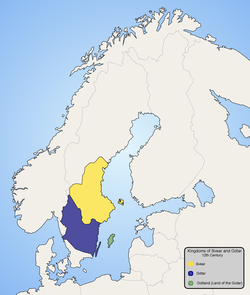
Etymologically, the name Götaland likely serves as a plural construction meaning "lands of the Geats." While the term originally focused on the heartlands of Västergötland and Östergötland, it was later extended to include adjoining districts. Historical records, such as the 1384 will of Bo Jonsson Grip, suggest that Götaland was viewed as a distinct entity alongside Svealand (Sweden) and Österland (Finland) during the late Middle Ages.
Historical Evolution and Unification
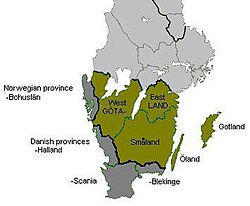
The formation of modern Sweden was a centuries-long process of political intertwining between the provinces of Götaland and Svealand. During the Middle Ages, much of what we now call Götaland was not part of Sweden; some areas were under Danish or Norwegian control. For example, the province of Bohuslän only became Swedish in the 17th century after being taken from Norway.
The borders of the region shifted significantly through various treaties and conflicts:
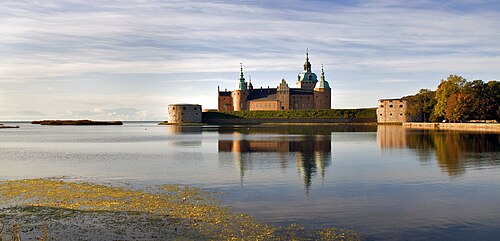
- The Kalmar Union: In 1397, the historic town of Kalmar became the site where the personal union of Sweden, Denmark, and Norway was proclaimed.
- Treaty of Roskilde (1658): This landmark treaty saw Denmark-Norway cede the provinces of Blekinge, Halland, Scania, and Bohuslän to Sweden, all of which are now considered part of Götaland.
- Gotland: The status of the Baltic island of Gotland varied throughout the Middle Ages, shifting allegiance between Swedes and Danes before eventually being counted as part of Götaland.
Geography and Modern Provinces
Today, Götaland serves as a cultural and historical designation rather than an administrative one. While Sweden is officially divided into counties (Län), Götaland is recognized through its ten historical provinces. The geography of the region is highly varied, ranging from the agricultural abundance of Scania to the dense, deep forests of Småland.
Regional Overview
| Feature | Details |
|---|---|
| Total Area | 97,841 km² |
| Population Density | 51.060/km² |
| Major Lakes | Lake Vänern (3rd largest in Europe) |
| Key Coastal Features | Archipelagoes and sandy beaches |
| Time Zone | UTC+1 (CET) / UTC+2 (CEST) |
The Ten Provinces
The region is composed of the following provinces, which roughly correspond to modern administrative counties:
- Blekinge
- Gotland
- Halland
- Jönköping
- Kalmar
- Kronoberg
- Östergötland
- Scania
- Västra Götaland
- Dalsland (and Småland)
Frequently Asked Questions
Is Götaland an official administrative region?
No, Götaland has no official administrative function in modern Sweden. It is considered one of the three historical lands, but administrative duties are handled by counties (Län).
What is the connection between the Geats and Beowulf?
The Geats (Gēatas) mentioned in the epic poem Beowulf are widely believed to be the same people as the Gautar (Geats) of Götaland.
Which provinces were added to Sweden from Denmark?
Following the Treaty of Roskilde in 1658, the provinces of Blekinge, Halland, and Scania were ceded by Denmark to Sweden.
Does Götaland include the island of Gotland?
Yes, although Gotland's historical links to Svealand are sometimes debated, it is officially counted as part of Götaland.
What defines the northern border of Götaland?
The border with Svealand is marked by the deep forests of Tiveden, Tylöskog, and Kolmården.