Goddard Space Flight Center: NASA's Premier Hub for Space Science and Exploration
Located just 6.5 miles northeast of Washington, D.C., in Greenbelt, Maryland, the Goddard Space Flight Center (GSFC) stands as a cornerstone of American space exploration. Established on May 1, 1959, as NASA's very first space flight center, it has evolved into the largest combined organization of scientists and engineers in the United States dedicated to studying the Earth, the Solar System, and the vast mysteries of the universe.
Named after the pioneering American rocket propulsion scientist Robert H. Goddard, the center serves as a major laboratory for the development, manufacturing, and operation of uncrewed scientific spacecraft. From the earliest days of satellite technology to the cutting-edge observatories of the modern era, Goddard has been at the forefront of pushing the boundaries of human knowledge.
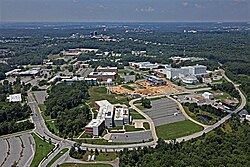
Key Facts
- Established: May 1, 1959
- Headquarters: Greenbelt, Maryland, USA
- Workforce: Approximately 10,000 civil servants and contractors
- Primary Focus: Uncrewed scientific spacecraft and space research
- Notable Achievement: Home to the 2006 Nobel Prize winner in Physics, John C. Mather
A Legacy of Innovation and History
The history of GSFC is deeply intertwined with the evolution of American spaceflight. The center's original 157 employees transferred from the U.S. Navy's Project Vanguard missile program. While Goddard played a significant role in the early days of Project Mercury—America's first human spaceflight program—the scope of crewed missions eventually led to the establishment of the Manned Spacecraft Center (now Johnson Space Center) in Texas.
Despite the shift in crewed mission management, Goddard remained vital to human spaceflight by providing critical computer support and radar tracking through the Spacecraft Tracking and Data Acquisition Network (STDN).
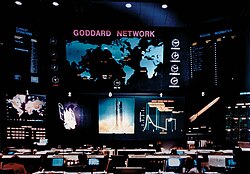
Goddard's true specialty lies in modular spacecraft design. This engineering approach allows for cost-effective development and the ability to repair satellites while they are in orbit. This was famously demonstrated by the repair of the Solar Max satellite in 1984 and the ongoing success of the Hubble Space Telescope, which has been extended through multiple servicing missions thanks to its modular architecture.
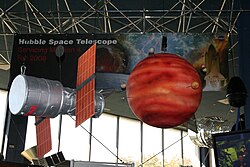
Scientific Missions: Past, Present, and Future
Goddard's mission portfolio is vast, spanning decades of scientific discovery. The center has been involved in designing and operating spacecraft since the launch of Explorer 1, the nation's first artificial satellite.
Historical Milestones
Significant past missions include the Landsat series, which has monitored Earth's resources since 1972, and TIROS-1, the first successful weather satellite launched in 1960. Other notable contributions include the Compton Gamma Ray Observatory and the Cosmic Background Explorer (COBE), the latter of which provided essential data regarding the early universe.
Modern Observatories and Exploration
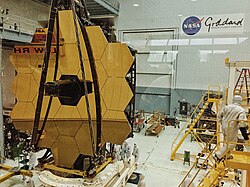
Today, Goddard operates some of the most advanced scientific tools in existence. The Hubble Space Telescope continues to revolutionize astronomy, while the James Webb Space Telescope (JWST), launched in 2022, allows scientists to observe the formation of the first stars and galaxies.
Other active missions include:
- WMAP: Studying the structure and evolution of the universe.
- SOHO and SDO: Monitoring the Sun and its influence on Earth.
- Lunar Reconnaissance Orbiter (LRO): Mapping the Moon's topography.
- OSIRIS-REx: A mission that successfully returned a sample from asteroid Bennu in 2023.
Advanced Facilities and Infrastructure
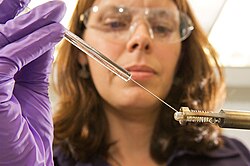
To support such complex missions, Goddard maintains world-class testing and manufacturing facilities. The High Bay Cleanroom in Building 29 is the largest ISO 7 cleanroom in the world, providing 1.3 million cubic feet of controlled space for spacecraft assembly.
Other specialized facilities include:
- Vacuum Chambers: Capable of extreme temperature fluctuations between ± 200 °C.
- High Capacity Centrifuge: Capable of generating 30 G of force.
- Near Space Operations Control Center (NSOCC): A renovated hub that provides critical mission support for SpaceX Crew & Cargo, JWST, and international partners like JAXA and ESA.
Spinoff Technologies: From Space to Earth
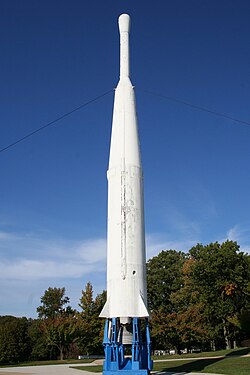
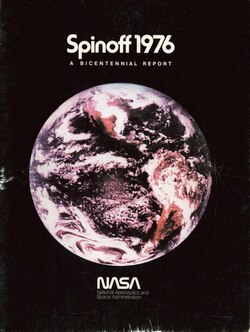
NASA's mandate includes the utilization of space technology to benefit the U.S. economy and improve quality of life. Through the Technology Utilization Program, Goddard ensures that scientific breakthroughs are commercialized for terrestrial use. Since 1976, NASA has documented these advancements in annual "Spinoff" reports, showcasing how space research translates into everyday technology.
Summary of Goddard Space Flight Center
| Category | Details |
|---|---|
| Primary Mission | Uncrewed scientific spacecraft development and operation |
| Key Facilities | High Bay Cleanroom, NSOCC, Testing Chambers |
| Major Child Agencies | Wallops Flight Facility, Goddard Institute for Space Studies |
| Notable Missions | Hubble, JWST, Landsat, OSIRIS-REx |
Frequently Asked Questions
What is the main purpose of the Goddard Space Flight Center?
GSFC is a major NASA research laboratory focused on increasing knowledge of the Earth, the Solar System, and the universe through the development and operation of uncrewed scientific spacecraft.
Does Goddard handle crewed spaceflight missions?
While Goddard was involved in the early stages of Project Mercury, its primary focus is on uncrewed scientific research. However, it provides critical support for human spaceflight through its tracking networks and operations centers.
What are "spinoff technologies"?
Spinoff technologies are innovations originally developed for space exploration that are later adapted and commercialized for use on Earth to improve the economy and quality of life.
Can the public visit the Goddard Space Flight Center?
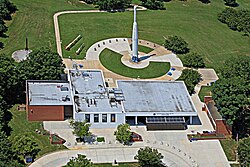
The Goddard Visitor Center has historically been open to the public, featuring spacecraft displays and deep space imagery. However, NASA has announced plans to close the visitor center on October 1, 2025.
What is the role of the Wallops Flight Facility?
The Wallops Flight Facility is an external facility operated by Goddard that manages NASA's sounding rocket program and supports approximately 35 missions annually.