Glasgow University Student Television: A History of the World's Oldest Student-Run Station
In the landscape of student media, few institutions carry as much historical weight as Glasgow University Student Television (GUST). Established in the mid-1960s, GUST holds a unique place in broadcasting history as the first student television station founded in the United Kingdom and the oldest student television station in Europe. Most significantly, it is recognized as the oldest student-run television station in the world.
Key Facts
- Founded: 1964.
- Global Status: Oldest student-run television station in the world.
- Infrastructure: Operates out of a dedicated studio in the basement of Southpark House.
- Industry Impact: Founding member of the National Student Television Association (NaSTA).
- Notable Alumni: Steven Moffat and Andrew Neil.
The Founding and Early Infrastructure
While the University of Glasgow's Television Service began operating in 1963, GUST was officially founded in 1964. Although the acronym "GUST" only became common usage in the 1970s, the organization's impact was immediate. Unlike earlier student-focused stations in the United States, which were managed by staff, GUST was designed from the ground up to be operated by the students themselves.
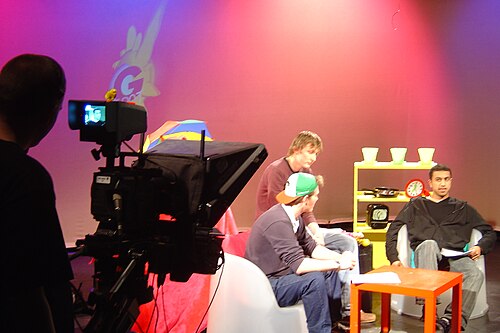
Between 1966 and 1968, the university constructed a television studio in the basement of Southpark House. Originally intended to support teaching facilities, the space was envisioned as a hub for a student-operated service. This facility marked the official beginning of GUST as a broadcasting station and continues to serve as the site for their weekly studio productions today.
The Golden Era of Cable Broadcasting (1960s–1990s)
During its early decades, GUST established a strong presence on campus through a weekly live program called "Lunchtime Friday." Airing every Friday during term time at 12:10 pm and repeated at 1:10 pm, the hour-long show reached every building on campus via the university's cable network.
This network was rented from British Relay, meaning GUST was broadcasting on the largest cable network in Europe at the time. By 1985, the University of Glasgow purchased this network from British Relay for the nominal sum of £1. The earliest surviving footage from around 1970 showcases the station's early creative spirit, featuring live band performances and comedy sketches.
Growth and Recognition
GUST played a pivotal role in the wider student media community as a founding member of the National Student Television Association (NaSTA), contributing to the establishment of the first NaSTA awards ceremony in 1973. The station also served as a training ground for future media professionals, including renowned figures such as Andrew Neil and Steven Moffat.
Technological milestones continued through the late 20th century. GUST transitioned to colour broadcasts in 1979 and achieved a viewership peak in 1980 following an interview with the band Def Leppard. By the early 2000s, the station's quality was recognized by the BBC, leading to a feature on a student television theme night on BBC Choice.
GUST in the Modern Era
Today, GUST has evolved from a cable-only service to a multi-platform media outlet. Since 2005, the station has broadcast its programming via its official website, gust.tv, while continuing to display content on screens across the university campus.
The station remains deeply integrated into student life, providing comprehensive coverage of Freshers' Week. This includes events hosted by the Glasgow University Union, the Students' Representative Council, the Queen Margaret Union, and the Glasgow University Sports Association. A highlight of their annual calendar is the Freshers' Guide, which is streamed during the official Freshers' Address on the Monday of the first week.
In 2014, the Southpark House studio underwent a significant upgrade to full High Definition (HD). This allows GUST to produce a diverse array of modern content, including documentaries on mental health and cosplay, as well as musician interviews. Recent series include Experimental Shorts, Creative Conflict, Surround Sound Live, and Miscellanea.
| Year/Period | Milestone |
|---|---|
| 1964 | GUST founded; oldest student-run station globally. |
| 1966–1968 | Construction of Southpark House basement studio. |
| 1973 | Co-founded NaSTA and its first awards ceremony. |
| 1979 | Introduction of colour broadcasts. |
| 1985 | University purchases cable network from British Relay for £1. |
| 2000 | Featured on BBC Choice student television night. |
| 2005 | Launch of gust.tv website. |
| 2014 | Studio upgraded to full HD. |
Frequently Asked Questions
What makes GUST unique compared to other student stations?
GUST is the oldest student-run television station in the world, distinguishing it from other early stations that were managed by university staff rather than students.
Where is GUST's studio located?
The studio is located in the basement of Southpark House at the University of Glasgow, where it has been situated since the late 1960s.
Who are some of the famous people who were part of GUST?
Notable former members include journalist Andrew Neil and writer/producer Steven Moffat.
How can people watch GUST content today?
Programming is available on television screens across the university campus and via their dedicated website, gust.tv.
What kind of programming does GUST produce now?
GUST produces a wide variety of content, including interviews with musicians, documentaries on topics like mental health and cosplay, and series such as Miscellanea and Surround Sound Live.