GIZ: Germany's Leading Agency for International Cooperation
The Deutsche Gesellschaft für Internationale Zusammenarbeit (GIZ), translated as the German Society for International Cooperation, serves as the primary development agency of the Federal Republic of Germany. Headquartered in Bonn and Eschborn, GIZ is dedicated to providing professional services in international development cooperation and international education. Its core mission is to implement effective solutions that improve living conditions and create better prospects for people worldwide.
As a federal enterprise organized as a GmbH (a limited liability company under German law), GIZ operates at the intersection of government policy and on-the-ground implementation. It transforms political mandates into tangible projects, focusing on sustainable growth and social stability across more than 120 countries.
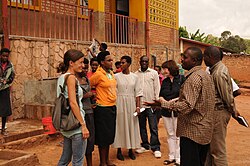
Key Facts
- Established: January 1, 2011, via the merger of GTZ, DED, and InWEnt.
- Primary Client: The Federal Ministry for Economic Cooperation and Development (BMZ).
- Budget: €3.3 billion (2020).
- Workforce: 24,530 staff members (2024), with 80% based outside Germany.
- Core Discipline: Capacity development (strengthening the skills and abilities of people and organizations).
- Global Reach: Operates 90 offices worldwide and a representation in Brussels.
Organizational Structure and Governance
GIZ is wholly owned by the Federal Republic of Germany, represented by the Federal Ministry for Economic Cooperation and Development (BMZ) and the Federal Ministry of Finance (BMF). The organization is managed by a management board, currently chaired by Thorsten Schäfer-Gümbel, and is overseen by a supervisory board, a board of trustees, and a Private Sector Advisory Board.
Internally, the agency is divided into eight corporate units—handling functions such as Legal Affairs, Compliance, and the Academy for International Cooperation (AIZ)—and ten specialized departments. These departments manage regional operations across Africa, Asia, Latin America, the Caribbean, Europe, the Mediterranean, and Central Asia, as well as sectoral and global programs.
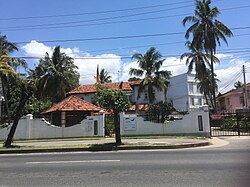
Core Activities and Strategic Partnerships
The central pillar of GIZ's work is capacity development. This involves enhancing the capabilities of national governments, civil society, and research institutions to manage their own development sustainably. GIZ often facilitates complex cooperation models, including:
- South-South Cooperation: Bilateral partnerships between developing countries and emerging economies.
- Triangular Cooperation: A model where a traditional donor (like Germany) provides expertise to support a partnership between an emerging economy and a developing country.
GIZ also maintains a strategic partnership with the KfW, Germany's government-owned development bank. While KfW handles "financial cooperation" (funding and loans), GIZ manages "technical cooperation," which focuses on expertise and capacity building. Additionally, GIZ operates the Centre for International Migration and Development (CIM) in collaboration with the German Federal Employment Agency to support global labor mobility.
Global Initiatives and Networks
GIZ has been instrumental in supporting various global agendas and networks, including the Renewable Energy Policy Network for the 21st Century (REN21) and the Sustainable Sanitation Alliance. It is also a member of the European Network of Implementing Development Agencies (EUNIDA) and participates in the SuRe® Stakeholder Council for sustainable and resilient infrastructure.
Operational Overview
| Category | Details |
|---|---|
| Legal Form | GmbH (Federal Enterprise) |
| Main Shareholder | Federal Republic of Germany |
| Staff Distribution | ~70% local staff; 80% based internationally |
| Key Partners | EU, UN, Private Sector, Foreign Governments |
| Annual Event | Eschborn Dialogue (since 1988) |
Challenges and Controversies
Operating in high-risk environments presents significant challenges. GIZ staff have faced violence, including abductions in Afghanistan (2015) and a fatal assault in Niger (2018). In 2022, the agency faced criticism for continuing to hire local staff in Afghanistan following the Taliban takeover.
The organization has also faced scrutiny regarding its financial management. In 2023, the Bundesrechnungshof (Federal Court of Audit) noted a lack of data to evaluate economic efficiency and criticized the absence of cost-cutting mechanisms, specifically mentioning the bonus structures for managing directors.
Frequently Asked Questions
What is the difference between GIZ and KfW?
GIZ focuses on technical cooperation, which involves capacity development, training, and advisory services. KfW is a development bank that focuses on financial cooperation, providing the funding and loans necessary for large-scale projects.
How was GIZ formed?
GIZ was established on January 1, 2011, through the merger of three existing organizations: the Deutscher Entwicklungsdienst (DED), the Deutsche Gesellschaft für Technische Zusammenarbeit (GTZ), and Internationale Weiterbildung und Entwicklung (InWEnt).
Who funds GIZ's projects?
The primary commissioning party is the German Federal Ministry for Economic Cooperation and Development (BMZ). However, GIZ also works for other German ministries, the European Union, United Nations agencies, and various foreign governments and private sector partners.
What is capacity development?
Capacity development is GIZ's core discipline. It refers to the process of strengthening the skills, instincts, abilities, processes, and resources that organizations and communities need to survive, adapt, and thrive in a fast-changing world.
Where are GIZ's headquarters located?
GIZ is headquartered in Bonn and Eschborn, Germany, and maintains an additional office in Berlin along with several other locations across the country.