German Nobility: History, Titles, and Legal Evolution
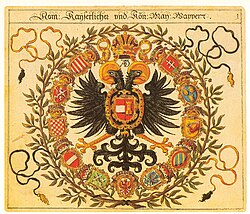
For centuries, the German nobility (deutscher Adel) and royalty served as the dominant status groups of Central European medieval society. These groups enjoyed significant legal privileges and social immunities that set them apart from the general population. From the early days of the Holy Roman Empire to the collapse of the German Empire in 1918, the aristocracy shaped the political, military, and social landscape of the German-speaking world.
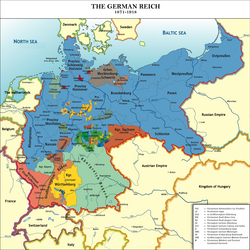
The recognition of nobility was historically managed by various entities, most notably the Holy Roman Empire (962–1806), the German Confederation (1814–1866), and the German Empire (1871–1918). As Germany transitioned into a modern industrial power after 1850, the nobility adapted. Landowners modernized their estates for international markets, while younger sons utilized high-prestige universities to enter the civil service and the military officer corps.
During the German Empire, Chancellor Otto von Bismarck expanded the political base of the nobility by ennobling the nouveau riche—wealthy industrialists and businessmen who lacked noble ancestry. This era also saw the nobility engage in partisan politics; Roman Catholic nobles were instrumental in forming the Centre Party to resist Bismarck's anti-Catholic Kulturkampf, while Protestant nobles remained active in the Conservative Party.
Key Facts
- Legal Status: Nobility and royalty were officially abolished in Germany in August 1919 under the Weimar Republic.
- Surnames: Former titles are now legally considered part of the surname rather than distinct titles of rank.
- Uradel vs. Briefadel: Uradel refers to ancient nobility (pre-14th century), while Briefadel refers to nobility granted via letters patent.
- Austria vs. Germany: While Germany allows former titles as part of surnames, Austria banned the use of noble titles and particles entirely in 1919.
- Modern Governance: The Deutscher Adelsrechtsausschuss (German Commission on Nobiliary Law) manages genealogical and legitimacy matters privately.
The Legal Transition of 1919
The promulgation of the Weimar Constitution on August 11, 1919, marked a definitive end to the legal privileges of the aristocracy. All Germans were declared equal before the law, and the state ceased to confer new noble titles. However, a unique compromise was reached regarding names.
Former titles and nobiliary particles (such as von and zu) were transformed into legal components of the surname. For example, a person previously styled as Graf Kasimir von der Recke (Count Kasimir von der Recke) would legally become Kasimir Graf von der Recke. These names are now protected as private names under German law.
Special Cases in Naming
Certain titles were handled differently based on inheritance. Heirs to former thrones (such as an Erbprinz or hereditary prince) and those inheriting via primogeniture were permitted to incorporate their titles into their surnames. However, these specific titles became extinct upon the death of the holder and were not heritable. Similarly, titles for unmarried noblewomen, such as Baronesse or Freiin, were integrated into the legal surname.
Social Structures and Marriage Strategies
Historically, maintaining noble status often required strict marriage strategies. Many German states mandated that a nobleman marry a woman of elevated social status—referred to in Prussian law as marriage "to the right hand"—to ensure titles and privileges passed to their children.
While the higher nobility continued to marry within their own circles, the late 19th century saw a rise in marriages between nobles and the emerging wealthy commoner class. Upwardly mobile families often utilized a strategy where men of lower rank married women of higher status who provided a substantial dowry.
Classifications of the Nobility
The German aristocratic system was divided into several distinct categories based on the origin of their status and their rank.
Uradel and Briefadel
The Uradel (ancient nobility) consists of families whose noble status dates back to at least the 14th century. In contrast, the Briefadel (patent nobility) refers to those whose status was granted through letters patent. The earliest known document of this type dates to September 30, 1360, for Wyker Frosch in Mainz.
Hochadel and Niederer Adel
The Hochadel (high nobility) included ruling houses and those who held sovereignty. During the unification of Germany (1866–1871), several states—including Hanover and Nassau—were absorbed into Prussia, but their ruling houses maintained their status as high nobility. The Niederer Adel (lower nobility) comprised the non-sovereign titled classes.
Nobiliary Law in the Modern Era
Today, the Federal Republic of Germany does not recognize nobility as a legal class. However, the tradition is preserved under Sonderprivatrecht (special private law). The Deutscher Adelsrechtsausschuss (German Commission on Nobiliary Law) adjudicates matters of lineage and legitimacy based on pre-1919 codified law.
The Commission works to prevent the "inflation" of fake nobility, which occurred in the 20th century when some impoverished nobles sold adoptions for money. Those who bear noble names but were not born legitimately of a noble father according to Salic law are termed Nichtadelige Namensträger (non-noble name-carriers).
| Title (English) | Title (German) | Territory (English) | Territory (German) |
|---|---|---|---|
| Prince-elector | Kurfürst(in) | Electorate | Kurfürstentum |
| Prince of the Empire | Reichsfürst(in) | Principality with Imperial Immediacy | Reichsfürstentum |
| Duke/Duchess | Herzog(in) | Duchy | Herzogtum |
| Sovereign Prince | Fürst(in) | Principality | Fürstentum |
| Margrave/Margravine | Markgraf/Markgräfin | Margraviate | Markgrafschaft |
| Count(ess) | Graf/Gräfin | County | Grafschaft |
| Baron(ess) | Freiherr/Freifrau | Barony | Freiherrschaft |
Frequently Asked Questions
Are noble titles still legal in Germany?
Noble titles are no longer granted by the state and carry no legal privileges. However, they are legally recognized as part of a person's surname.
What is the difference between Uradel and Briefadel?
Uradel refers to families whose nobility is ancient and dates back to at least the 14th century, whereas Briefadel refers to nobility granted officially via a written document or letters patent.
How does the Austrian system differ from the German system?
While Germany allowed titles to become part of the surname, Austria completely banned the use of noble titles and particles in 1919. In Austria, using such titles officially can be considered a minor offense.
Who is a "non-noble name-carrier"?
A non-noble name-carrier (Nichtadelige Namensträger) is someone who possesses a noble-sounding surname—often through adoption or other means—but does not belong to the historical nobility according to Salic law.
What was the role of the Adelsrechtsausschuss?
The German Commission on Nobiliary Law acts as a private body that determines lineage and the right to bear a noble name based on historical laws, though its rulings are generally non-binding for state courts.