German East Africa: The Rise and Fall of a Colonial Empire
German East Africa (GEA), known in German as Deutsch-Ostafrika, was a significant colonial territory in the African Great Lakes region. Spanning from 1885 to 1918, the colony encompassed the modern-day mainland of Tanzania, Burundi, Rwanda, and the Kionga Triangle (now part of Mozambique). At its peak in 1912, the colony covered 994,996 square kilometers—nearly three times the size of present-day Germany.
The establishment of GEA was a product of the era of New Imperialism, characterized by European competition for African territories. Its history is marked by rapid economic expansion, violent resistance from indigenous populations, and a grueling military campaign during the First World War.
Key Facts
- Duration: 1885–1918.
- Total Area: Approximately 995,000 km².
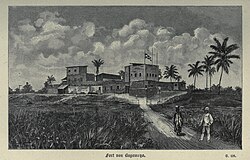
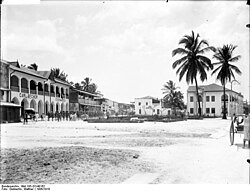
- Capitals: Bagamoyo (1885–1890), Dar es Salaam (1890–1916), and Tabora (1916, temporary).
- Key Figures: Carl Peters (founder), Paul von Lettow-Vorbeck (WWI General).
- Major Conflict: The Maji Maji Rebellion (1905), which may have cost 300,000 lives.
- Successor States: Tanganyika (Britain), Ruanda-Urundi (Belgium), and Mozambique (Portugal).
The Foundation of the Colony
The colony's origins trace back to Carl Peters, an adventurer and founder of the Society for German Colonization. Peters signed treaties with native chieftains on the mainland opposite Zanzibar, leading Chancellor Otto von Bismarck to grant an imperial charter on February 27, 1885. This established a protectorate in the region.
The expansion was not without conflict. The Sultan of Zanzibar claimed rule over the mainland, prompting Bismarck to deploy five warships to force the Sultan's acceptance of German claims. By November 1886, Germany and Britain agreed to respect the Sultan's sovereignty over Zanzibar and a narrow 16-kilometer coastal strip, while dividing the rest of the mainland into their respective spheres of interest.
The Heligoland–Zanzibar Treaty of 1890 further solidified these borders, granting Heligoland to Germany and defining the boundary between GEA and the British East Africa Protectorate.
Military Expansion and Indigenous Resistance
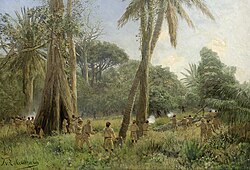
German control was enforced by military groups, most notably the Wissmann Truppe. These units consisted of African soldiers, known as Askaris, led by German commanders. The Wissmann Truppe were notorious for committing widespread atrocities during their campaigns to subdue the interior.
Resistance was persistent. Between 1891 and 1894, the Hehe people, led by Chief Mkwawa, fought a prolonged guerrilla war against German expansion. Mkwawa eventually committed suicide in 1898 after being cornered. Later, in 1905, the Maji Maji Rebellion erupted. Governor Gustav Adolf von Götzen suppressed the uprising using scorched-earth tactics to create a famine, resulting in massive loss of life.
Economic Development and Infrastructure
The German administration focused heavily on commercial growth and agricultural exports. Sisal became the primary cash crop, with over 40,000 hectares under cultivation. The colony also produced significant quantities of coffee, rubber, and cotton.
To transport these goods, the Germans invested in extensive rail networks:
- Usambara Railway: Built from Tanga to Moshi starting in 1888.
- Central Railroad: A 1,247 km line linking Dar es Salaam, Morogoro, Tabora, and Kigoma, reaching Lake Tanganyika in July 1914.
Mining also played a role, with gold discoveries near Lake Victoria in 1894 leading to the operation of the Sekenke Gold Mine by 1909.
Social Issues and Slavery
Slavery in German Tanganyika was phased out gradually rather than abolished instantly. While the commercial slave trade was banned in 1901, private sales continued into the early 20th century. The administration allowed slaves to buy their freedom and decreed that anyone born after 1905 was born free. A total ban was contemplated in 1914 but was rejected because the government deemed the financial compensation for slave owners to be too costly.
World War I and the Fall of GEA
During World War I, GEA became a theater of conflict led by General Paul von Lettow-Vorbeck. Commanding a force of 3,500 Europeans and 12,000 Askaris and porters, Lettow-Vorbeck employed guerrilla tactics to harass a much larger British army. One of his most significant achievements was the Battle of Tanga in November 1914, where his forces defeated a British army eight times their size.
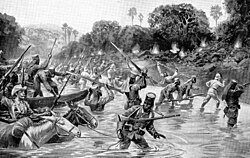
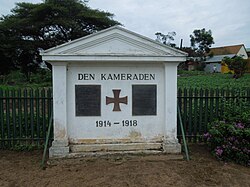
The colony finally surrendered on November 25, 1918. Following the Treaty of Versailles and the 1919 Paris Peace Conference, the territory was dismantled. The majority was awarded to Britain (becoming Tanganyika), while the north-western districts of Ruanda and Urundi were ceded to Belgium. A small portion was transferred to Portugal.
Colonial Summary
| Category | Details |
|---|---|
| Official Languages | German, Swahili, Arabic, Kirundi, Kinyarwanda, Maa, Kisukuma, Iraqw, Chaga |
| Major Religions | Islam, Christianity (Catholic/Lutheran), Traditional African religions |
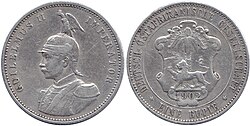
| Currency | German East African rupie |
| Population (1912) | 7,700,000 |
| Key Exports | Sisal, Coffee, Rubber, Cotton |
Frequently Asked Questions
Who founded German East Africa?
The colony was initiated by Carl Peters, an adventurer who signed treaties with local chieftains and received an imperial charter from Chancellor Otto von Bismarck in 1885.
What was the Maji Maji Rebellion?
The Maji Maji Rebellion was a major uprising in 1905 against German colonial rule. It was suppressed by Governor Gustav Adolf von Götzen through the creation of a man-made famine, leading to approximately 300,000 deaths.
How did the colony end?
Following Germany's defeat in World War I, the Treaty of Versailles and the Paris Peace Conference of 1919 divided the territory between Britain, Belgium, and Portugal.
What happened to the land after 1919?
The mainland became the British territory of Tanganyika, while the regions of Ruanda and Urundi were handed to Belgium. The Kionga Triangle was incorporated into Mozambique.
What was the role of the Askaris?
Askaris were native African soldiers serving under German command. They formed the bulk of the military force used for both colonial expansion and the defense of the colony during World War I.