George I: The First Hanoverian King of Great Britain
George I (born George Louis) holds a unique place in history as the first British monarch of the House of Hanover. Ruling as King of Great Britain and Ireland from 1714 to 1727, and as the Elector of Hanover within the Holy Roman Empire from 1698 until his death, his reign marked a pivotal transition in the political and dynastic landscape of Europe.
Born in Hanover to Ernest Augustus and Sophia of the Palatinate, George was groomed for leadership from a young age. His early life was defined by the complex territorial politics of the German states, where he eventually inherited the titles and lands of the Duchy of Brunswick-Lüneburg.
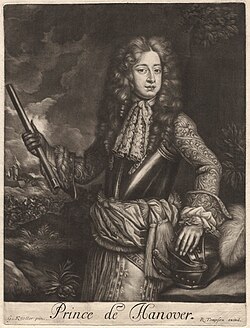
Key Facts
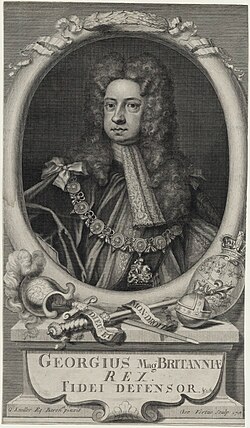
- Reign: King of Great Britain and Ireland (1714–1727); Elector of Hanover (1698–1727).
- Dynasty: First monarch of the House of Hanover in Britain.
- Succession: Ascended the throne following the death of Queen Anne.
- Personal Life: Married Sophia Dorothea of Celle (divorced 1694); maintained a long-term relationship with Melusine von der Schulenburg.
- Legacy: Oversaw the early development of the British cabinet system and the Quadruple Alliance.
Early Life and Education
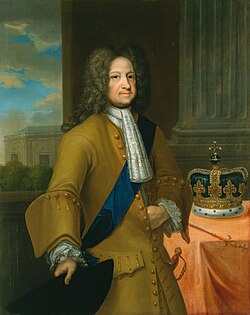
George was born in 1660. For his first year, he was the sole heir to his father's German territories. He grew up alongside his brother, Frederick Augustus, in Osnabrück, where his father served as the ruler of the Prince-Bishopric of Osnabrück. His mother, Sophia, took a keen interest in his upbringing, describing him in her letters as a responsible and conscientious child who served as a role model for his younger siblings.
Military Service and Primogeniture
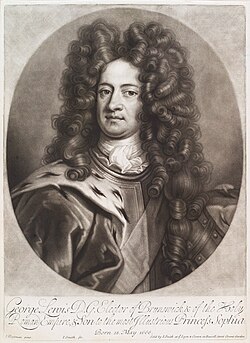
In 1683, George and Frederick Augustus served in the Great Turkish War at the Battle of Vienna. During this period, the family adopted primogeniture—a legal rule ensuring the eldest son inherits the entire estate—which caused a permanent rift between George and his brother, Frederick Augustus, who had expected a share of the territory.
Marriage and Personal Scandals
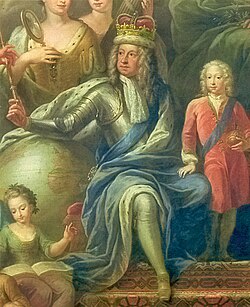
In 1682, George married his cousin, Sophia Dorothea of Celle. The marriage produced two children: George Augustus (the future George II) and Sophia Dorothea. However, the union was unhappy. George became involved with Melusine von der Schulenburg, while Sophia Dorothea began a romance with the Swedish Count Philip Christoph von Königsmarck.
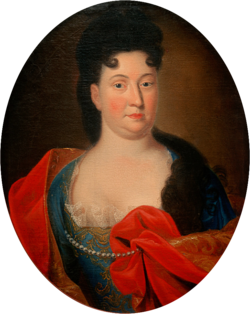
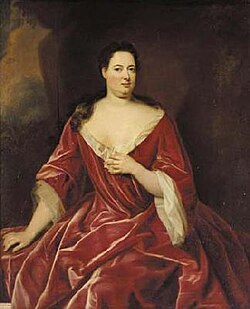
The scandal culminated in 1694 when Count Königsmarck disappeared; diplomatic sources suggest he was murdered with George's connivance. Following this, George and Sophia Dorothea divorced on the grounds of abandonment. Sophia Dorothea was imprisoned in Ahlden House for over thirty years, denied access to her children, while Melusine von der Schulenburg became George's open hostess and the mother of his three daughters.
The Electorate of Hanover
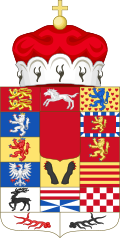
Upon the death of his father on January 23, 1698, George became the Duke of Brunswick-Lüneburg and a prince-elector of the Holy Roman Empire. His court in Hanover became a center of intellectual and artistic achievement, hosting figures such as the philosopher Gottfried Leibniz and the composer George Frideric Händel.
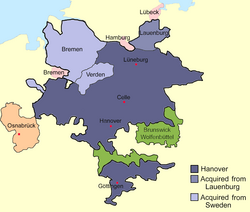
During his time as Elector, George's domains expanded through various European wars. He was formally ratified as prince-elector in 1708 and later granted the dignity of Arch-Treasurer of the Empire in 1710.
Accession to the British Throne
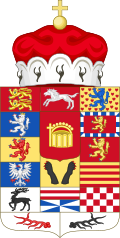
The path to the British throne was paved by the Act of Settlement 1701, which designated the descendants of Electress Sophia of Hanover as heirs to the throne to ensure a Protestant succession. This process was complicated by tensions between England and Scotland, eventually leading to the Treaty of Union 1707, which created the Kingdom of Great Britain.
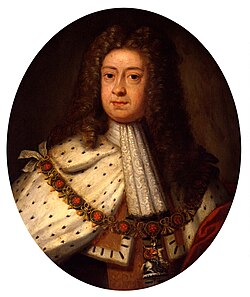
Following the death of his mother in May 1714 and Queen Anne on August 1, 1714, George was proclaimed King. He arrived in Britain on September 18 and was crowned at Westminster Abbey on October 20, 1714.
Governance and Foreign Policy
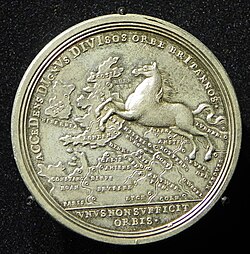
George spent approximately one-fifth of his reign in Germany, visiting Hanover several times. In Britain, he was active in foreign policy, contributing to the Triple Alliance (1717) and the Quadruple Alliance (1718) to maintain the balance of power in Europe and address the claims of Philip V of Spain.
Later Years and Death
In his later years, George became increasingly reliant on his ministers, most notably Robert Walpole. His reign ended during his sixth trip to Hanover. He suffered a stroke on June 9, 1727, and died on June 11, 1727, at the palace of his brother in Osnabrück at the age of 67.
Originally buried in Leine Palace, his remains were moved to the mausoleum of King Ernest Augustus in the Berggarten of Herrenhausen Gardens after Leine Palace was destroyed during World War II air raids.

Summary of George I's Life
| Category | Details |
|---|---|
| Full Name | George Louis (Georg Ludwig) |
| Born | May 28 / June 7, 1660 (Hanover) |
| Died | June 11, 1727 (Osnabrück) |
| British Reign | August 1, 1714 – June 11, 1727 |
| Hanoverian Reign | January 23, 1698 – June 11, 1727 |
| Spouse | Sophia Dorothea of Celle (m. 1682, div. 1694) |
| Successor | George II |
Frequently Asked Questions
Why was George I chosen as the King of Great Britain?
He was the heir presumptive under the Act of Settlement 1701, which sought to ensure a Protestant succession to the throne after Queen Anne, who had no surviving children.
What was the relationship between George I and his wife?
The marriage was estranged. George had a long-term relationship with Melusine von der Schulenburg, and Sophia Dorothea had a romance with Count Philip Christoph von Königsmarck. They divorced in 1694, and Sophia Dorothea was imprisoned for the remainder of her life.
Did George I spend all his time in Britain?
No, he maintained his role as Elector of Hanover and spent about one-fifth of his reign in Germany, visiting his home territory five times between 1716 and 1725.
How did George I die?
George I died on June 11, 1727, after suffering a stroke while traveling between Delden and Nordhorn during his final trip to Hanover.
Who were the children of George I?
He had two children with his wife, Sophia Dorothea of Celle (George II and Sophia Dorothea of Hanover), and three daughters with his mistress, Melusine von der Schulenburg.