Gates Foundation: Transforming Global Health and Development
The Gates Foundation is one of the world's most influential non-operating private foundations, dedicated to improving healthcare, expanding educational opportunities, and fighting extreme poverty on a global scale. Established in 2000 by Bill Gates and Melinda French Gates, the organization operates as a 501(c)(3) non-profit, utilizing a massive endowment to provide grants and donations to partners worldwide.
By focusing on high-impact interventions, the foundation seeks to bridge the gap in health and opportunity between wealthy and developing nations. From eradicating infectious diseases to reinventing basic infrastructure, its approach combines large-scale funding with a commitment to scientific innovation.
Key Facts
- Founders: Bill Gates and Melinda French Gates.
- Financial Power: An endowment of $89 billion (2025) with annual expenses of $8.1 billion.
- Core Mission: Improving global healthcare, education, and poverty reduction.
- Global Reach: Operates worldwide through five primary divisions, including Global Health and Global Development.
- Key Leadership: Chaired by Bill Gates and led by CEO Mark Suzman.
Organizational Structure and Strategy
The foundation organizes its philanthropic efforts into five specialized divisions to ensure targeted impact:
- Global Health Division: Focuses on reducing the burden of infectious diseases and improving maternal and child health.
- Global Development Division: Works on delivery of health tools, agricultural productivity, and sanitation.
- United States Division: Concentrates on domestic education and economic mobility.
- Global Policy & Advocacy Division: Partners with governments to prioritize global health and development.
- Global Growth & Opportunity Division: Focuses on sustainable economic growth in developing regions.
Combatting Infectious Diseases
A cornerstone of the foundation's work is the control of infectious diseases. Between 2009 and 2015, the foundation committed billions of dollars to fight some of the world's deadliest pathogens. The highest funding priority has been infectious disease control, followed by malaria, HIV/AIDS, and tuberculosis.
| Sector | Total Funding (Millions USD) |
|---|---|
| Infectious Disease Control | 5,586.4 |
| Malaria Control | 1,456.1 |
| STD Control (including HIV/AIDS) | 1,308.0 |
| Tuberculosis Control | 1,094.0 |
| Reproductive Health Care | 905.8 |
| Agricultural Research | 807.2 |
To achieve these goals, the foundation partners with major international organizations. Some of its largest recipients include GAVI (the Vaccine Alliance), the World Health Organization (WHO), and The Global Fund to Fight AIDS, Tuberculosis and Malaria.
Innovation in Sanitation and Agriculture
Beyond medicine, the foundation addresses the root causes of poverty and disease through infrastructure and food security. A primary focus is the sanitation value chain—the process of collection, transport, treatment, and reuse of waste—to prevent waterborne illnesses.
![The "sanitation value chain" used by the Gates Foundation to illustrate their approach to sanitation, showing collection, transport, treatment and reuse[115]](/images/59/b6/59b648fb39d10bce1d761ba5c67f0cf427523cf62dfde3cd818a76425bc4085d.jpg)
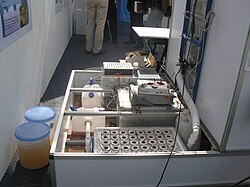
The "Reinvent the Toilet Challenge" has spurred the development of transformative technologies. These range from high-tech solutions like the Nano Membrane Toilet, which operates off-grid, to low-tech innovations like urine-diverting dry toilets used in Ecuador and the US.

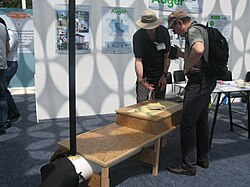
Research also extends to energy recovery, such as using microbial fuel cells to convert urine into electricity. In agriculture, the foundation funds research to increase crop yields and support small-scale farmers in Africa through initiatives like AGRA.
Financial Foundation and Investments
The foundation's ability to grant billions of dollars annually is supported by a diverse investment portfolio. The Trust manages assets across various industries to ensure long-term sustainability. Significant holdings include Berkshire Hathaway, Waste Management, Canadian National Railway, and Microsoft.

Frequently Asked Questions
Who leads the Gates Foundation?
The foundation is chaired by Bill Gates and the current CEO is Mark Suzman.
What are the primary goals of the foundation?
The foundation focuses on three main pillars: improving global healthcare, expanding educational opportunities, and fighting extreme poverty.
How does the foundation fund its projects?
It operates as a non-operating private foundation, using its endowment—which reached $89 billion in 2025—to provide grants and donations to other organizations and research institutions.
What is the "Reinvent the Toilet Challenge"?
It is an initiative to develop new sanitation technologies that operate without traditional sewers or water connections, aiming to improve public health in areas with poor infrastructure.
Which organizations receive the most funding?
Major recipients include GAVI, the World Health Organization, and The Global Fund to Fight AIDS, Tuberculosis and Malaria.