French Prefectures: Administration and Governance
In the complex landscape of French governance, the prefecture (French: préfecture) serves as a vital link between the national government and local territories. Depending on the context, a prefecture can refer to the administrative center of a department or region, the jurisdiction itself, or the official headquarters and residence of the prefect.
While France is divided into various administrative layers, the prefecture ensures that national laws are applied consistently across the country. This system balances centralized state authority with local management, creating a structured hierarchy that reaches from the capital to the smallest rural districts.
Key Facts
- There are 101 prefectures in France, one for every department.
- Prefectures are managed by the Ministry of the Interior.
- The prefect represents the national government at the local level.
- Prefectures handle essential documents, including passports, identity cards, and residency permits.
- Since 1982, the chief executive of a department is the President of the Departmental Council, not the prefect.
The Role and Responsibilities of the Prefecture
The prefecture is the primary administrative hub for the state within a department. Led by the prefect (préfet), these offices are responsible for a wide array of public services and regulatory duties. Key responsibilities include the issuance of driving licenses, vehicle registrations, and work permits for foreign nationals, as well as the registration and dissolution of associations.
Beyond paperwork, the prefecture manages critical security infrastructure, including the National Police and firefighters. It is worth noting that as of 2018, 79% of French firefighters are part-time volunteers.
The prefect exercises constitutional powers of the national government, issuing ordinances to enforce local laws. This may include modifying traffic regulations, such as speed limits, or ordering the closure of buildings that fail to meet safety codes.
Location and Selection
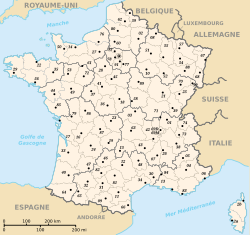
Historically, prefectures were established as the chef-lieu (administrative center) of a department, typically located near the geographic center. This placement ensured that any point in the department was within a day's travel on horseback. Because of this historical logic, the prefecture is not always the largest city in the department. For example, in the department of Marne, the prefecture is Châlons-en-Champagne, even though the city of Reims is four times larger.
Departmental Governance vs. State Administration
It is important to distinguish between the state's representative (the prefect) and the local governing body. The departmental council (Conseil départemental) is an elected body organized by cantons. While the prefect represents the state, the departmental council manages local infrastructure and social services, including:
- Maintenance of departmental roads.
- Building and upkeep of collèges (middle schools).
- Financial assistance for the elderly and disabled.
- Promotion of local economic development.
The Parisian Exception and the Petite Couronne
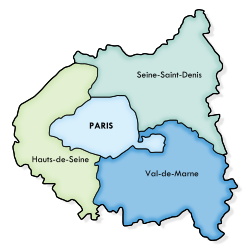
The administrative structure in the Île-de-France region differs significantly from the rest of the country. Paris and the three surrounding departments—Hauts-de-Seine, Seine-Saint-Denis, and Val-de-Marne—collectively known as the Petite Couronne ("Small Crown"), are subject to a specialized authority.
Due to historical precedents following the Paris Commune of 1871, these areas are managed by the Paris Police Prefecture (préfecture de police). While mayors typically hold law enforcement powers in other communes, in the Petite Couronne, this power is vested in the Prefect of Police. A similar, though less independent, structure was established in 2012 for the Bouches-du-Rhône Police Prefecture.
Administrative Subdivisions
To ensure efficient management, departments are further divided into smaller units:
- Arrondissements: The primary subdivisions of a department. The administrative center of an arrondissement is called a subprefecture (sous-préfecture), led by a subprefect (sous-préfet).
- Cantons: Further subdivisions of arrondissements. Cantons serve primarily as electoral districts for the organization of local elections.
| Level | Administrative Center | Lead Official | Primary Focus |
|---|---|---|---|
| Region | Regional Prefecture | Regional Prefect | Regional State Coordination |
| Department | Prefecture | Prefect | State Representation & Public Services |
| Arrondissement | Subprefecture | Subprefect | Local State Administration |
| Canton | N/A | N/A | Electoral Organization |
Frequently Asked Questions
What is the difference between a prefect and the President of the Departmental Council?
The prefect is an appointed official who represents the national government and the Ministry of the Interior. The President of the Departmental Council is an elected official who serves as the chief executive of the department's local government.
Why is the prefecture not always the largest city in a department?
Prefectures were originally chosen based on geographic centrality to ensure they were reachable within a day's ride on horseback from any location in the department, regardless of the city's population size.
What services can I access at a prefecture?
Prefectures handle the delivery of official identification and permits, including passports, identity cards, driving licenses, and residency or work permits for foreign nationals.
What is the Petite Couronne?
The Petite Couronne refers to the three departments surrounding Paris: Hauts-de-Seine, Seine-Saint-Denis, and Val-de-Marne. These areas share a unique security administration under the Paris Police Prefecture.
What is a subprefecture?
A subprefecture is the chef-lieu (administrative center) of an arrondissement, which is a subdivision of a department. It is managed by a subprefect.