Fraser's Literary Portrayal of Colonial Jamaica
The literary works of Fraser provide a complex, often contentious window into the social and racial hierarchies of late 19th-century Jamaica. Writing during a period of intense economic instability and social friction, Fraser utilized a satirical and often ironic voice to chronicle a society struggling to redefine itself in the wake of emancipation.
Fraser's body of work includes two novels, A Study in Colour (1894) and Lucilla: An Experiment (1895), as well as a collection of short stories titled A Reluctant Evangelist and Other Stories (1866) and a 1913 memoir, Livingstone and Newstead, which details David Livingstone's visit to her family estate during her youth. Much of her writing focuses on the fraught racial dynamics of Jamaica, blending factual observation with light fictionalization.
Key Facts
- Primary Focus: Fraser's work centers on the racial and social tensions of post-emancipation Jamaica.
- Major Work: Lucilla: An Experiment is her most critically analyzed novel, focusing on a failed interracial marriage.
- Literary Style: Scholars generally agree that her authorial voice is characterized by satire, sarcasm, and irony.
- Historical Context: Her writing reflects a society divided into three racialized classes: the white elite, the brown population, and Afro-Jamaicans.
- Critical Debate: Modern critics are divided on whether she was a mouthpiece for imperial racism or an advocate for racial separation.
Historical Context of 19th-Century Jamaica
To understand Fraser's writing, one must understand the volatility of Jamaica during the 1800s. While the Slavery Abolition Act 1833 ended slavery, it did not establish immediate equality. Instead, enslaved people became "apprentices" on August 1, 1834, with full legal emancipation eventually occurring by 1838. During this time, traditional practices like obeah (a system of spiritual and healing practices) were criminalized.
By the 1840s, the British imperial metropole—the central governing power in London—viewed the island as a "problem" due to labor strife following emancipation. This tension culminated in the Morant Bay rebellion of 1865, which led to the abolition of representative government and the return of direct rule by colonial governors as a Crown colony.
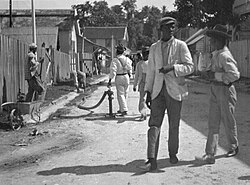
Economically, the 1890s were marked by a crash in global sugar prices, which devastated Jamaica's export-dependent economy. Paradoxically, British promoters continued to advertise the island as a vacation destination, suggesting a disconnect between the economic reality and the metropolitan perception.
The Racial Hierarchy
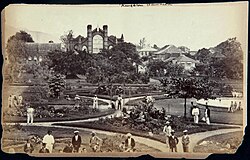
Following emancipation, Jamaican society was stratified into three distinct racialized classes:
- The White Elite: Comprising bourgeois professionals and plantation owners.
- The Brown Population: A burgeoning middle class that viewed itself as a separate and distinct group.
- Afro-Jamaicans: The group with the most limited social opportunities, often subjected to negative racial stereotypes carried over from the era of slavery.
Critical Analysis of Fraser's Work
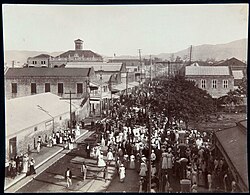
There is little consensus among scholars regarding the interpretation of Fraser's work, though most agree her tone is satirical. Some critics, such as Rosenberg and Gohrisch, argue that Fraser was an imperialist who exploited her servants for material and viewed non-Europeans as socially and racially inferior. Johnson further suggests that A Study in Colour emphasizes the admiration darker-skinned people held for lighter-skinned ones.
Conversely, scholar Bryan suggests that Fraser believed in racial determinism—the theory that race primarily explains behavior—and advocated for "racial separation." In this view, Fraser did not necessarily see non-Europeans as barbaric, but rather believed different races were distinct cultures that should remain isolated from one another.
| Title | Year | Genre | Primary Subject |
|---|---|---|---|
| A Study in Colour | 1894 | Novel | Racial dynamics in Jamaica |
| Lucilla: An Experiment | 1895 | Novel | Interracial marriage and social caste |
| A Reluctant Evangelist and Other Stories | 1896 | Short Story Collection | Various Jamaican social themes |
| Livingstone and Newstead | 1913 | Memoir | David Livingstone's stay at her family seat |
Lucilla: An Experiment
The novel Lucilla: An Experiment is Fraser's most discussed work. Set on the fictional island of San José (a transparent stand-in for Jamaica), it follows Lucilla St. John, a British woman who moves to the island to teach French and music. The plot centers on Lucilla's marriage to Isidore da Costa, a wealthy "coloured" man. The marriage eventually fails, and Lucilla returns to England.
Contemporary and Modern Reception
At the time of publication, reviewers in The Spectator and The Standard found Lucilla to be an unlikable, "narrow-brained" character. The "experiment" mentioned in the title was widely understood by contemporary readers as the attempt at an interracial marriage, which reviewers described as "disastrous."
Modern critics like Bryan argue the novel promotes a pessimistic view of racial integration. However, Gohrisch suggests that the novel actually valorizes "brown" or "coloured" middle-class women, such as Liris Morales and Teresa de Souza, portraying them as cultured, independent, and cosmopolitan figures.
Frequently Asked Questions
What was the "experiment" in the novel Lucilla: An Experiment?
The "experiment" refers to the protagonist Lucilla's marriage to Isidore da Costa, a man of mixed racial heritage (described as "coloured" or a "creole").
How did the Slavery Abolition Act 1833 affect Jamaica?
While it ended slavery, it introduced a period of "apprenticeship" starting August 1, 1834, and full legal emancipation was not achieved until 1838.
What are the three racial classes described in Fraser's Jamaica?
The society was divided into the white elite (plantation owners and professionals), the brown population (a burgeoning middle class), and Afro-Jamaicans (who faced the most limited opportunities).
How do modern critics view Fraser's attitude toward race?
Opinions vary: some see her as a racist mouthpiece for the British Empire, while others believe she advocated for the separate development of races rather than integration.
What was the impact of the Morant Bay rebellion of 1865?
The rebellion led to the end of representative government in Jamaica and the return of direct rule by colonial governors as a Crown colony.