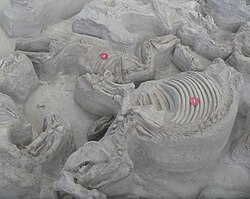
Fossil-Lagerstätten: Windows into Earth's Ancient Life

Fossil-Lagerstätten: Windows into Earth's Ancient Life

In the study of paleontology, most fossils are limited to hard parts like bones, teeth, and shells. However, there are rare sedimentary deposits that provide a far more complete picture of prehistoric ecosystems. These sites are known as Fossil-Lagerstätten (from the German Lager meaning 'storage' and Stätte meaning 'place'). These deposits preserve an exceptionally high amount of paleontological information, allowing scientists to study the evolution of life with unprecedented detail.

Types of Lagerstätten
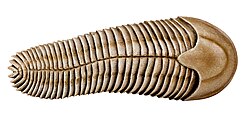
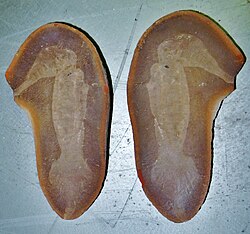
Spriggina floundersi, a worm-like organism

Paleontologists categorize these extraordinary sites into two primary types based on the nature of their preservation:

  • Konzentrat-Lagerstätten: These are deposits characterized by a high concentration of fossils, often resulting from the accumulation of many organisms in one area.
  • Konservat-Lagerstätten: These sites offer exceptional preservation quality. Unlike standard fossils, these may include soft tissues—organs, skin, and feathers—that typically decompose shortly after death.

The Science of Exceptional Preservation
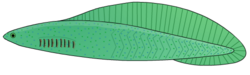
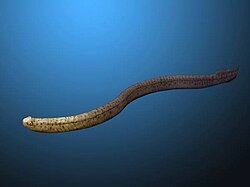
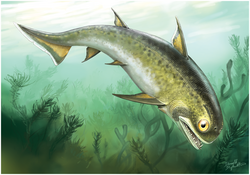
Haikouichthys, a primitive craniate

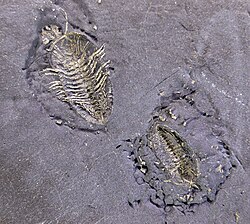
The creation of a Konservat-Lagerstätte requires specific taphonomic pathways (the processes affecting remains from death to fossilization). A common mechanism is the rapid burial of a carcass in an anoxic environment—an area depleted of oxygen. This lack of oxygen minimizes bacterial activity, delaying the decomposition of both gross and fine biological features. This delay allows a durable impression to be created in the surrounding matrix before the soft tissues vanish.

These sites span a vast geological timeline, from the Neoproterozoic era to the present day, providing a continuous record of biological innovation.

Key Facts
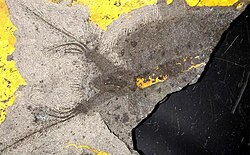
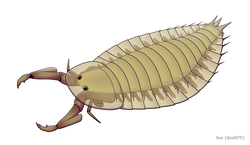
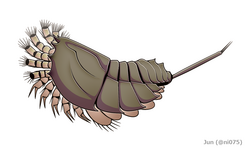
Kerygmachela, a lobopodian-like dinocaridid
  • Lagerstätten can either be defined by the quantity of fossils (Konzentrat) or the quality of preservation (Konservat).
  • Anoxic conditions are critical for preserving soft tissues by preventing bacterial decay.
  • The Messel Pit is a UNESCO World Heritage Site known for over 1,000 species of plants and animals.
  • The Mammoth Site in South Dakota has yielded remains of 61 mammoths from a prehistoric sinkhole.
  • Preservation ranges from the Neoproterozoic era to the modern age.

Chronological Examples of Exceptional Sites
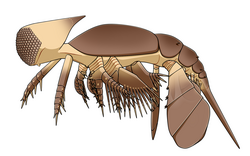
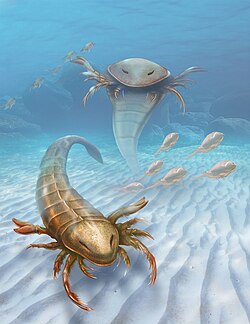
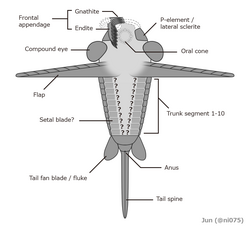
Cambropachycope, a stem-group mandibulate arthropod

Early Life and the Cambrian Explosion

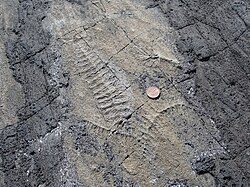
Some of the most famous sites date back to the dawn of complex life. The Doushantuo Formation (600–555 Ma) and the Ediacara Hills (555 Ma) provide glimpses into early multicellular organisms.
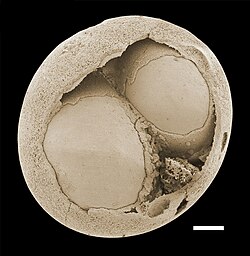
An Ediacaran embryo-like fossil

Frondose ediacaran organisms

The Cambrian period is represented by the Maotianshan Shales and the Burgess Shale, which are world-renowned for preserving the bizarre forms of early marine life.
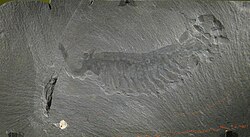
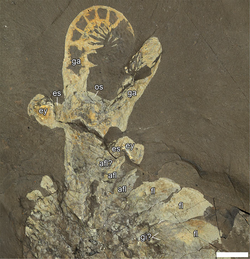
Well-preserved basal arthropod Opabinia from Burgess Shale Lagerstätte (Middle Cambrian)

Anomalocaris, a predatory radiodont

The Paleozoic Era

As life moved onto land and diversified in the oceans, sites like the Fezouata Formation (Ordovician) and the Rhynie chert (Devonian) captured critical evolutionary transitions, including early vascular plants.
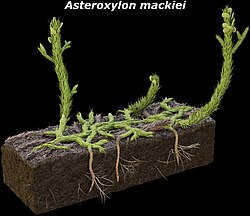
Asteroxylon, an early vascular plant related to lycopods

A pair of Triarthrus trilobites with pyritized soft-tissue

The Mesozoic Era: Age of Reptiles

The Triassic, Jurassic, and Cretaceous periods are documented in sites like the Solnhofen Limestone and the Jehol Biota. These sites are famous for preserving feathered dinosaurs and early birds.
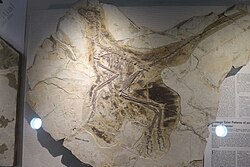
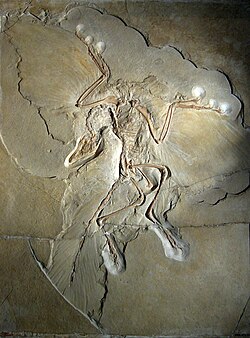
Anchiornis, small feathered anchiornithid dinosaur

The Berlin Specimen of Archaeopteryx lithographica

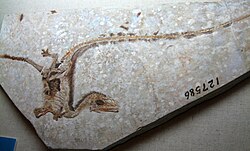
Sinosauropteryx, the first non-avain dinosaur with evidence of feathers to have been recognized

The Cenozoic Era: Age of Mammals

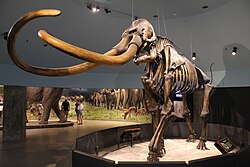
More recent deposits, such as the Messel Formation and the La Brea Tar Pits, provide high-resolution data on the evolution of mammals and birds.
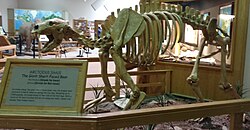
Fossil skeleton of Arctodus simus, a large species of "short-faced" bear that was one of North America's largest predators during the Pleistocene
Fossil skeleton of Arctodus simus, a large species of "short-faced" bear that was one of North America's largest predators during the Pleistocene.

Fossil skeleton of Mammuthus columbi excavated from the tar pits

Summary of Notable Fossil-Lagerstätten
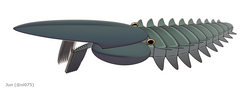
Aegirocassis, a giant hurdiid radiodont
Selected Global Fossil-Lagerstätten and Their Significance
Site Age (Approx.) Location Notable Findings
Burgess Shale 508 Ma Canada Cambrian marine invertebrates
Rhynie chert 400 Ma UK Early vascular plants
Solnhofen Limestone 149-148 Ma Germany Archaeopteryx and early birds
Jehol Biota 125–119 Ma China Feathered dinosaurs
Messel Formation 47 Ma Germany Early mammals and birds
La Brea Tar Pits 40–12 Ka USA Pleistocene megafauna

Frequently Asked Questions
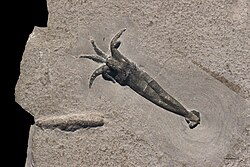
Pentecopterus, the oldest known eurypterid
Promissum, a conodont known from rare soft-tissues
Parioscorpio, an enigmatic arthropod
Offacolus, a euchelicerate
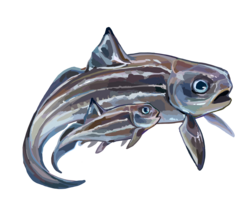
Nerepisacanthus, an acanthodian
Schinderhannes bartelsi, the youngest known radiodont
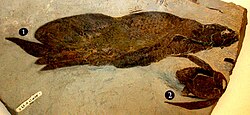
Materpiscis, a ptyctodontid placoderm fish that is the oldest vertebrate known to give live birth
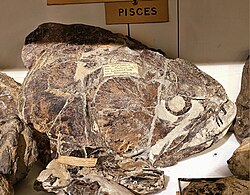
Fossil of lungfish Scaumenacia and antiarch placoderm Bothriolepis
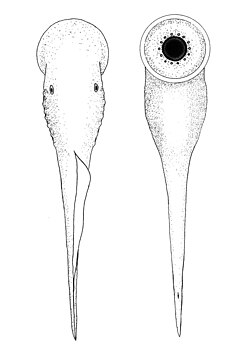
Priscomyzon, the oldest known genus of lamprey
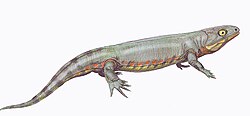
Silvanerpeton, a possible reptiliomorph
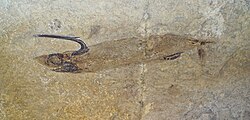
Falcatus, a holocephalian which males had large fin spine
Hylonomus, the oldest known sauropsid in the fossil record
Tullimonstrum, an enigmatic animal
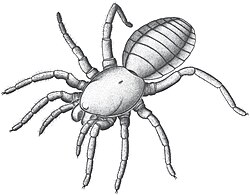
Idmonarachne, an arachnid that is related to spiders
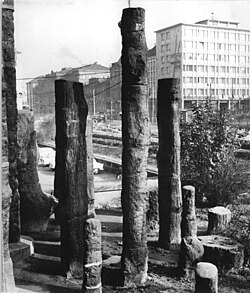
Large trunks of Arthropitys at Chemnitz
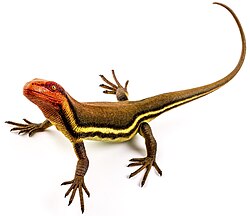
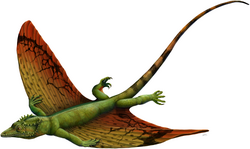
Weigeltisaurus, gliding weigeltisaurid reptile
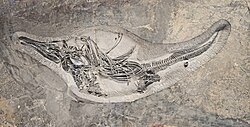
Barracudasauroides, an ichthyosaur preserved in articulation from the Guanling Formation
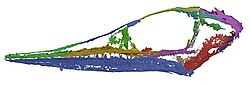
Skull of Mirasaura, a reptile with large dorsal crest over its back
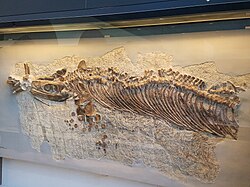
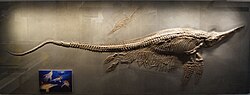
Cymbospondylus, one of the many marine reptile specimens preserved in articulation from the Besano Formation
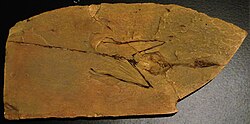
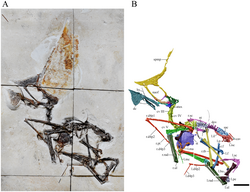
A cast of the holotype of Sharovipteryx, a well-preserved gliding reptile
Mecistotrachelos, a gliding reptile distantly related to archosauromorphs, like crocodylians and dinosaurs
A specimen of the ichthyosaur Stenopterygius crassicostatus with preserved young
A rare well-preserved cephalopod, Rhomboteuthis
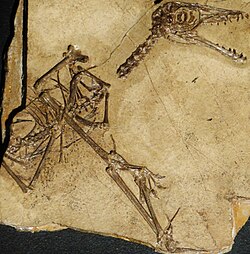
Sordes, small pterosaur with visible soft-tissues preserved
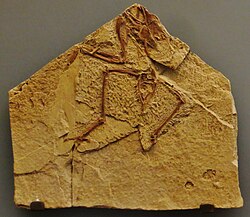
Concornis, an early enantiornithean
Tupandactylus, a fossil pterosaur that was preserved with feathers and other soft tissues intact
Ichthyoceros, a pycnodont actinopterygian
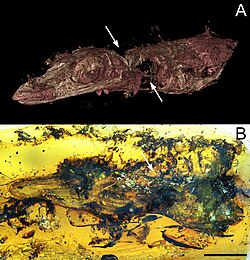
Oculudentavis, small-sized lizard
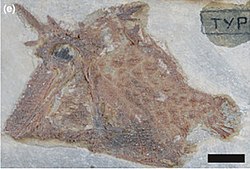
Brychaetus muelleri, fish skull
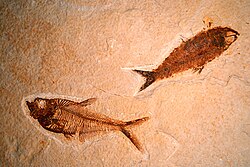
Diplomystus and Knightia
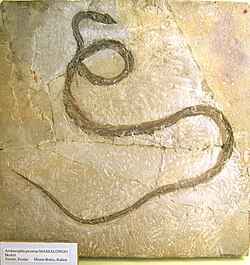
A complete Archaeophis proavus
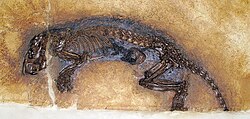
Masillamys sp., an ischyromyid rodent
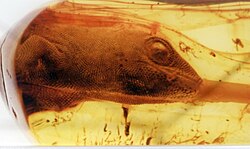
Yantarogekko, a gecko
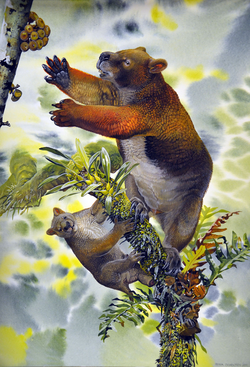
Reconstruction of the diprotodont marsupial Nimbadon lavarackorum.
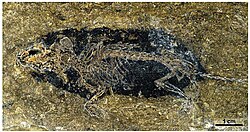
Fossil of Lusorex
Fossil of Lusorex
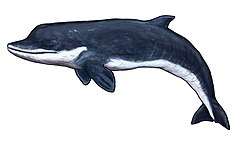
Reconstruction of the macroraptorial stem-physeteroid whale Acrophyseter.
A bone-bed containing the fossils of the basal rhino Teleoceras and the three-toed horse Cormohipparion.
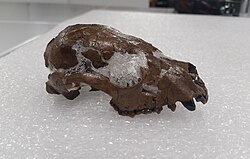
Fossil skull of Pristinailurus, a North American relative of the modern Red Panda
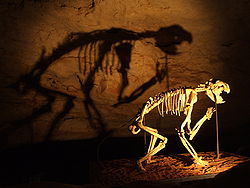
Skeleton of Thylacoleo at the Naracoorte Caves

What is the difference between a Konzentrat and a Konservat-Lagerstätte?

A Konzentrat-Lagerstätte is defined by the quantity of fossils found in one location, whereas a Konservat-Lagerstätte is defined by the quality of preservation, often including soft tissues.

How are soft tissues preserved in the fossil record?

Soft tissues are typically preserved when an organism is buried quickly in an anoxic environment. This prevents oxygen-dependent bacteria from decomposing the organic matter, allowing a mineral impression to form.

Why is the Messel Pit scientifically important?

The Messel Pit is significant because it has yielded over 1,000 species of plants and animals, providing critical data on the early evolution of mammals and birds.

What can we learn from the Jehol Biota?

The Jehol Biota is essential for understanding the evolution of birds and dinosaurs, as it contains some of the best-preserved evidence of feathers in non-avian dinosaurs.

Are Lagerstätten only found in the ocean?

No. While many are marine (like the Burgess Shale), there are many terrestrial Lagerstätten, such as the Chemnitz petrified forest or the La Brea Tar Pits.