Fort Lauderdale Strikers: The Rise and Fall of a South Florida Soccer Icon
The Fort Lauderdale Strikers hold a storied place in the landscape of American professional soccer. Based in Fort Lauderdale, Florida, the club served as a beacon for the sport in South Florida across multiple eras, most recently competing in the North American Soccer League (NASL), the second tier of the American soccer pyramid, until 2016.
From hosting global legends to navigating complex financial waters, the Strikers' journey is a reflection of the volatile yet passionate nature of soccer in the United States. While the club eventually dissolved, its legacy continues to influence the region's sporting culture.
Key Facts
- Founded: 2006 (as Miami FC); rebranded as Strikers in 2011.
- Dissolved: 2016.
- Primary Venue: Lockhart Stadium.
- Major Honors: 1989 National Championship; 2014 and 2015 Coastal Cup winners.
- Notable Association: Brazilian icon Ronaldo joined the ownership group in 2014.
- Main Rivalry: The "Florida Derby" against the Tampa Bay Rowdies.
The Legacy of the Original Strikers (1977–1997)
The Strikers' identity began in 1977 when the Robbie family relocated the Miami Toros to Fort Lauderdale. This original iteration of the team became a powerhouse in the old North American Soccer League, playing home matches at Lockhart Stadium. Under the captaincy of Ray Hudson, the team reached the playoffs in every one of its seven seasons in Fort Lauderdale.
The club was renowned for fielding some of the greatest players in football history, including Gerd Müller, George Best, Gordon Banks, Teófilo Cubillas, and Elías Figueroa. Although the team moved to Minnesota in 1984, the Strikers' name returned in various forms through the American Soccer League and the United States Interregional Soccer League, notably winning a national championship in 1989 before eventually folding in 1997.
The Modern Era: From Miami FC to the NASL
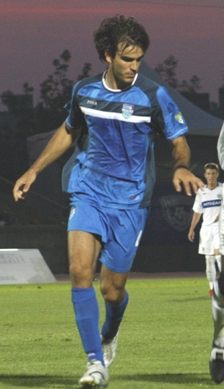
Professional soccer returned to the area in 2006 when Traffic Sports USA founded Miami FC. The club immediately captured global attention by signing World Cup winners Romario and Zinho. During its early years, the club engaged the community through contests to determine its nickname ("Blues") and mascot ("Hotshot").
In 2009, the team moved to Lockhart Stadium, and by February 17, 2011, the club officially rebranded as the Fort Lauderdale Strikers to pay homage to the original NASL team. This move coincided with their entry into the newly established North American Soccer League.
Competitive Peaks and Global Attention
The modern Strikers experienced immediate success, reaching the NASL Championship Series in their inaugural 2011 season. Under head coach Günter Kronsteiner, the team reached the NASL Championship final again in 2014, finishing as runners-up to the San Antonio Scorpions.
The club reached a peak of international visibility on December 11, 2014, when Brazilian legend Ronaldo joined the ownership group. Ronaldo expressed his ambition to turn the Strikers into a "global powerhouse" and even considered playing for the team if his fitness allowed.
Financial Decline and Dissolution
Despite the star power, the club faced severe financial instability. By September 2016, reports surfaced that the team was in serious financial jeopardy after principal owner Paulo Cesso stopped funding the club. By January 2017, the NASL confirmed that the Strikers would not be part of the upcoming season.
The end of the club was marked by a legal battle. Bill Edwards, owner of the Tampa Bay Rowdies, sued the Strikers' holding company over unpaid loans totaling $300,000. In May 2017, Edwards was awarded a summary judgement. Following a public sale in June 2017, Edwards acquired the trademarks, copyrights, and the "Fort Lauderdale Strikers" name for $5,100.
Club Culture and Identity
The Florida Derby and Coastal Cup
The Strikers maintained a fierce rivalry with the Tampa Bay Rowdies, a conflict dating back to 1977. This matchup, known as the Florida Derby, was primarily driven by the passion of the supporters' groups. The clubs also competed for the Coastal Cup, which evolved from a two-team contest into a triangular and eventually quadrilateral competition with the addition of Jacksonville Armada FC and a new Miami FC team.
Visual Identity and Supporters
The team's colors—red, gold, charcoal gray, metallic gold, and "beach sand"—were designed to symbolize the warmth of the Sunshine State. Their red and gold hoop jerseys were a direct tribute to the 1980s era. The club was supported by Flight 19, a group named after the famous 1945 disappearance of five aircraft over the Bermuda Triangle.
| Period | League | Key Achievement | Primary Venue |
|---|---|---|---|
| 2006–2010 | USL / USSF Div 2 | Ponce De Leon Cup (2008) | Tropical Park / Lockhart |
| 2011–2016 | NASL | NASL Runner-up (2011, 2014) | Lockhart / Central Broward |
Frequently Asked Questions
Who was the most famous owner of the Fort Lauderdale Strikers?
Brazilian soccer icon Ronaldo joined the ownership group in December 2014, aiming to help the club become a global powerhouse.
What was the "Florida Derby"?
The Florida Derby was the intense rivalry between the Fort Lauderdale Strikers and the Tampa Bay Rowdies, a conflict that began in the original NASL in 1977.
Where did the Strikers play their home games?
The majority of their games were played at Lockhart Stadium, though they also used Tropical Park Stadium (2006–2008) and Central Broward Stadium (2016).
Why did the Fort Lauderdale Strikers dissolve?
The club faced severe financial jeopardy after its principal owner stopped funding the team in 2016, leading to its exclusion from the 2017 NASL season and a subsequent legal foreclosure of its assets.
What happened to the Strikers' brand and name?
Following a lawsuit over unpaid loans, Tampa Bay Rowdies owner Bill Edwards purchased the trademarks and rights to the name "Fort Lauderdale Strikers" at a public sale in 2017 for $5,100.