Footwear: A Comprehensive History, Evolution, and Technical Guide
Footwear, also known as footgear, encompasses all garments worn on the feet. While often viewed through the lens of fashion, the primary purpose of footwear is protection. It shields the feet from environmental adversities, such as rough terrain, slippery surfaces, and extreme temperatures, while easing locomotion and preventing injuries.
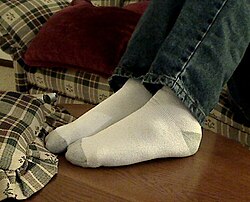
Beyond utility, footwear serves as a powerful tool for social expression. Throughout history, shoes have been used for adornment and to signal a person's rank or status within a social hierarchy. To enhance comfort, hosiery—such as socks—is typically worn between the foot and the shoe.
Key Facts
- Ancient Origins: Evidence suggests footwear was necessary in some human settlements as early as 50,000 years ago.
- Global Production: China currently produces over 60% of exported footwear.
- Safety Standards: Industrial footwear must adhere to strict international standards like ISO 20345 and ASTM F2413 to ensure worker safety.
- Diverse Functions: Footwear ranges from minimalist toe shoes to specialized athletic gear and heavy-duty safety boots.
The Evolution of Footwear
Prehistoric and Ancient Beginnings
The history of footwear is as old as humanity. Paleoclimatology indicates a need for foot protection during the Last Glacial Period, roughly 50,000 years ago. Some fossilized tracks in South Africa may date back 130,000 years, and osteological evidence shows the physical impact of footwear on human remains by 40,000 years ago.
Among the oldest recovered physical examples are the shoes from the Spirit Cave mummy in Nevada (approx. 10,600 BP) and sandals from Fort Rock Cave, Oregon, dated between 10,500 and 9,300 BP. Other notable ancient examples include the Areni-1 shoe from Armenia (c. 3500 BC) and Ötzi's shoe, crafted from bearskin, deer hide, and tree bark (c. 3200 BC).
Medieval and Early Modern Developments
In medieval Europe, leather became the dominant material. The turnshoe was a significant innovation; the sole and upper were sewn together and then turned inside-out to protect the seam and increase water resistance. Fashion trends often led to extremes, such as the 12th-century pigache and the 14th-century poulaine, both characterized by elongated toes.
To protect soft footwear from street muck, people used overshoes like calopedes or pattens. In Venice, these evolved into chopines—high platforms that sometimes required servants to help the wearer balance. By the early modern period, the introduction of welting (a leather band between the upper and sole) improved durability and made resoling easier.
The 16th century saw the rise of high heels among royalty, starting with Catherine de Medici in 1533, used for both display and as an aid for riding in stirrups.
Industrialization and Global Trade
The 19th century brought mass production, particularly in the United States. However, the industry was often tied to social codes; for example, slave codes in parts of the Americas frequently mandated that enslaved people remain barefoot. This created a demand for low-quality shoes produced in Northern U.S. cities, a dependency that impacted the Confederate Army during the American Civil War.
Post-World War II, the center of production shifted. Italy became a major exporter in the 1950s, followed by Japan in the 1960s. Production eventually migrated to Taiwan, South Korea, and Hong Kong, before settling largely in mainland China starting in the 1980s. Today, China produces more than half of the world's shoes.
Anatomy and Types of Footwear
Core Components
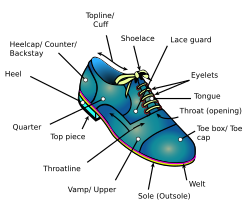
Modern footwear is composed of several technical parts that ensure fit and function. The tongue covers the top of the foot under the laces, while the insole and outsole provide the interior and exterior base. Other critical parts include the shank for support, the welt for stitching, and the tread for grip.
Categorization of Footwear
Footwear is broadly categorized by its design and intended use:
- Boots: Including combat, hiking, Wellington, and cowboy boots.
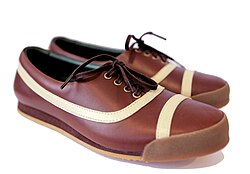
- Shoes: Ranging from athletic sneakers and oxfords to loafers and ballet flats.
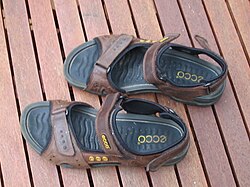
- Sandals: Including flip-flops, slides, and traditional styles like Kolhapuri chappals.
- Slippers: Both open and closed varieties for indoor use.
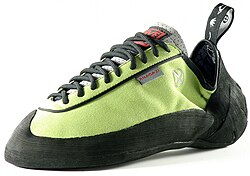
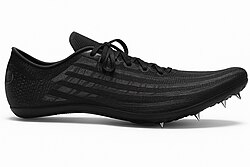
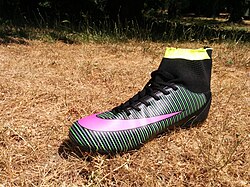
- Specialized Gear: Such as climbing shoes, football boots (cleats), and ice skates.
Traditional and Niche Footwear
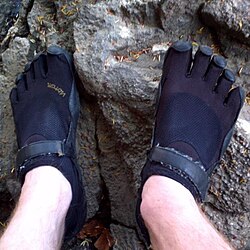
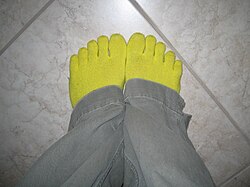
Various cultures have developed unique footwear, such as the Japanese Geta (wooden shoes), the Dutch Klompen, and the Finnish Army's footwraps used until the 1990s. Modern niche options include minimalist shoes and Vibram FiveFingers toe shoes.
Safety and Industrial Standards
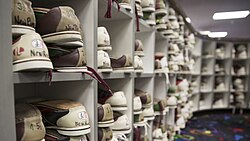
In professional environments, footwear is a critical piece of Personal Protective Equipment (PPE). Safety shoes are designed to protect against falling objects, sharp materials, electrocution, and chemical exposure. Key features often include steel or composite toe caps and puncture-proof midsoles.
To ensure these protections are effective, manufacturers follow international standards:
- ISO 20345: General requirements for safety footwear.
- ASTM F2413: The primary safety standard used in the USA.
- EN ISO 20345: The European standard for safety footwear.
Proper fit is essential; tight-fitting footwear can lead to fractured toes, ankle sprains, and reduced productivity, increasing employer liability in construction and warehouse settings.
| Category | Key Examples | Primary Purpose |
|---|---|---|
| Athletic | Sneakers, Track Spikes, Cleats | Performance and Stability |
| Safety | Steel-toe Boots, Waders | Hazard Protection |
| Casual/Fashion | Loafers, Pumps, Sandals | Aesthetics and Comfort |
| Traditional | Geta, Klompen, Moccasins | Cultural Heritage/Utility |
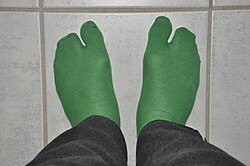
| Hosiery | Socks, Toe Socks, Tabi | Comfort and Lining |
Frequently Asked Questions
What is a turnshoe?
A turnshoe is a medieval style of footwear where the sole and upper were sewn together and then turned inside-out. This technique hid the seam on the inside, which improved water resistance and protected the stitching from wear.
Why are safety footwear standards like ISO 20345 important?
These standards ensure that safety shoes meet minimum performance criteria for impact resistance, puncture protection, slide resistance, and insulation, protecting workers from workplace hazards like falling objects or chemicals.
Which country is the largest producer of footwear today?
China is the dominant producer, manufacturing more than 60% of the world's exported footwear, although a significant portion of the trade value remains with American and German brands.
What are the risks of wearing ill-fitting footwear?
Tight-fitting shoes can cause extreme pain, crushed or fractured toes, and ankle sprains. In industrial settings, this can lead to increased insurance premiums and workplace accidents.
What is the difference between a pump and a court shoe?
They are essentially the same type of shoe; "court shoe" is the term commonly used in the UK, while "pump" is the preferred term in the United States.