Football in Venezuela: The Rise of La Vinotinto
In Venezuela, football has steadily climbed the ranks of popularity to become a mainstream sport. While it now shares the spotlight with baseball, the latter remains the country's primary sport. This dominance is largely attributed to the deep-rooted nature of baseball in the culture and the high-profile success of Venezuelan athletes in Major League Baseball (MLB).
Historically, football's growth was hindered by the national team's struggles on the international stage. Venezuela holds the distinction of being the only South American team not to have qualified for a FIFA World Cup, excluding Suriname, Guyana, and French Guiana, which compete in the CONCACAF region. Despite this, the team consistently competes in one of the world's most challenging brackets, facing global powerhouses like Brazil and Argentina.
Key Facts
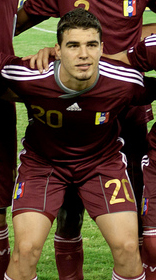
- La Vinotinto: The nickname for the national team, meaning "The Red Wine," referring to their dark burgundy jerseys.
- World Cup Status: Venezuela is the only South American nation in the CONMEBOL region never to qualify for a World Cup.
- Governing Body: The Federación Venezolana de Fútbol (FVF) was established in 1926.
- Youth Success: The under-20 national team achieved a historic runner-up finish at the 2017 FIFA U-20 World Cup.
- Professionalism: Professional football was officially established in Venezuela in 1957.
The History of the National Team
The journey of Venezuelan football has been fraught with difficulty. Following the creation of the Liga Venezolana in 1921 and the FVF in 1926, the national team played its first match in 1938. However, the era between 1966 and 1994 was particularly bleak. During this period, the team was often referred to as the "whipping boys" due to frequent and heavy losses.
Across seven qualifying campaigns during this era, the team played 65 matches, recording only seven wins and seven draws against fifty-one losses. Their goal difference stood at negative 99, highlighting a significant gap in quality compared to their opponents.
In 1998, a change in the qualifying format and a new point system offered a glimmer of hope. However, the team initially struggled to capitalize on these easier conditions, performing worse than they had under the previous, stricter rules.
The Revolution of La Vinotinto
The trajectory of the team changed with the appointment of Richard Páez, a former player, as head coach. Páez revolutionized the squad by integrating younger talent and shifting the team's mentality from defeatism to victory.
A landmark moment occurred when Páez led the team to its first-ever victory over Uruguay. Following the 3–0 win, Páez remarked that the country had earned the right to savor the triumph after "thirty six years of humiliation."
The momentum continued in 2007 when Venezuela hosted the Copa América. The team won its second-ever match in the tournament's history and remained undefeated in their group stage before falling 4–1 to Uruguay in the quarter-finals. This event sparked a surge of national enthusiasm, briefly making football the country's favorite sport.
Following Páez's resignation before the 2010 qualifiers, César Farías took over. Farías continued the revolution, focusing on increasing the intensity of play across all youth levels to produce higher-quality players for the senior squad.
Youth and Women's Football
Beyond the senior men's team, Venezuela has seen significant success in youth categories. The national under-20 team qualified for the 2009 FIFA U-20 World Cup after finishing fourth in the hexagonal final, notably defeating powerhouses like Argentina and Colombia.
The pinnacle of youth achievement came in 2017, when the Venezuelan under-20 team finished as runners-up in the FIFA U-20 World Cup. Additionally, Venezuela maintains active under-17 and women's national teams.
Major Football Stadiums
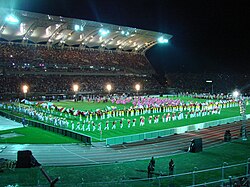
Venezuela boasts several large-scale venues that support its growing football passion. These stadiums provide the infrastructure necessary for both domestic league matches and international fixtures.
| Stadium | Capacity | City | Home Team |
|---|---|---|---|
| Estadio Monumental de Maturín | 52,000 | Maturín | Monagas Sport Club |
| Estadio Metropolitano de Fútbol de Lara | 47,913 | Barquisimeto | Unión Lara |
| Estadio Metropolitano de Mérida | 42,200 | Mérida | Estudiantes de Mérida FC |
| Polideportivo Cachamay | 41,600 | Ciudad Guayana | Atlético Club Mineros de Guayana |
| Estadio José Pachencho Romero | 40,800 | Maracaibo | Unión Atlético Maracaibo |
| Estadio Polideportivo de Pueblo Nuevo | 38,755 | San Cristóbal | Deportivo Táchira Fútbol Club |
| Estadio José Antonio Anzoátegui | 37,485 | Puerto la Cruz | Deportivo Anzoátegui |
Frequently Asked Questions
Why is the Venezuelan team called "La Vinotinto"?
The team is nicknamed "La Vinotinto" (The Red Wine) because of the dark burgundy color of their jerseys, which resembles the color of red wine.
Has Venezuela ever qualified for the FIFA World Cup?
No, Venezuela is the only South American team in the CONMEBOL region that has never qualified for a FIFA World Cup.
Who was the coach responsible for the team's "revolution"?
Richard Páez is credited with revolutionizing the team by introducing younger players and leading them to historic victories, including a 3–0 win over Uruguay.
What is the most successful achievement of Venezuela's youth teams?
The most significant achievement was the under-20 national team becoming the runners-up in the 2017 FIFA U-20 World Cup.
Which sport is traditionally more popular than football in Venezuela?
Baseball is traditionally the most popular sport in Venezuela, driven by the success of its players in Major League Baseball (MLB).