Five-Pointed Stars: Symbolism, Geometry, and Global Usage
The five-pointed star is one of the most recognizable ideograms in the western world and beyond. From national flags to mystical symbols, its simple geometry carries a vast array of meanings depending on its construction and cultural context.
The Geometry of the Star
When a five-pointed star is drawn with points of equal length and angles of 36° at each point, it is referred to as a golden five pointed star. A different variation occurs when the collinear edges are joined to create a pentagram. The pentagram is the simplest form of a unicursal star polygon—a star drawn in a single continuous line—and is often associated with magical and mystical significance.

Global and Political Symbolism
In the modern era, the five-pointed star is frequently linked to military power and war. This association is evident in the heraldry of the United States and the flags of 35 different countries. It is significantly more common in vexillology (the study of flags) than the seven-pointed star.
Political ideologies have also adopted the symbol; many communist nations, including China and Vietnam, incorporate five-pointed stars into their national symbols. Historically, the 1777 Flag of the United States featured 13 stars, though the number of points on those stars was unspecified.
Religious and Cultural Meanings
The five-pointed star often appears alongside a crescent to symbolize Islam, a design famously used by the Ottoman Empire. However, it is worth noting that the oldest Ottoman flags and the flag of Azerbaijan utilize an eight-pointed star instead.
In Armenian mythology, the goddess Astlik (or Astghik) is linked to the stars; in the Armenian language, Astgh means star and Astghik means "Little Star." While the five-pointed star is common today, the sign for this goddess would likely have been an eight-pointed star, similar to Ishtar or Astara.
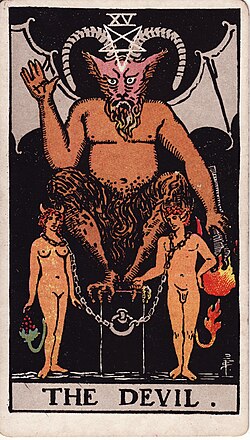
Beyond state and religion, the pentagram has taken on darker connotations in specific movements. During the Romanticism period and in modern Satanism, a pentagram with a point facing downward was adopted as a symbol of the devil.
Specialized Uses of the Star
The five-pointed star serves specific purposes in niche fields and subcultures:
- Philately: In the study and collection of postage stamps, a five-pointed star indicates that a stamp has not been postmarked.
- Gang Culture: The symbol is used by the People Nation alliance of gangs in Chicago. This usage was later emulated by the United Blood Nation, a group originating from New York.
Key Facts
- The golden five pointed star features equal point lengths and 36° angles.
- The pentagram is the simplest unicursal star polygon.
- Five-pointed stars appear on the flags of 35 countries.
- In philately, the star denotes stamps that are not postmarked.
- The downward-pointing pentagram is a symbol used in modern Satanism and Romanticism.
| Category | Usage/Meaning | Examples |
|---|---|---|
| Political | Military power, Communism | USA, China, Vietnam |
| Religious | Islam | Ottoman Empire |
| Mystical | Magic, Satanism | Pentagrams |
| Technical | Unpostmarked stamps | Philately |
Frequently Asked Questions
What is the difference between a five-pointed star and a pentagram?
While both have five points, a pentagram is specifically a five-pointed star drawn with five straight strokes, forming a unicursal star polygon.
How many countries use the five-pointed star on their flags?
The five-pointed star appears in the flags of 35 countries.
What does the five-pointed star mean in philately?
In the context of stamp collecting, it signifies that the stamps have not been postmarked.
Is the star and crescent always five-pointed?
No. While modern flags mostly use five-pointed stars, the flag of Azerbaijan and the oldest Ottoman flags use an eight-pointed star.
What is a golden five pointed star?
It is a star drawn with points of equal length and angles of 36° at each point.