Fire and Rescue Services in the United Kingdom
The United Kingdom's approach to fire safety and emergency response is a complex network of legislative and administrative arrangements. Rather than a single national entity, emergency cover is provided by 49 fire and rescue services (FRS) as of 2023. While the terms "fire brigade" and "fire service" are still used informally, the modern framework emphasizes a broader rescue mandate.
The governance of these services varies significantly by region. In England and Wales, local fire services are overseen by fire authorities composed of local government representatives. These authorities fund their operations through a combination of government grants and a Council Tax levy. In contrast, Scotland and Northern Ireland operate centralized services, where authorities function as committees of their respective devolved parliaments.
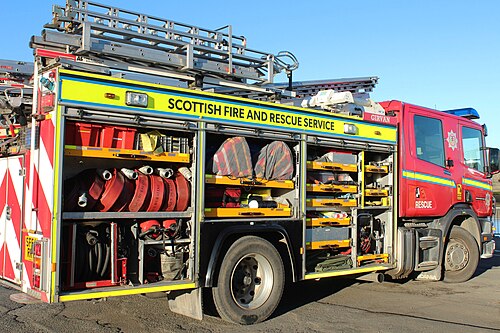
Key Facts
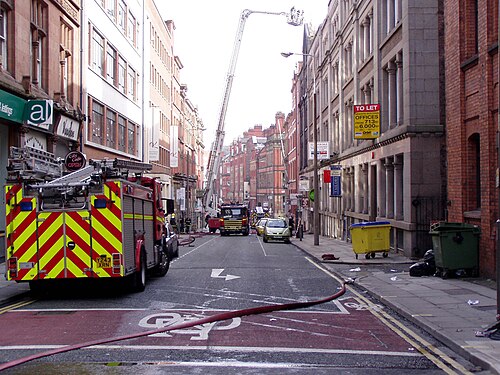
- Total Services: 49 fire and rescue services provide emergency cover across the UK.
- Funding: The total budget for fire services was £2.9 billion in 2014-15.
- Oversight: His Majesty's Inspectorate of Constabulary and Fire & Rescue Services provides direct oversight in England and Wales.
- Centralization: Scotland and Northern Ireland utilize centralized fire service models.
- Recent Legislation: The Fire Safety (England) Regulations 2022 were introduced to implement recommendations from the Grenfell Tower Inquiry.
Legislative Framework and Evolution
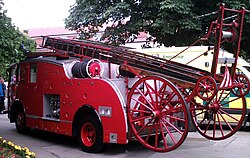
The legal basis for firefighting in the UK has evolved from mandatory local arrangements to sophisticated safety regulations. Early milestones include the Fire Brigades Act 1938, which mandated local authorities to provide effective services, and the Fire Services Act 1947, which transferred functions from the National Fire Service back to local control.
In the modern era, the Fire and Rescue Services Act 2004 serves as a primary pillar for England and Wales. This was followed by the Regulatory Reform (Fire Safety) Order 2005, which streamlined fire precautions in premises and replaced the old system of issuing fire certificates.
Regional Legislative Variations
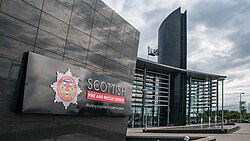
- Scotland: The Police and Fire Reform (Scotland) Act 2012 created a single, unified Scottish Fire and Rescue Service on April 1, 2013.
- Northern Ireland: The Northern Ireland Fire Authority was unified in 1950, later governed by the Fire and Rescue Services (Northern Ireland) Order 2006.
- Wales: The Government of Wales Act 2006 granted the National Assembly for Wales powers to pass laws regarding fire and rescue services and the promotion of fire safety.
Organizational Structure and Ranks
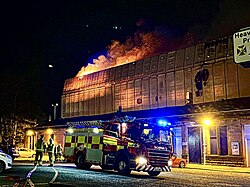
Fire services are structured to ensure a clear chain of command during emergencies. Large organizations, such as the London Fire Brigade, further divide their operations into "commands." While ranks vary between services, they generally follow a hierarchy from firefighters up to the Chief Fire Officer or Commissioner.

Comparison of Rank Titles
| General/Standard Title | London Title | Scottish Title |
|---|---|---|
| Chief Fire Officer | Commissioner | Chief Fire Officer |
| Area Manager | Group Commander | Area Manager |
| Station Manager | Station Commander | Station Manager |
| Watch Manager | Station Officer | Watch Manager |
| Crew Manager | Leading Firefighter | Crew Manager |
| Firefighter | Firefighter | Firefighter |
Specialized Services and Modernization
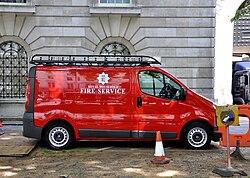
Beyond the public FRS, the UK maintains several specialized fire services. These include airport fire services, the Defence Fire and Rescue Service, and dedicated services protecting royal properties, such as the Royal Household Fire Service at Buckingham Palace.
Modernization efforts have been driven by independent reviews, most notably the 2002 review by Professor Sir George Bain. This led to the 2004 Act and attempts to rationalize call handling. One such initiative, the FiReControl project, aimed to create nine Regional Control Centres to improve communication between emergency services, though the system remains largely handled by individual FRS units via the 999 system.
Frequently Asked Questions
How is the fire service funded in England and Wales?
Funding is provided through a combination of central government grants and a Council Tax levy raised by the local fire authority.
What is the difference between the fire services in Scotland and England?
Scotland has a single, centralized service (the Scottish Fire and Rescue Service), whereas England and Wales utilize a decentralized system of multiple local fire and rescue services.
What was the purpose of the Fire Safety (England) Regulations 2022?
These regulations were introduced to implement the majority of the recommendations from the Grenfell Tower Inquiry to better protect the public from fire hazards.
Who provides oversight for fire services in the UK?
In England and Wales, oversight is provided by His Majesty's Inspectorate of Constabulary and Fire & Rescue Services, while Scotland has a similar agency known as HMFSI Scotland.
What is the role of the Chief Fire and Rescue Adviser?
Created in 2007, this role provides a body of independent advisers to help the central government maintain national standards for fire services.