Filter Feeders: Nature's Aquatic Water Purifiers
In the vast expanse of the world's oceans and waterways, a diverse group of animals has evolved a sophisticated method of survival known as filter feeding. These aquatic organisms do not hunt in the traditional sense; instead, they strain organic matter, food particles, and tiny organisms—such as bacteria, microalgae, and zooplankton—directly from the water. By passing water through specialized filtering organs, they sieve out the nutrients they need to survive.
Beyond their own survival, filter feeders act as critical ecosystem engineers. They condense biomass and remove excess nutrients like nitrogen and phosphate from their environment, effectively cleaning the water. Because they concentrate these substances, they are also vital indicator organisms used to study bioaccumulation in aquatic habitats.
Key Facts
- Diverse Habitats: Filter feeders can be sessile (fixed in one place), planktonic (drifting), nektonic (swimming), or neustonic (floating at the surface).
- Environmental Impact: They combat eutrophication (excess nutrient buildup) and improve water clarity.
- Broad Taxonomy: This feeding strategy is found across numerous phyla, from simple sponges to massive baleen whales.
- Mechanism: Feeding occurs via sieving (trapping particles by size) or using sticky surfaces to capture smaller particles.
The Mechanics of Filter Feeding
The process of filter feeding generally relies on two primary theories. The first, proposed in 1851, is sieving, where particles are trapped based on the size of the filter's mesh. The second theory, introduced in 1905, suggests that some animals use sticky limbs or surfaces to collide with and capture particles that are actually smaller than the mesh size itself.
Depending on the species, the filtering organ can vary wildly, from the microscopic collar cells of a sponge to the massive keratin plates of a whale.
Filter Feeding Across the Animal Kingdom
Vertebrates: From Sharks to Whales
Many large marine vertebrates have adapted to filter feeding to exploit the abundance of plankton. Cartilaginous fishes, such as the whale shark, use a unique modification of gill rakers to trap particles larger than 2 to 3 mm. While the whale shark and megamouth shark can actively pump water, the basking shark is a passive filter feeder, relying on its swimming motion to push up to 2,000 tons of water per hour through its gills.
Manta rays employ a similar strategy, often timing their feeding to coincide with the spawning of fish to consume free-floating eggs and sperm.
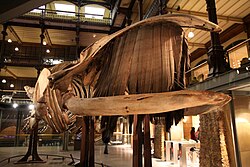
Baleen whales (Mysticeti) are perhaps the most famous filter feeders. They possess baleen plates—triangular keratin structures similar to human fingernails—attached to their upper jaws. Right whales swim slowly, letting water enter a gap between baleen rows, while rorquals (like the blue whale) are fast swimmers that gulp massive volumes of water, expanding their ventral grooves to maximize intake.
Invertebrates and Simple Organisms
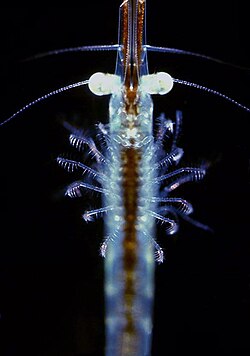
Invertebrates exhibit an incredible array of filtering techniques. Bivalves, such as mussels and oysters, are essential for nutrient bioextraction. By removing nitrogen and phosphorus, they help prevent harmful algal blooms and increase light availability for underwater plants like eelgrass.
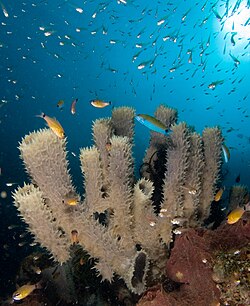
Sponges (Poriferans) operate as living pumps. A small sponge like Leuconia can pull water through 80,000 incurrent canals. The water slows down significantly as it enters millions of flagellated chambers, allowing collar cells to capture food before the water is expelled through a single opening called an osculum.
Crinoids (sea lilies) use a different approach. They extend tube feet covered in sticky mucus to trap particles. Once captured, the food is flicked into an ambulacral groove and propelled by cilia toward the mouth. A single Japanese sea lily can have a total food-trapping surface length of 80 meters.
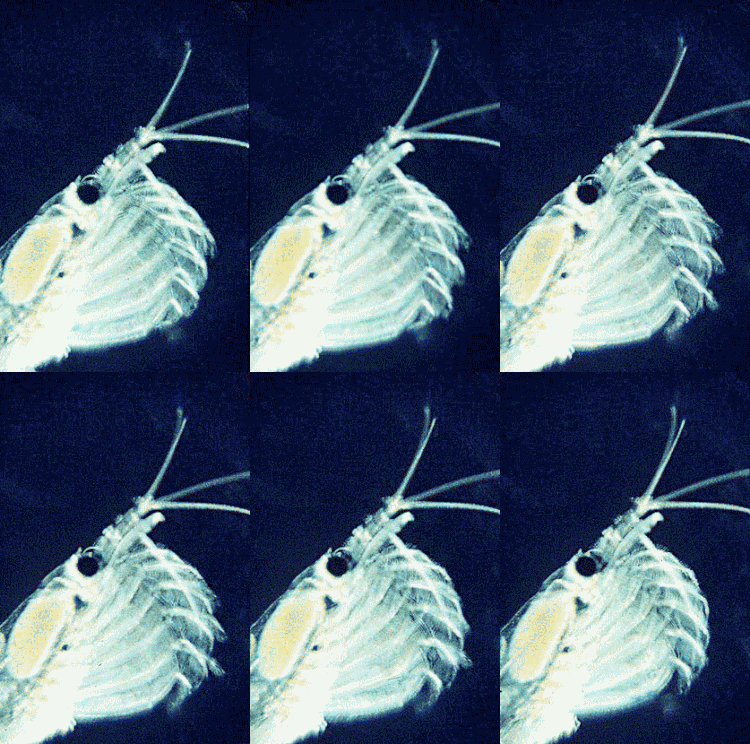
Other notable filter feeders include tunicates, which use siphons to process water, and various cnidarians such as corals and sea fans.
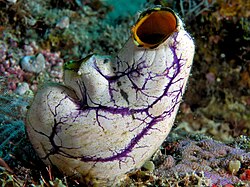
Terrestrial Visitors
While primarily land-based, some birds have evolved filter-feeding capabilities for foraging. Flamingos, for instance, possess specialized bills adapted for scooping and filtering food from the bottom of shallow waters.
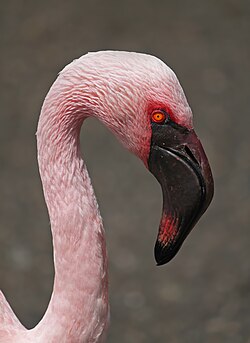
Summary of Filter Feeding Types
| Organism Group | Filtering Mechanism | Primary Food Source | Mobility |
|---|---|---|---|
| Baleen Whales | Keratin Baleen Plates | Krill, Small Fish | Nektonic |
| Basking Sharks | Passive Gill Rakers | Zooplankton | Nektonic |
| Bivalves | Sieving/Gills | Organic Matter | Sessile |
| Sponges | Flagellated Chambers | Bacteria, Microalgae | Sessile |
| Crinoids | Sticky Tube Feet | Plankton | Sessile |
Frequently Asked Questions
What is the difference between sieving and sticky filtering?
Sieving is a mechanical process where only particles of a specific size (matching the mesh of the filter) are trapped. Sticky filtering involves the use of mucus or adhesive surfaces to capture particles that may be smaller than the filter's physical gaps.
How do filter feeders help the environment?
They act as water-cleaning ecosystem engineers by removing excess nutrients like nitrogen and phosphate. This process, known as nutrient bioextraction, helps prevent eutrophication and harmful algal blooms.
Do all whales filter feed?
No. Only baleen whales (Mysticeti) are filter feeders. Toothed whales (Odontoceti), such as orcas and dolphins, hunt individual prey using teeth.
How does a sponge move water without a heart?
Sponges use millions of flagellated chambers to create a water current. This current brings dissolved gases and food to the cells via simple diffusion and carries metabolic waste away through the osculum.
Can land animals be filter feeders?
While filter feeding is primarily an aquatic strategy, some birds like flamingos and certain duck species use filter-feeding mechanisms when foraging in the water.