Fermat's Last Theorem: The History and Proof of a Mathematical Mystery
For over three centuries, one of the most famous riddles in the history of mathematics remained unsolved. Known as Fermat's Last Theorem, this problem began not as a formal publication, but as a cryptic note scribbled in the margin of a book. It challenged the greatest minds in number theory—the study of integers and their properties—until it was finally conquered in the late 20th century using mathematics that would have been unimaginable in the 17th century.
Key Facts
- Proposed by: Pierre de Fermat around 1637.
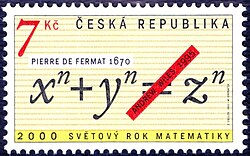
- The Claim: The equation xn + yn = zn has no positive integer solutions for n > 2.
- Solved by: Andrew Wiles, with the proof released in 1994 and published in 1995.
- Core Method: The proof utilized the modularity theorem and the properties of elliptic curves.
- Recognition: Andrew Wiles received the Abel Prize in 2016 for his achievement.
Pythagorean Origins
The theorem is a direct extension of the Pythagorean equation, x2 + y2 = z2. This equation has an infinite number of positive integer solutions, known as Pythagorean triples (such as 3, 4, and 5). Around 1637, Pierre de Fermat contemplated what would happen if the exponent was increased beyond 2.
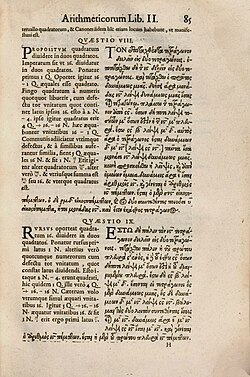
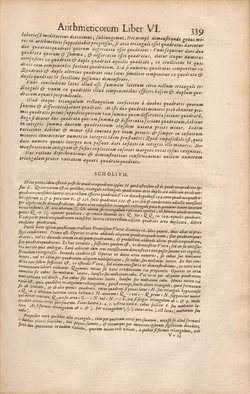
Fermat wrote in the margin of his copy of Diophantus's Arithmetica that the equation had no solutions in positive integers if n is an integer greater than 2. He famously claimed to have a general proof, but noted that the margin was too small to contain it. This claim was discovered roughly 30 years after his death.
The Long Road to a Solution
For 358 years, mathematicians attempted to prove Fermat's conjecture. Early efforts focused on proving the theorem for specific exponents. Fermat himself provided a proof for the case n = 4 using a method called infinite descent.
Early Contributions and Islamic Mathematics
The quest for a solution predates Fermat in some respects. In the medieval Islamic world, Abu-Mahmud Khujandi (c. 940–1000) studied the cubic equation (n = 3) and claimed to prove it had no integer solutions, though his proof is now considered faulty. Later, Ibn al-Khawwām (1243–after 1324) listed both the degree 3 and degree 4 cases as open problems.
Breakthroughs in the 19th and 20th Centuries
Significant progress was made by Sophie Germain and later by Ernst Kummer. Kummer used the theory of ideal numbers to prove the theorem for all regular prime numbers. However, he could not account for irregular primes, which are estimated to occur about 39% of the time.
By the mid-20th century, computers began to assist. In 1954, Harry Vandiver used a SWAC computer to verify the theorem for primes up to 2,521. By 1993, computational methods had extended this verification to all primes less than four million.
The Final Proof by Andrew Wiles
The ultimate solution came not from attacking the equation directly, but through a connection to elliptic curves (cubic equations in two variables). In the 1980s, mathematicians Gerhard Frey, Jean-Pierre Serre, and Ken Ribet linked Fermat's equation to the Taniyama–Shimura–Weil conjecture, which proposed that every elliptic curve is modular.
Andrew Wiles spent years working in secrecy to prove a partial version of this conjecture. On October 24, 1994, he submitted two manuscripts that established the necessary conditions to prove the theorem. His work was published in the May 1995 issue of the Annals of Mathematics.
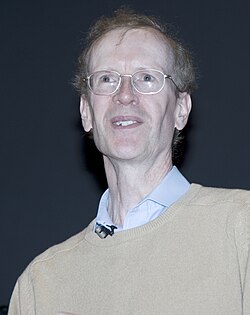
Wiles's approach, specifically the identification of a deformation ring with a Hecke algebra (the R=T theorem), became a cornerstone of modern algebraic number theory. His work paved the way for other mathematicians to fully prove the modularity theorem by 2001.
Summary of Fermat's Last Theorem
| Aspect | Details |
|---|---|
| Original Equation | xn + yn = zn |
| Condition for No Solution | n > 2 (positive integers) |
| Key Historical Figures | Pierre de Fermat, Ernst Kummer, Andrew Wiles |
| Crucial Mathematical Tools | Elliptic curves, Modularity theorem, Ideal numbers |
| Final Publication Date | May 1995 |
Frequently Asked Questions
Did Pierre de Fermat actually have a proof?
It is widely believed by modern mathematicians that Fermat did not have a valid general proof. The mathematics used by Andrew Wiles to solve the problem involves complex 20th-century concepts that did not exist in Fermat's time.
What are Pythagorean triples?
Pythagorean triples are sets of three positive integers (a, b, c) that satisfy the equation a2 + b2 = c2. The most common example is 3, 4, and 5, as 9 + 16 = 25.
What is the modularity theorem?
Formerly known as the Taniyama–Shimura–Weil conjecture, the modularity theorem states that elliptic curves are related to modular forms. Proving this connection was the key to unlocking the proof of Fermat's Last Theorem.
What prizes were awarded for the proof?
Several prizes were offered over the centuries, including one from the French Academy of Sciences and a large bequest from Paul Wolfskehl. Andrew Wiles collected the Wolfskehl prize in 1997 and the Abel Prize in 2016.
Are there any counterexamples to the theorem?
No. The theorem has been proven true for all integers n > 2. Some apparent counterexamples seen in popular culture (like in The Simpsons) are actually mathematical illusions that only appear correct when using calculators with limited significant figures.