Extreme Weather: Patterns, Causes, and the Impact of Climate Change
Extreme weather refers to weather conditions that are unexpected, unusual, severe, or unseasonal. These events exist at the extremes of a location's historical distribution—the range of weather patterns recorded in that specific area over time. While severe weather specifically describes events that pose immediate risks to life and property, extreme weather encompasses a broader spectrum of phenomena that can disrupt ecosystems and human societies.
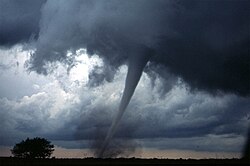
Understanding these events requires distinguishing between natural variability and long-term shifts. Weather patterns naturally fluctuate due to phenomena like the El Niño-Southern Oscillation (ENSO) or the North Atlantic Oscillation (NAO). However, recent data suggests that system-wide changes to global weather systems are influencing the frequency and intensity of these occurrences.
Key Facts
- Extreme weather events are defined based on a specific location's recorded historical weather data.
- Climate-related events reported between 2000–2019 (6,681) were significantly higher than those reported between 1980–1999 (3,656).
- Extreme temperatures are linked to approximately 9.4% of global deaths annually.
- Rising atmospheric water vapor due to global warming is making heavy rainfall events more severe.
- Heat-related deaths are increasing, while cold-related deaths are decreasing globally.
Primary Types of Extreme Weather
Heat Waves
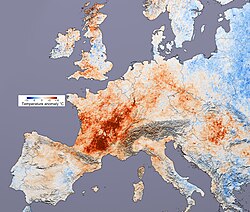
Heat waves are periods of excessively hot weather. Recent trends indicate that not only are these events becoming more intense, but heat wave seasons are also growing in length. In European urban areas, extreme heat contributed to over 13,000 excess deaths annually between 2000 and 2019.
Cold Waves
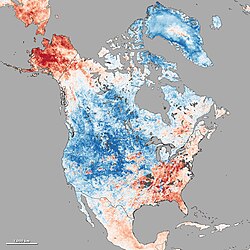
Cold waves involve periods of intense cold. The relationship between climate change and cold waves is complex and remains a subject of scientific discussion. While some research suggests changes in the Arctic may lead to more frequent extreme winter weather in parts of North America and Asia, other studies indicate an overall decline in the intensity and frequency of extreme cold spells due to milder winters.
Heavy Precipitation and Tropical Cyclones
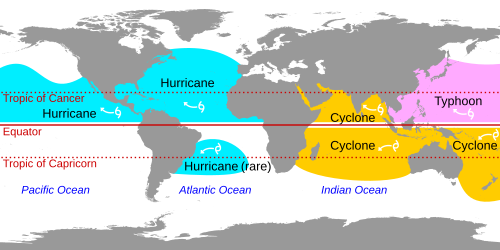
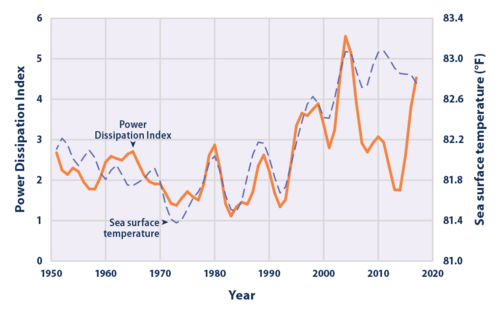
Heavy precipitation includes intense rainfall and storm events. As global temperatures rise, the amount of water vapor in the atmosphere increases, which can lead to more severe rainfall. One major manifestation of such storms is the tropical cyclone.
![The amount of water vapor in Earth's atmosphere has risen over recent decades[23] with global warming, making heavy rainfall events more severe.[24]](/images/73/64/7364518109efdd22683ee4d567e83ffbd3dde6512fad00f88f48734e3cdd9c20.webp)
Drought
Droughts are prolonged periods of deficient precipitation that can lead to water shortages and significant agricultural impacts. These events can be devastating to reservoirs and local economies.

Causes and Attribution
Natural Variability
It is important to note that a single extreme weather event cannot be attributed to a single cause. Natural cycles in the Earth's climate system play a significant role in driving weather patterns from year to year.
Climate Change and Attribution Research
The field of extreme event attribution uses climate models to investigate how much human-induced climate change contributes to specific events. By comparing models of current climates to models that exclude man-made drivers, scientists can estimate the influence of rising global temperatures.
![One way of judging which weather events are extreme involves selecting events that exceed a certain threshold of intensity (or frequency, or impact, etc., not shown). This threshold might select events lying above a certain percentile or beyond a certain number of standard deviations above average.[2] In the field of extreme event attribution, climate models then process the climate characteristics underlying the selected events for comparison to models of climates in which man-made climate drivers are excluded.](/images/36/81/36813af6b0b50959349879b4ad8803308974e63dbfc895e9d87b1688b3d4d929.webp)
While evidence shows that changing global temperatures impact the frequency of extreme weather, the most significant effects are projected to arise in the future. Climate models are essential tools for simulating atmospheric behavior and helping develop mitigation strategies.
Summary of Extreme Weather Trends
| Weather Type | Observed/Projected Trend | Primary Impact Area |
|---|---|---|
| Heat Waves | Increasing intensity and duration | Human health and urban areas |
| Cold Waves | Overall decline in intensity/frequency | Human health (mortality) |
| Heavy Rainfall | Increasing severity due to water vapor | Flooding and storm damage |
| Drought | Variable; linked to shifting patterns | Agriculture and water supplies |
![Analyzing >250 US cities, all but two experienced fewer freezing days in 2025 than in 1956. In 2025, on average, freezing days began 11 days later and ended 26 days earlier.[33]](/images/9d/4b/9d4ba73ab97123f44546823afe573f8736d6380264bfe705c3700b87486c6d39.webp)
Frequently Asked Questions
What is the difference between extreme weather and severe weather?
Extreme weather refers to any weather that falls outside the historical norm for a location. Severe weather is a specific subset of extreme weather that poses direct risks to life and property.
How does climate change affect heat waves?
Climate models indicate that rising global temperatures can make heat waves more frequent, more intense, and longer in duration.
Are cold waves becoming more common due to climate change?
The scientific community is still debating this. While some research suggests Arctic changes might influence winter extremes in certain regions, other studies show an overall decline in the frequency and intensity of extreme cold spells globally.
How can scientists attribute a specific storm to climate change?
Scientists use extreme event attribution, which involves running climate models with and without man-made climate drivers to see how much the likelihood or intensity of an event changes.
Has the death toll from extreme weather changed over time?
Yes. While extreme temperatures still cause millions of deaths annually, there has been a dramatic decline in deaths from certain events, such as tropical cyclones in South Asia, due to improved forecasting and preparedness.