Experimental Rock: The Evolution of Avant-Garde Sound
Experimental rock, often referred to as avant-rock or avant-garde rock, is a genre that pushes the boundaries of traditional music. By blending the energy of rock and roll with unconventional structures and sounds, it challenges the listener's perception of what music can be. From its roots in the 1960s counterculture to its modern iterations in math rock and post-rock, the genre has consistently sought to dismantle formal conventions.
Key Facts
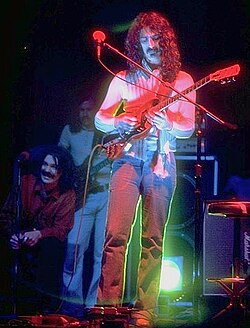
- Origins: Emerged in the 1960s across the United States and United Kingdom.
- Influences: Draws from free jazz, noise, musique concrète (music using recorded sounds as raw material), and tape music.
- Early Terminology: Originally called "avant-garde rock and roll" in publications like Sing Out! (1966).
- Key Pioneers: The Velvet Underground, Frank Zappa, and the Fugs.
- Global Impact: Led to the development of Germany's Krautrock scene in the late 1960s.
The Roots of Sonic Experimentation
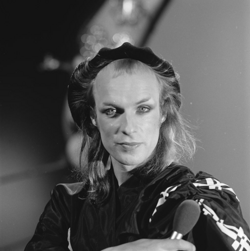
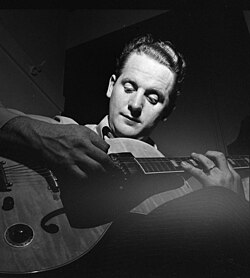
While the genre solidified in the 1960s, the seeds were sown earlier. In the 1950s, innovators like Les Paul began exploring audio effects that would later become staples of the experimental sound.
Les Paul's 1951 release "How High The Moon" was a landmark in production, showcasing early uses of flanging, delay, phasing, and vari-speed (adjusting the speed of tape recording to change pitch and tempo).
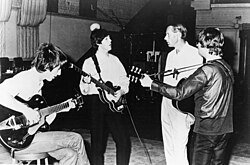
By 1964, the Beatles further pushed boundaries with "I Feel Fine," which became the first commercially released rock song to feature deliberate guitar feedback, a sound that would later be embraced by noise and avant-garde artists.
The 1960s: The Birth of Avant-Garde Rock
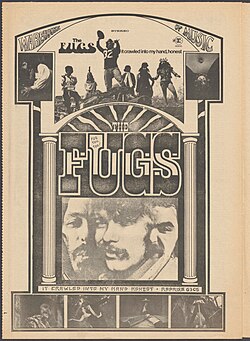
The mid-to-late 1960s saw the rise of a distinct underground scene, particularly in New York City's Lower East Side. The independent label ESP-Disk played a pivotal role, signing boundary-pushing acts such as the Fugs, the Godz, and Pearls Before Swine.
The Fugs were among the first to be explicitly labeled an "avant-garde rock and roll group" in 1966, marking a shift toward music that prioritized artistic expression over commercial appeal.
The Influence of The Velvet Underground
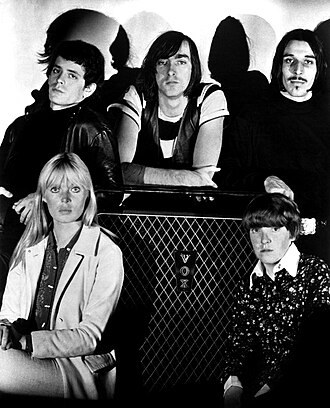
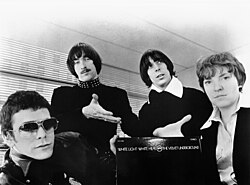
Perhaps no band defined the era more than The Velvet Underground. Produced by Andy Warhol, their 1967 debut, The Velvet Underground & Nico, and the subsequent 1968 album White Light/White Heat, introduced a raw, dissonant approach to rock. The band's early work included an instrumental piece titled "Noise," released via ESP-Disk.
West Coast Innovation
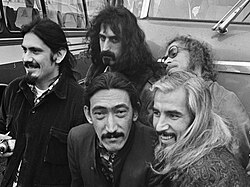
Simultaneously, the West Coast scene was evolving. Frank Zappa and the Mothers of Invention released Freak Out! in 1966, an album that inspired numerous experimental bands by blending satire with complex musical arrangements.
Other innovators, such as Silver Apples, began incorporating oscillators—electronic devices that produce a periodic signal—into their music, creating an early form of electronic rock.
Global Expansion and Krautrock
By the late 1960s, the experimental spirit spread to Germany, giving birth to Krautrock. This movement was deeply tied to the student protests of 1968 and a desire among German youth to create a cultural identity separate from their past.
Krautrock artists rejected standard rock conventions, drawing instead from minimalism and contemporary classical composers like Stockhausen. Bands such as Can, Faust, Neu!, and Kraftwerk merged psychedelic rock with funk, jazz improvisation, and early electronic music.
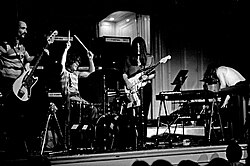
Can's 1971 album Tago Mago is widely regarded as a genre-defining work, alongside Ege Bamyasi (1972) and Future Days (1973), which serve as touchstones for the experimental rock movement.
Evolution into Modern Subgenres
The experimental ethos of the 60s and 70s branched into a vast array of derivative forms. Art rock emerged as a more polished version of these experiments, while more aggressive forms led to the birth of noise rock and no wave.
In the following decades, the genre continued to fragment and evolve. The 1980s saw the rise of figures like Glenn Branca in New York, while the 1990s and 2000s brought about the precision of math rock and the atmospheric textures of post-rock.
Modern acts like Black Midi continue this tradition, blending complex time signatures and avant-garde arrangements for contemporary audiences.
Summary of Experimental Rock Evolution
| Era | Key Movements/Styles | Notable Artists | Defining Characteristics |
|---|---|---|---|
| 1950s | Early Production Experiments | Les Paul | Flanging, delay, vari-speed |
| 1960s | Avant-Garde Rock / NYC Scene | The Velvet Underground, Frank Zappa, The Fugs | Dissonance, feedback, oscillators |
| 1970s | Krautrock | Can, Kraftwerk, Neu! | Minimalism, electronic fusion, rejection of rock norms |
| 1980s-Present | Post-Rock, Math Rock, Noise Rock | Glenn Branca, U.S. Maple, Black Midi | Complex rhythms, sonic textures, non-linear structures |
Frequently Asked Questions
What is the difference between experimental rock and art rock?
While the terms are sometimes used interchangeably, experimental rock typically focuses on the exploration of new sounds and the dismantling of musical structures. Art rock often incorporates these elements but tends to be more focused on conceptual themes and a polished, "high art" aesthetic.
What is Krautrock?
Krautrock is a form of experimental rock that emerged in Germany in the late 1960s. It is characterized by a rejection of American and British rock conventions, instead incorporating minimalism, electronic music, and avant-garde classical influences.
Who were the pioneers of the New York avant-garde scene?
Key pioneers included The Velvet Underground, the Fugs, and the Godz. The independent label ESP-Disk was instrumental in providing a platform for these artists during the 1960s counterculture movement.
What are some common characteristics of experimental rock?
Common traits include the use of non-traditional instruments (like oscillators), the embrace of noise and feedback, unconventional song structures, and the integration of elements from free jazz and musique concrète.
How did production techniques influence the genre?
Production was central to the genre's growth. Early innovations in tape manipulation by Les Paul and the use of deliberate feedback by the Beatles expanded the sonic palette available to musicians, allowing the studio itself to become an instrument.