Excretion: How Organisms Eliminate Metabolic Waste
Every living organism, from the simplest single-celled microbe to the most complex mammal, must manage the chemical leftovers of its own existence. This vital biological process is known as excretion: the elimination of metabolic waste from the body. While often confused with secretion—where substances are released to perform specific tasks elsewhere in the body—excretion is strictly about removing harmful byproducts to maintain internal balance.
Metabolism, the sum of all chemical reactions within the body (such as cellular respiration), produces several waste products. These include carbon dioxide, water, salts, urea, and uric acid. If these substances accumulate beyond a certain threshold, they become toxic and harmful. To prevent this, specialized excretory organs work continuously to purge these materials from the system.
Key Facts
- Excretion is the removal of metabolic waste, distinct from secretion.
- In vertebrates, the primary organs responsible for excretion are the kidneys, lungs, and skin.
- Nitrogenous waste varies by species: ammonia, urea, and uric acid are the most common.
- Detoxification is the process of converting toxic ammonia into less harmful substances like urea in terrestrial animals.
- Plants excrete oxygen via stomata and remove other materials through leaf-fall or passive exudation.
Excretion Across Different Life Forms
Unicellular Organisms and Simple Life
For single-celled organisms, the process is straightforward. Lacking complex organs, they discharge their waste products directly through the surface of the cell membrane into the surrounding environment.
Plants
Plants utilize several methods to eliminate waste. Oxygen, a byproduct of photosynthesis, exits the plant through the stomata (small pores on leaves), root cell walls, and other routes. Some plants also exude substances such as resin, saps, and latex. These are pushed out by hydrostatic pressures and absorptive forces within the plant cells, meaning these processes occur passively without requiring additional energy.
Additionally, deciduous plants engage in a form of excretion during the pre-abscission phase, where they shed their leaves to remove accumulated waste.
Animals and Vertebrates
In animals, the liver and kidneys are central to clearing substances from the blood—a process known as renal excretion. These wastes are then expelled from the body via urine and feces. Mammals, for example, expel urine from the bladder through the urethra as part of a dedicated excretory system.
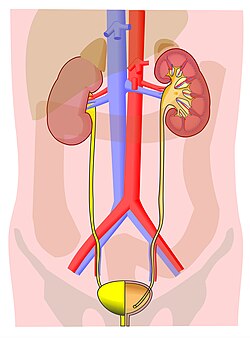
The type of waste produced depends largely on the animal's environment. Aquatic animals typically excrete ammonia directly into the water because it is highly soluble and easily diluted. However, because ammonia is toxic and water is scarce on land, terrestrial animals convert it into urea. This conversion is a critical part of detoxification.
Other animals produce different nitrogenous wastes, such as guanine in Arachnida (spiders and scorpions) and creatine.
Birds and Reptiles
Birds excrete nitrogenous waste as uric acid, which is released as a thick paste. While this method is more metabolically expensive to produce, it is highly efficient for water retention and allows waste to be stored safely within an egg. Some seabirds also possess specialized nasal salt glands to excrete excess saline solution through their nostrils.

Insects
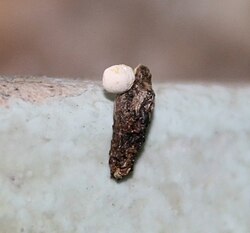
Insects utilize a unique system called Malpighian tubules. Metabolic waste is either diffused or actively transported into these tubules, which then carry the waste to the intestines. Finally, the waste is released from the body along with fecal matter; in pathological contexts, this excreted material is sometimes referred to as ejecta.
Summary of Excretory Products by Group
| Organism Group | Primary Waste Product(s) | Excretory Mechanism/Organ |
|---|---|---|
| Plants | Oxygen, Resin, Saps, Latex | Stomata, Root walls, Leaf-fall |
| Aquatic Animals | Ammonia | Direct diffusion into water |
| Terrestrial Mammals | Urea | Kidneys, Bladder, Urethra |
| Birds & Reptiles | Uric Acid | Paste-like excretion |
| Insects | Various metabolic wastes | Malpighian tubules |
| Arachnida | Guanine | Specialized excretory organs |
Frequently Asked Questions
What is the difference between excretion and secretion?
Excretion is the removal of metabolic waste products that the body no longer needs. Secretion is the release of a substance that often has a specific functional task to perform after leaving the cell.
Why do land animals produce urea instead of ammonia?
Ammonia is highly toxic and requires a large amount of water to dilute. Because terrestrial animals have limited water access, they undergo detoxification to convert ammonia into urea, which is less harmful and requires less water for elimination.
How do plants excrete waste without a urinary system?
Plants use various passive methods, including releasing oxygen through stomata, exuding resins and saps via hydrostatic pressure, and shedding leaves (leaf-fall) to remove waste.
What are Malpighian tubules?
Malpighian tubules are the excretory organs found in insects. They collect metabolic waste from the body fluids and transport it to the intestines to be expelled along with feces.
Why is uric acid beneficial for birds?
Uric acid allows birds to conserve water more efficiently than urea or ammonia. Additionally, it can be stored safely inside an egg without poisoning the developing embryo.