Wikipedia: The Evolution of the World's Largest Collaborative Encyclopedia
Imagine a library that never closes, where millions of people from every corner of the globe contribute their knowledge in real-time. This is Wikipedia, a free, multilingual online encyclopedia that has fundamentally changed how humanity accesses and shares information. Launched on January 15, 2001, by Jimmy Wales and Larry Sanger, Wikipedia grew from a bold experiment into a global cornerstone of the internet.
Before Wikipedia, there was Nupedia, a predecessor that relied on a more traditional, slow-paced expert review process. The transition to a "wiki"—a type of website that allows collaborative editing by its users—accelerated growth exponentially, enabling the platform to scale across hundreds of languages and millions of topics.
![The Wikipedia home page on December 20, 2001[f]](/images/97/6f/976ff8f084d1e2778dc81c0fc01c3a4c278c59e23a236fd9aedac879e213d24a.png)
The Core Philosophy of Open Knowledge
At its heart, Wikipedia is built on the principle of the democratization of knowledge. Unlike traditional encyclopedias written by a small group of paid experts, Wikipedia is written by a massive community of volunteers. To maintain quality and reliability, the project adheres to several foundational guidelines:
- Neutral Point of View (NPOV): Articles must be written fairly, proportionately, and without editorial bias.
- Free Content: All content is licensed under the Creative Commons Attribution-ShareAlike 4.0 license, meaning anyone can use, edit, and distribute the information.
- Civility: Editors are expected to treat one another with respect to maintain a productive collaborative environment.
- No Firm Rules: The community favors flexible guidelines over rigid laws to allow the project to evolve.
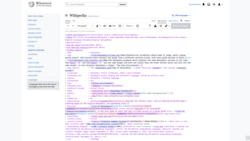
The actual process of contributing is straightforward. Through a specialized editing interface, any user can modify a page, add citations, or create new entries.
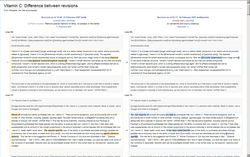
To ensure transparency, Wikipedia tracks every single change. Users can compare different versions of an article to see exactly what was added or removed, which helps in identifying errors or malicious changes.
Governance and Quality Control
Managing a site with 133 million users (as of August 1, 2026) requires a sophisticated governance structure. While the Wikimedia Foundation, a non-profit based in San Francisco, owns the site and manages the technical infrastructure, the content is governed by the community.
Community Roles and Dispute Resolution
The community utilizes a tiered system of oversight to maintain order:
- Administrators: Experienced users granted special tools to protect pages from vandalism or block disruptive users.
- Arbitration Committee: A high-level body that resolves the most complex community disputes.
- Dispute Resolution: A set of processes used to reach a consensus when editors disagree on the content of an article.
Combating Vandalism and Bias
Because anyone can edit, Wikipedia is susceptible to vandalism (the deliberate addition of false or offensive content) and edit warring (repeatedly undoing each other's changes). To combat this, the site uses a combination of human "patrollers" and automated bots that flag suspicious edits.
However, the platform also faces systemic bias. This refers to the tendency for certain topics, regions, or demographics to be over-represented while others are ignored. For example, there have been ongoing efforts to address sexism and geographical gaps in coverage to ensure a more diverse representation of global knowledge.
![Estimation of contributions shares from different regions in the world to different Wikipedia editions[151]](/images/ea/99/ea99b0d28949b58496759ab71bfd432d5b2be02edada3a6785ff7e40941b087e.png)
One of the most famous examples of the struggle for accuracy was the Seigenthaler biography incident, involving American journalist John Seigenthaler, which highlighted the risks of unchecked user contributions.
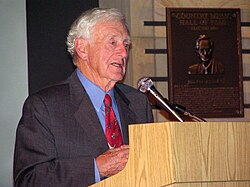
Global Reach and Technical Infrastructure
Wikipedia is a truly global project, available in 348 languages. While the English edition is the largest, with over 7.2 million articles, other editions like Cebuano, German, and French also boast millions of entries.
| Feature | Detail |
|---|---|
| Launch Date | January 15, 2001 |
| Owner | Wikimedia Foundation |
| Available Languages | 348 |
| User Base | 133 Million (as of Aug 2026) |
| Primary License | Creative Commons Attribution-ShareAlike 4.0 |
| Headquarters | San Francisco, California, US |
![Cartogram showing number of articles in the top 88 Wikipedias (as of March 2024).[update] The size of the circles for Wikipedias that have less than a million articles is fixed and not proportional to the size of the Wikipedia. The smallest Wikipedia that made the cutoff is the Haitian Creole Wikipedia with 69K articles.[g] The languages are roughly grouped by region: Northern Europe Eastern Europe Middle East East Asia Indian subcontinent Sub-Saharan Africa Central Asia Caribbean](/images/6d/a4/6da44f24e056632e0c7d66e81c85ab7a690e0bc96e04445d26f5dfb0c3468f0f.png)
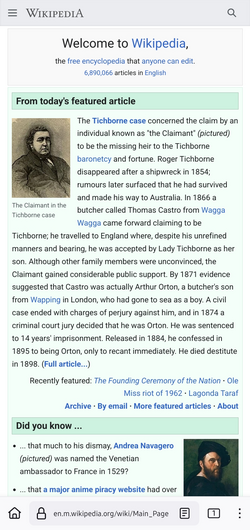
The platform's accessibility has expanded beyond the desktop. Mobile access has become a primary way users consume information, though some research suggests that the shift to mobile has impacted the number of active editors, as editing is more complex on smaller screens.
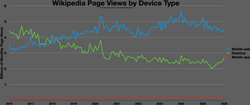
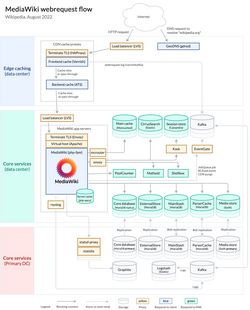
Technically, Wikipedia runs on MediaWiki, a powerful open-source wiki engine. The system architecture is designed to handle massive traffic loads through a combination of specialized servers and data centers.
To further support research and accuracy, the project established the Wikipedia Library, providing editors with access to published sources to improve the verifiability of articles.
Cultural Impact and Legacy
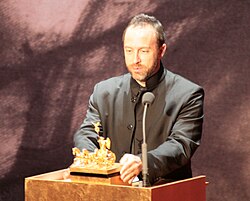
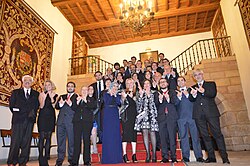
Wikipedia has evolved from a controversial source—often discouraged in early educational settings—into a trusted tool for combating fake news and a primary reference for millions. Its influence is recognized globally through various honors, including the 2015 Prince of Asturias Award for International Cooperation.
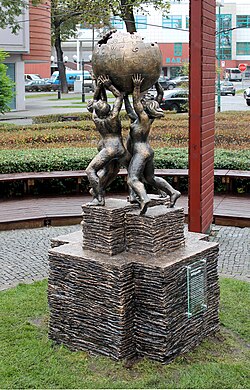
The project's impact is even visible in the physical world, such as the Wikipedia Monument in Słubice, Poland.
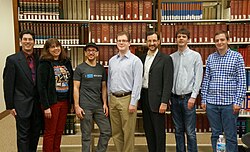
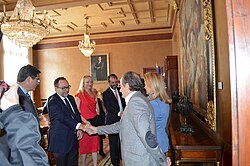
From visiting the Parliament of Asturias to collaborating with global academic institutions, the Wikimedia movement continues to push the boundaries of how information is stored and shared.
Ultimately, Wikipedia represents a shift in the power dynamics of information. By moving away from the closed-door model of the Encyclopædia Britannica and toward an open, transparent system, it has created a living record of human knowledge.