Evo Morales: The Political Journey of Bolivia's First Indigenous President
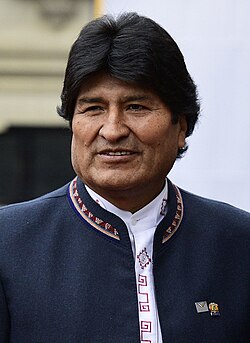
Juan Evo Morales Ayma stands as one of the most consequential figures in modern Latin American history. As the 65th President of Bolivia, he broke centuries of tradition by becoming the nation's first indigenous head of state. His trajectory from a coca leaf grower to the presidency reflects a broader shift in Bolivian society toward the empowerment of marginalized indigenous populations.
Morales's political identity is deeply rooted in his heritage and his early activism. He rose to prominence as a leader of the cocaleros (coca leaf growers), advocating for the right to grow the plant for traditional and medicinal use against international pressure for eradication.

Key Facts
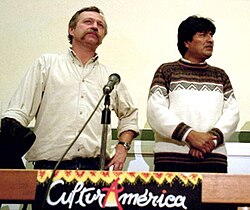
- Presidency: Served as President of Bolivia from January 22, 2006, to November 10, 2019.
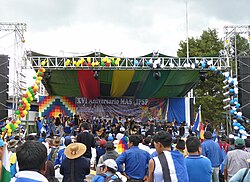
- Political Party: Founded and led the Movement for Socialism (MAS) for nearly three decades.
- Historic First: First indigenous person to hold the Bolivian presidency.
- International Roles: Served as President pro tempore of both CELAC and UNASUR.
- Military Service: Served in the Bolivian Army from 1977 to 1978 in the Fourth Ingavi Cavalry Regiment.
Early Life and Political Ascent
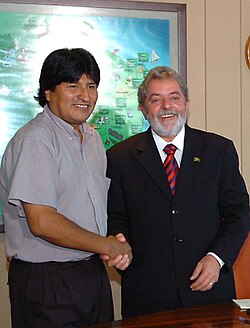
Born on October 26, 1959, in Isallavi, Bolivia, Morales's early years were marked by a blend of military service and grassroots organizing. By 1984, he had become the General Secretary of the Cocalero Union, a position that provided him with a platform to challenge the status quo of Bolivian agriculture and labor.
His transition into formal politics began in the late 1990s. He was first elected to the Chamber of Deputies in 1997 representing the United Left, and later won a seat under the Movement for Socialism (MAS) in 2002. During this period, he became a central figure in the Cochabamba protests, further cementing his image as a champion of the poor and indigenous.
The Path to the Presidency
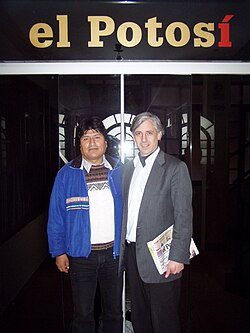
After a narrow loss in the 2002 presidential race, Morales secured a landslide victory in 2005 with 53.74% of the vote. Alongside his vice-presidential running mate, Álvaro García Linera, he entered office in January 2006 with a mandate to restructure the Bolivian state.
The Presidential Era (2006–2019)
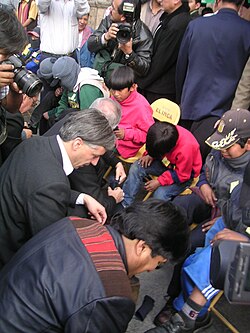
Morales's presidency was defined by a redistributionist economic program and a push for a new constitution to recognize Bolivia as a Plurinational State. He focused on nationalizing key industries and reducing poverty through social spending.
International Relations and ALBA
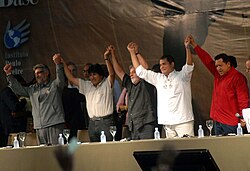
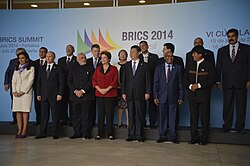
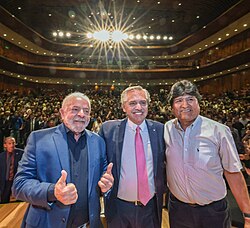
On the global stage, Morales aligned Bolivia with other left-wing governments in South America. He was a key member of ALBA (Bolivarian Alliance for the Peoples of Our America), maintaining close ties with leaders like Hugo Chávez of Venezuela and Lula da Silva of Brazil.
Domestic Governance and Infrastructure
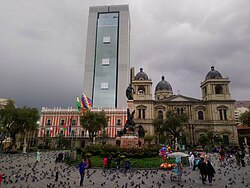
Throughout his three terms, Morales oversaw significant infrastructure projects, including the construction of the Casa Grande del Pueblo in 2018, a massive presidential office complex designed to reflect the nation's indigenous identity.
Controversy, Resignation, and Post-Presidency
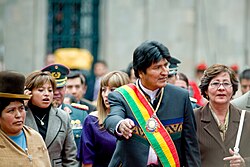
The latter years of Morales's tenure were marked by increasing tension. A 2016 referendum on term limits was intended to prevent him from running for a fourth term, but a subsequent 2017 Supreme Constitutional Tribunal ruling allowed him to seek office again.
The 2019 election resulted in allegations of fraud and widespread unrest. Following findings by the Organization of American States (OAS), Morales resigned on November 10, 2019, and sought political asylum in Mexico.
Return to Bolivia and Current Status
Morales eventually returned to Bolivia, where he has remained a polarizing figure. His post-presidency has been marked by legal battles, including a congressional pardon, an attempted assassination in 2024, and investigations into allegations of statutory rape and human trafficking.
In 2025, he transitioned from the Movement for Socialism to lead a new political entity, EVO Pueblo.
Summary of Political Career
| Year | Office/Role | Party/Alliance | Result/Status |
|---|---|---|---|
| 1997 | Deputy | United Left | Won |
| 2002 | Deputy | Movement for Socialism | Won |
| 2005 | President | Movement for Socialism | Won |
| 2009 | President | Movement for Socialism | Won |
| 2014 | President | Movement for Socialism | Won |
| 2019 | President | Movement for Socialism | Annulled/Resigned |
| 2025 | President of EVO Pueblo | EVO Pueblo | Incumbent |
Frequently Asked Questions
![President Morales with president of Chile Sebastián Piñera at the gold-copper mine San José during the Chilean mining accident and the rescue of 33 miners in 2010, who were trapped for more than two months more than 2,000 feet below the surface.[233]](/images/f6/98/f69851e4e6b73bd73aae242e31d171484e5c4f72f833238ca672e48bd47abbba.jpg)
Who was the first indigenous president of Bolivia?
Evo Morales became the first indigenous president of Bolivia when he took office on January 22, 2006.
What is the Movement for Socialism (MAS)?
The Movement for Socialism (MAS) is the political party founded and led by Evo Morales, which focused on indigenous rights and socialist economic policies.
Why did Evo Morales resign in 2019?
Morales resigned following a controversial 2019 election that led to widespread protests and allegations of fraud, supported by findings from the Organization of American States (OAS).
What is the Casa Grande del Pueblo?
The Casa Grande del Pueblo is the presidential office complex built by Evo Morales in 2018 to serve as the seat of the Bolivian government.
What is Evo Pueblo?
EVO Pueblo is the political party established by Evo Morales, which he assumed leadership of on March 31, 2025, after his long tenure with MAS.