Evangelicalism: History, Beliefs, and Global Impact of the Protestant Movement
Evangelicalism, also known as Evangelical Christianity or Evangelical Protestantism, is a diverse, interdenominational movement within Protestant Christianity. At its core, the movement emphasizes evangelism—the preaching and spreading of the Christian gospel. The term itself is derived from the Koine Greek word euangelion, meaning "good news," referring to the message of salvation through Jesus Christ.
While it is a global phenomenon, evangelicalism is not a single denomination but a movement that spans various church traditions. It typically emphasizes a personal conversion experience, often described as being "born again," and maintains that the Bible is the ultimate authority for faith and practice. Because of its breadth, theologians and scholars often debate its exact definition, as it encompasses a wide range of beliefs and practices.

Key Facts

- Core Focus: Emphasis on the "good news" (euangelion) and the active spreading of the gospel.
- Central Beliefs: Strong focus on personal conversion ("born again") and the supreme authority of the Bible.
- Origins: Roots in the 16th-century Protestant Reformation, with the modern movement emerging around 1734.
- Global Reach: Significant presence in the Americas, Sub-Saharan Africa, and Asia.
- Educational Impact: Operates vast networks of schools and theological institutes worldwide.
Theological Foundations and History

Early Roots and the Reformation
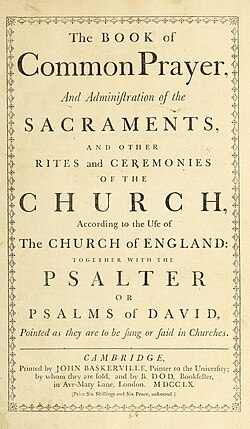
The theological foundations of evangelicalism trace back to the Protestant Reformation in 16th-century Europe, which prioritized the authority of Scripture. Historically, the term was closely associated with Evangelical-Lutheran Churches, which used the descriptor to signal their adherence to pure gospel doctrines.
The Modern Movement and Great Awakenings
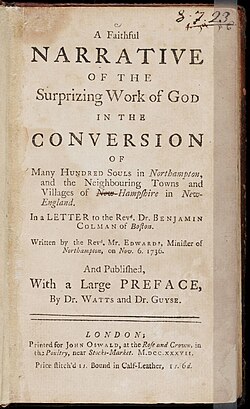
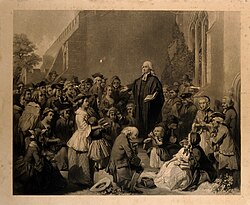
The modern evangelical movement began to take shape around 1734, influenced by currents such as Pietism, Puritanism, Quakerism, and Moravianism—specifically the work of Nicolaus Zinzendorf and the Herrnhut community. It gained significant momentum during the First Great Awakening, led by influential figures like John Wesley and the early Methodists.
Evolution in the 19th and 20th Centuries
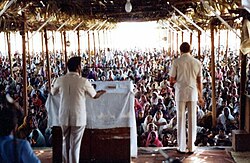
Over time, the movement expanded its focus. In the 19th century, figures like William Wilberforce combined evangelical faith with social activism, leading the British movement to abolish the slave trade. By the 20th century, revivalists like Billy Graham brought evangelicalism to massive global audiences through large-scale crusades.


Diversity Within the Movement
Evangelicalism is not monolithic; it contains several distinct varieties:
- Christian Fundamentalism: A conservative branch that often emphasizes a literal interpretation of the Bible.
- Mainstream Evangelicals: Those who balance traditional doctrines with engagement in academic scholarship and social concerns.
- Progressive Evangelicals: A smaller, growing minority that identifies as liberal while remaining within the evangelical framework.

Global Presence and Institutions
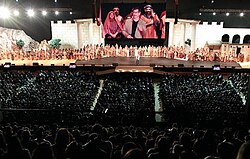
Education and Healthcare
The movement has established significant institutional footprints. The Association of Christian Schools International, founded in 1978, is projected to have 25,000 schools across 108 countries by 2025. Similarly, the International Council for Evangelical Theological Education (founded in 1980) supports 850 member schools in 113 countries.



Regional Impact
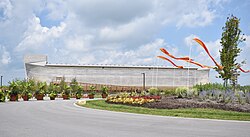
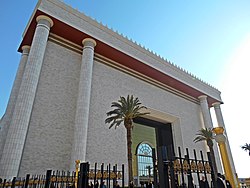
Evangelicalism has seen explosive growth in the Global South. In Brazil, the movement is highly visible through large-scale projects like the Temple of Solomon replica. In the Philippines, the Philippine Council of Evangelical Churches (PCEC) reported over 11 million members as of 2011. In the United States, socially conservative evangelicalism remains a dominant force, particularly in the "Bible Belt" of the South.

Humanitarian Efforts
Many evangelical organizations engage in global humanitarian aid, providing emergency food distribution and disaster relief, as seen in the work of organizations like World Vision International.

Summary of Global Evangelicalism
| Category | Details |
|---|---|
| Primary Goal | Evangelism (spreading the gospel) |
| Key Requirement | Personal conversion ("born again") |
| Authority | The Bible (Scripture) |
| Major Hubs | USA (Bible Belt), Brazil, Nigeria, South Korea, Philippines |
| Key Institutions | World Evangelical Alliance, ACSI, ICETE |
Worship and Practice
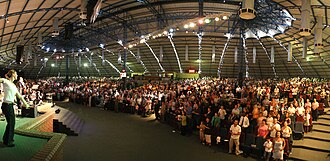
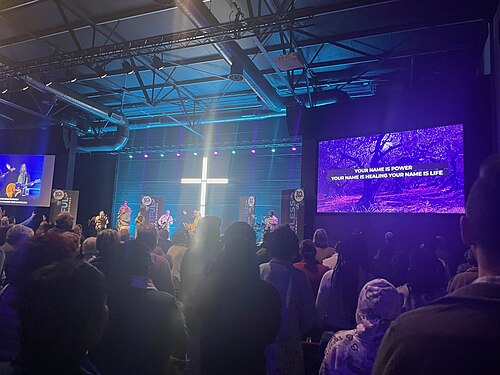
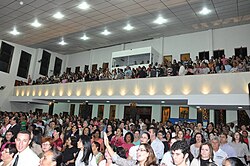
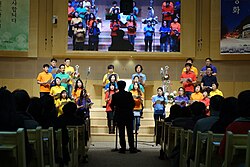
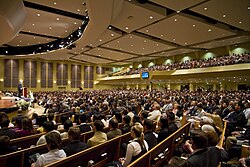
Worship styles vary wildly across the movement. Some congregations maintain traditional services, while others, particularly within the charismatic and Pentecostal wings, utilize high-energy music and modern auditoriums.





Frequently Asked Questions




What is the difference between evangelicalism and evangelism?
Evangelicalism is a broad Protestant movement and theological tradition, whereas evangelism is the specific act of preaching the gospel to convert others to Christianity.
What does it mean to be "born again"?
Being "born again" refers to a personal conversion experience where an individual makes a conscious decision to commit their life to Jesus Christ, marking a spiritual rebirth.
Is evangelicalism the same as fundamentalism?
While they overlap, they are not identical. Fundamentalism is a more rigid, conservative subset of evangelicalism. Many mainstream evangelicals reject the term "fundamentalist" due to its pejorative connotations, preferring "conservative evangelical."
Where is evangelicalism most prominent today?
While historically rooted in Europe and North America, it has seen massive growth in Africa (especially Nigeria), Latin America (especially Brazil), and Asia (especially South Korea and the Philippines).
How does the movement view the Bible?
Evangelicals generally regard the Bible as the ultimate and final authority in all matters of faith, practice, and doctrine.