Estonia National Football Team: History, Milestones, and Legacy
Known affectionately as the Sinisärgid (Blueshirts) or Kalevipojad, the Estonia national football team represents the spirit and resilience of Estonian sport. Managed by the Eesti Jalgpalli Liit (EJL), the team has navigated a complex history—from early 20th-century beginnings and the challenges of occupation to a modern era of competitive growth within UEFA.
While the team has yet to qualify for a FIFA World Cup or UEFA European Championship, they have carved out a reputation for punching above their weight, securing historic victories against global powerhouses and dominating regional competitions.
Key Facts
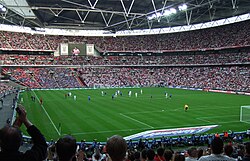
- Most Capped Player: Konstantin Vassiljev (159 appearances).
- Top Goalscorer: Andres Oper (38 goals).
- Home Ground: Lilleküla Stadium (A. Le Coq Arena) in Tallinn.
- Regional Success: Six-time Baltic Cup Champions.
- Highest FIFA Ranking: 47th (March 2012).
- Current Head Coach: Jürgen Henn.
Historical Journey
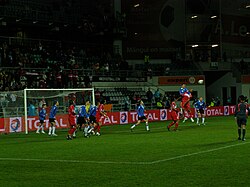
Early Years and the First Republic (1918–1940)
Estonia's international football journey began on October 17, 1920, with a 6–0 defeat to Finland in Helsinki. Despite a difficult start, the team grew in stature, participating in the 1924 Summer Olympics in Paris, where they faced the United States in the first round.
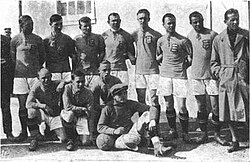
The 1920s and 30s saw the emergence of the Baltic Cup, a regional contest between Estonia, Latvia, and Lithuania. Estonia proved to be a formidable force in this competition, notably winning the tournament in 1938.
Occupation and the Return to Independence
The trajectory of Estonian football was halted in 1940 when the Soviet Union invaded and occupied the country. For over five decades, a sovereign national team could not be fielded. It was only after Estonia restored its full independence in August 1991 that the team returned to the global stage.
The first FIFA-recognised match of the modern era took place on June 3, 1992, resulting in a 1–1 draw against Slovenia in Tallinn.
Modern Era and Major Milestones
The "Annus Mirabilis" and Giant-Killing
The year 2011 is often cited as the annus mirabilis (miracle year) of Estonian football. During the UEFA Euro 2012 qualifying campaign, Estonia finished second in their group, reaching the play-offs where they eventually faced Ireland.
This period was marked by stunning upsets. On October 8, 2010, Estonia secured a famous 3–1 away victory against Serbia, who were ranked 15th in the world at the time. This was followed by a 2–0 friendly win over Uruguay on March 25, 2011—a team that had recently reached the World Cup semi-finals and was ranked 7th globally.
Recent Achievements
Estonia has continued to find success in the Baltic Cup, winning the title in 2020, 2024, and 2026. In 2022–23, the team achieved a significant milestone by winning League D of the UEFA Nations League, which granted them a spot in the UEFA Euro 2024 qualifying play-offs.
Stadium and Infrastructure
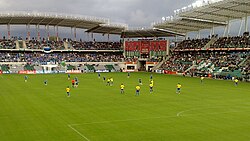
Since 2001, the national team has called the Lilleküla Stadium home. Also known as the A. Le Coq Arena due to its sponsorship by a major Estonian brewery, the venue has a capacity of approximately 14,400 and serves as the home for FC Flora.
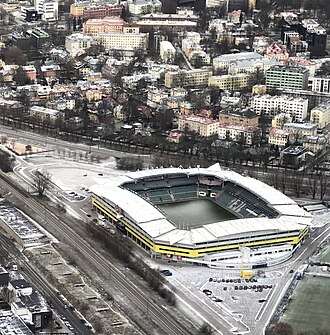
Stadium History Summary
| Stadium | Location | Years Used |
|---|---|---|
| Tiigiveski Ground | Tallinn | 1921 |
| Kalevi Aed | Tallinn | 1923–1925 |
| Kadriorg Stadium | Tallinn | 1926–1940, 1992–2000 |
| Lilleküla Stadium | Tallinn | 2001–present |
Legendary Figures
The history of the Sinisärgid is defined by several key individuals who have set the standard for future generations.
Konstantin Vassiljev holds the record for the most appearances, with 159 caps earned between 2006 and 2025. He remains a pivotal figure in the team's modern transition.
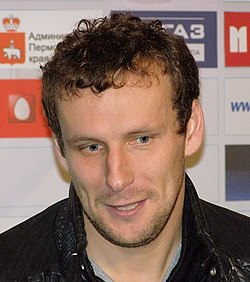
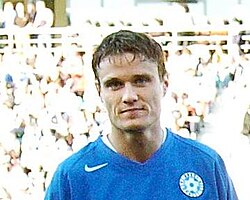
In terms of scoring, Andres Oper stands alone as the all-time top goalscorer, netting 38 goals across 134 appearances from 1995 to 2014.
Frequently Asked Questions
What is the nickname of the Estonia national team?
The team is known as the Sinisärgid (Blueshirts) and also as the Kalevipojad.
Has Estonia ever qualified for a major tournament?
No, Estonia has never qualified for the FIFA World Cup or the UEFA European Championship, though they reached the Euro 2012 qualifying play-offs.
Who is the most successful player in terms of goals?
Andres Oper is the top goalscorer with 38 goals scored for the national team.
What is the team's record in the Baltic Cup?
Estonia has been highly successful in the Baltic Cup, winning the championship six times (1929, 1931, 1938, 2020, 2024, and 2026).
Where does the national team play its home matches?
Home matches are played at the Lilleküla Stadium (A. Le Coq Arena) in Tallinn, which has been the national stadium since 2001.