Ernesto de la Cárcova: Master of Argentine Realism
Ernesto de la Cárcova y Arrotea was a pivotal figure in the development of Argentine art, renowned for his commitment to the Realist school—an artistic movement that sought to depict contemporary life and social realities with uncompromising accuracy. Born in Buenos Aires in 1866, de la Cárcova blended rigorous European training with a deep sensitivity to the social struggles of his homeland.
Key Facts
- Full Name: Ernesto de la Cárcova y Arrotea.
- Artistic Style: Realism.
- Most Famous Work: Without Bread and Without Work (1893).
- Major Awards: Gold medal at the 1904 Universal Exposition in St. Louis and a silver medal at the 1916 Paris Arts Exposition.
- Academic Legacy: Founder of the School Superior of Fine Arts (1923).
Early Education and European Influence
De la Cárcova's journey into the arts began in his hometown of Buenos Aires, where he studied at the Society for the Stimulus of Fine Arts under the guidance of Francisco Romero. Seeking to refine his craft, he traveled to Italy to attend the prestigious Accademia Albertina in Turin, where he studied under the painter Giacomo Grosso.
His talent gained international recognition early on. At the 31st Turin Fine Arts Exposition in 1890, he exhibited The Head of An Old Man. This pastel drawing was so highly regarded that it was purchased by King Umberto I of Italy for display at the Palazzo Quirinale in Rome.
Social Commentary and Masterworks
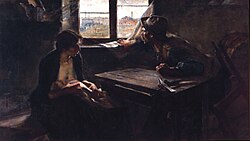
Upon returning to Argentina, de la Cárcova focused his lens on the hardships of the working class. In 1893, he completed his most celebrated painting, Without Bread and Without Work. The piece captures the desperation of the industrial southside of Buenos Aires during the severe economic recession following the Panic of 1890. This masterpiece is currently housed in the National Museum of Fine Art.
International Recognition and Academic Leadership
By 1902, de la Cárcova's reputation led to an invitation to direct the Argentine Artists' Fellowship Program in Paris. His international acclaim peaked in 1904 when he was awarded a gold medal at the Universal Exposition in St. Louis, United States.
During his time in Europe, he developed a passion for sculpture. He acquired numerous reproductions of ancient Egyptian, Chaldean, and Greek busts and bronzes from the Berlin State Museums. These works were later showcased at the Buenos Aires Centennial Exposition in 1910. His contributions to the arts were further recognized when he was invited into the National Fine Arts Academy by Eduardo Sívori, another prominent Realist painter.
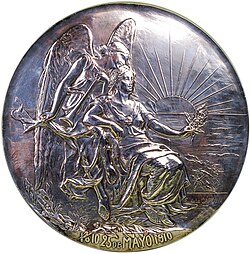
De la Cárcova's influence extended into institutional design and education. He served as a professor at the University of Buenos Aires and designed the official medal for the Argentine Centennial, as well as the great seal of the University of Buenos Aires in 1921.
Founding the School Superior of Fine Arts
In 1923, he founded the School Superior of Fine Arts, which absorbed the academy previously run by Sívori. This institution eventually became part of the National University Art Institute, which remains Argentina's leading art institution today.
Legacy and the Museum of Reproductions
Following his death on December 28, 1927, de la Cárcova's impact lived on through his generosity. He bequeathed his extensive collection of German sculptures to establish the Museum of Reproductions and Comparative Sculpture, which was named in his honor. He was laid to rest in the historic La Recoleta Cemetery.
| Category | Details |
|---|---|
| Lifespan | March 3, 1866 – December 28, 1927 |
| Primary Movement | Realism |
| Key Education | Society for the Stimulus of Fine Arts; Accademia Albertina |
| Major Honors | Gold Medal (1904), Silver Medal (1916) |
| Institutional Contribution | Founder of School Superior of Fine Arts |
Frequently Asked Questions
What is Ernesto de la Cárcova's most famous painting?
His most famous work is Without Bread and Without Work (1893), which depicts the social and economic hardships in industrial Buenos Aires following the Panic of 1890.
Where did de la Cárcova study art?
He began his studies at the Society for the Stimulus of Fine Arts in Buenos Aires under Francisco Romero and later attended the Accademia Albertina in Turin, Italy, under Giacomo Grosso.
What was his contribution to art education in Argentina?
He founded the School Superior of Fine Arts in 1923, which later became part of the National University Art Institute, the country's foremost art institution.
What is the Museum of Reproductions and Comparative Sculpture?
It is a museum established through de la Cárcova's bequest of his collection of German sculptures, including reproductions of ancient Egyptian, Chaldean, and Greek works.
Which royal figure purchased one of his early works?
King Umberto I of Italy purchased the pastel drawing The Head of An Old Man for display at the Palazzo Quirinale in Rome.