Enrique Banchs: The Classicist Poet of Argentina
Enrique Banchs (1888–1968) remains a distinctive figure in Argentine literature, known for a poetic career that was as intense as it was brief. While many writers spend a lifetime evolving their voice, Banchs published the entirety of his poetic output within a narrow four-year window at the dawn of the 20th century, leaving behind a legacy of refined, traditional craftsmanship.
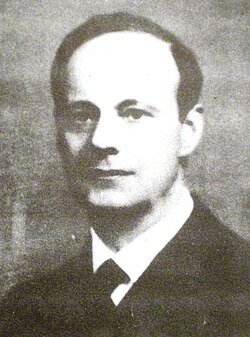
Key Facts
- Poetic Window: Published all major poetry between 1907 and 1911.
- Literary Style: Heavily influenced by the Siglo de Oro (the Golden Age of Spanish literature).
- Academic Standing: Member of the Argentine Academy of Letters.
- Versatility: Transitioned from formal poetry to children's stories and linguistic prose.
The Poetic Legacy of Enrique Banchs
Banchs is primarily remembered for his commitment to a classicistic style. During a period when literary movements were shifting toward the modern, Banchs looked backward to the Siglo de Oro, drawing inspiration from the rigorous structures and themes of 16th and 17th-century Spanish literature.
The Four Major Works
His poetic contributions are contained within four primary volumes. His debut, Las barcas (1907), set the stage for a series of works that emphasized formal beauty and ephemeral themes. This was followed by El libro de los elogios (1908) and El cascabel del halcón (1909).
His final poetic collection, La urna (1911), is particularly notable for its use of sonnets—a structured 14-line poem. By the time Banchs published this work, the sonnet form had been largely abandoned by his contemporaries, marking him as a dedicated traditionalist.
Later Career and Prose
After 1911, Banchs ceased publishing poetry, but he remained an active and influential member of the Argentine literary scene. He maintained a close friendship with Carlos Alberto Leumann and eventually became a member of the Argentine Academy of Letters.
Children's Literature and Pseudonyms
Starting in 1930, Banchs adopted a more playful and accessible tone. He began writing for the Buenos Aires newspaper La Prensa, contributing stories featuring children, animals, and exotic or oriental settings. To separate these whimsical works from his formal academic and poetic identity, he published them anonymously or under the pseudonyms J. Olive and E. Lloret.
Academic Contributions
In his later years, Banchs turned his attention to formal prose and linguistic study. His notable non-fiction works include his reception speech for the Argentine Academy of Letters (1941) and a study on linguistic authority titled Averiguaciones sobre la autoridad en el idioma (1943).
Summary of Works
| Year | Title | Genre |
|---|---|---|
| 1907 | Las barcas | Poetry |
| 1908 | El libro de los elogios | Poetry |
| 1909 | El cascabel del halcón | Poetry |
| 1911 | La urna | Poetry |
| 1941 | Discurso de recepción en la Academia Argentina de Letras | Prose |
| 1943 | Averiguaciones sobre la autoridad en el idioma | Prose |
Frequently Asked Questions
When did Enrique Banchs write his poetry?
Enrique Banchs published all of his poetic works in a short span of four years, between 1907 and 1911.
What literary style did Banchs follow?
He cultivated a classicistic style, drawing significant inspiration from the Siglo de Oro, the Golden Age of Spanish literature.
Which poetic form did he use in his final collection?
In his final work, La urna, Banchs used sonnets, a form that was almost completely abandoned by writers of his era.
Did Banchs write under any other names?
Yes, when writing children's stories and exotic tales for La Prensa, he used the pseudonyms J. Olive and E. Lloret, or published anonymously.
Was he involved in any official literary institutions?
Yes, Enrique Banchs was a member of the Argentine Academy of Letters.