Emergency Medical Services in the United Kingdom
Emergency medical services (EMS) in the United Kingdom provide critical care to individuals suffering from acute illness or injury. These services are predominantly delivered free at the point of use by the four National Health Services (NHS) serving England, Scotland, Wales, and Northern Ireland. While emergency department treatment and ambulance transport are free for everyone, including overseas visitors, subsequent inpatient hospital care may be chargeable unless the patient meets specific NHS eligibility criteria.
The public typically accesses these life-saving services via the national emergency telephone numbers, 999 or 112. The system is commissioned through 14 primary NHS organisations with ambulance responsibility: 11 in England and one each in Scotland, Wales, and Northern Ireland.

Key Facts
- Access: Primary emergency contact via 999 or 112.
- Provision: Managed by 14 NHS organisations across the UK.
- Response Types: Covers emergency calls, urgent doctor admissions, inter-hospital transfers, and major incidents.
- Regulation: All English services are regulated by the Care Quality Commission (CQC).
- Staffing: Paramedics are the core clinical providers, typically holding a BSc degree.
The Role and Evolution of Ambulance Services
By law, public ambulance services in the UK must respond to four specific types of requests:
- Emergency calls routed through the 999 or 111 systems.
- Urgent admission requests from doctors.
- Urgent and high-dependency transfers between hospitals.
- Major incidents requiring large-scale coordination.
Historical Development
The structure of the service has evolved significantly over the decades. In 1974, the National Health Service Reorganisation Act 1973 transferred 142 ambulance services from local authority to central government control, consolidating them into 53 services. By 2005, a report titled Taking healthcare to the Patient led to further mergers, reducing the number of organisations in England to 13. Following the NHS foundation trust pathway, England now has ten ambulance service trusts, with the Isle of Wight maintaining its own separate provision.
Governance has also shifted; the Health and Social Care Act 2012 moved commissioning to regional clinical commissioning groups (CCG), which were subsequently replaced by integrated care boards on July 1, 2022, under the Health and Care Act 2022.
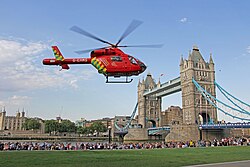
Current Public Provision and Usage
In England, the service is divided among several regional trusts, including the London, North West, and South Western Ambulance Service NHS Foundation Trusts, among others. In Wales, the Welsh Ambulance Service NHS Trust was established in 1998 and, as of 2015, employed 2,500 staff to serve 2.9 million residents.
Demand for these services has grown substantially over the last few decades. Emergency call volumes rose from 2.61 million in 1994/95 to 12.4 million in 2019/20. This increase in demand is reflected in the volume of high-priority responses; Category A ambulance arrivals rose from 6,856 per day in 2011–12 to 8,564 per day in 2014–15.
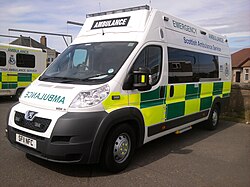
Call Categorisation and Response Targets
To manage demand, calls are sorted into categories based on urgency. Each category has specific response targets to ensure the most critical patients are reached first.
| Category | Description | Average Response Target | 90th Percentile Target |
|---|---|---|---|
| 1 | Life-threatening | 7 minutes | 15 minutes |
| 2 | Emergency | 18 minutes | 40 minutes |
| 3 | Urgent | None | 2 hours |
| 4 | Less-urgent | None | 3 hours |
Staffing and Clinical Roles
The workforce consists of a tiered system of clinicians and support staff. Paramedics are key practitioners with autonomous practice capabilities, including advanced airway placement and intravenous cannulation. They typically hold a BSc and are placed on NHS Agenda for Change bands 5 or 6.
Other roles include Emergency Care Assistants (ECA), Emergency Medical Technicians (EMT), and highly specialised roles such as Consultant Paramedics and Doctors. The workload is demanding, with a standard 37.5-hour week that includes nights, weekends, and public holidays.
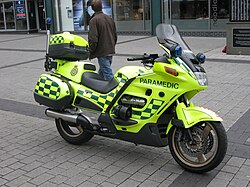
Workforce Challenges
Staffing shortages have occasionally forced trusts to recruit internationally. For example, in 2014/15, the London Ambulance Service recruited 175 paramedics from Australia to fill gaps. Across England, vacancy rates for ambulance posts were reported at approximately 9% (1,382 of 15,887 posts) during this period.
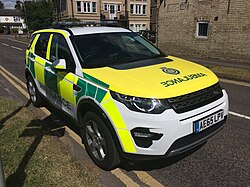
Supporting and Private Services
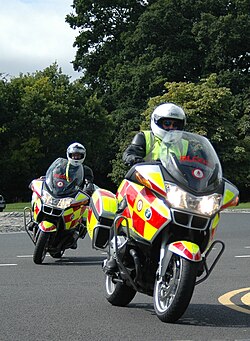
The NHS is supported by various auxiliary and voluntary services. This includes Blood Bikes for urgent medical transport and the Ambulance Auxiliary. In 2022, a £30 million contract was awarded to St John Ambulance to provide auxiliary support across all four call categories in England.
The Private Sector
There is a significant market for private and voluntary ambulance services, valued at £800 million in 2012. These providers offer additional resources to NHS trusts, urgent inter-hospital transport, and non-urgent patient transport. Since 2011, all such providers in England must be registered with the Care Quality Commission (CQC).
While many private services provide high-quality care, the CQC has previously issued improvement notices to several providers due to safety concerns, leading to the closure of some firms, such as Plymouth Central Ambulance Service.

Performance, Regulation, and Governance
Performance is measured using benchmarks known as New Ambulance Performance Standards (NAPS). Key metrics include patient satisfaction, outcomes for stroke and heart attack (STEMI) patients, and the proportion of calls managed via "hear and treat" (telephone advice) or "see and treat" (no transport required).
Operational Pressures
The system faces significant challenges. In March 2022, average waits for Category 2 patients (stroke and heart attack) reached two hours in some regions, far exceeding the 18-minute target. Additionally, "handover delays"—where patients remain in ambulances at hospitals—have increased, with the number of patients waiting over an hour doubling between 2014–15 and 2016–17.
Frequently Asked Questions
How do I call for an ambulance in the UK?
You can access emergency medical services by dialing either 999 or 112 from any phone.
Is the ambulance service free for everyone?
Yes, emergency ambulance transport and emergency department treatment are free at the point of use for everyone, including overseas visitors.
What is the difference between a Category 1 and Category 2 call?
Category 1 calls are for life-threatening situations with a 7-minute average response target, while Category 2 calls are for emergencies (such as strokes or heart attacks) with an 18-minute average response target.
Who regulates ambulance services in England?
All ambulance services in England, including private providers, are regulated by the Care Quality Commission (CQC) under the Health and Social Care Act.
What qualifications do UK paramedics typically have?
Paramedics typically hold a Bachelor of Science (BSc) degree and are trained in autonomous practice, including advanced clinical skills like intravenous cannulation.