Emberiza Buntings: Taxonomy, Evolution, and Species Diversity
The buntings of the genus Emberiza are a specialized group of Old World passerine birds. As the sole genus within the family Emberizidae, these birds are characterized by their seed-eating habits and distinctive stubby, conical bills. They are highly adaptable, inhabiting a wide range of open and half-open environments, from arid deserts and stony drylands to shrublands, savannas, and open taiga forests.
While the term "bunting" is also used for New World birds in the genus Passerina, those species are taxonomically distinct and belong to the family Cardinalidae. True buntings are defined by their specific evolutionary lineage and geographical distribution across Europe, Asia, and Africa.
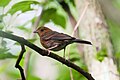
Key Facts
- Genus: Emberiza (the only genus in the family Emberizidae).
- Species Count: 44 recognized species.
- Diet: Primarily seed-eating.
- Habitat: Open landscapes including taiga, savanna, and deserts.
- Type Species: The yellowhammer (Emberiza citrinella).
- Origin: Ancestors originated in the New World before colonizing Asia via the Bering Strait.
Taxonomy and Classification
The classification of the family Emberizidae has undergone significant revision. Historically, the family was much larger, encompassing birds now categorized as New World sparrows (Passerellidae) and longspurs or snow buntings (Calcariidae). Molecular phylogenetic studies revealed that these groups formed distinct clades, leading scientists to treat them as separate families.
The genus Emberiza was first introduced by the Swedish naturalist Carl Linnaeus in 1758 in the tenth edition of Systema Naturae. The name is derived from the Old German word Embritz. While some ornithologists, such as Edward Dickinson and Leslie Christidis, have proposed splitting the genus into several smaller genera (including Fringillaria, Melophus, Granativora, and Schoeniclus), this division is not universally accepted by major authorities like the International Ornithologists' Union.
Genetic Refinements
Modern DNA analysis has further refined the genus. A 2008 study integrated three previously monotypic genera—the crested bunting (Melophus lathami), the slaty bunting (Latouchiornis siemsseni), and the corn bunting (Miliaria calandra)—directly into Emberiza. Additionally, a 2019 study indicated that buntings are most closely related to the family Calcariidae.
Evolutionary History and Global Radiation
A comprehensive genetic study from 2021 suggests that the ancestor of the Emberiza genus originated in the New World. During the late Miocene, these birds colonized eastern Asia via the Bering Strait. Their subsequent radiation into four distinct clades was driven by a global cooling event, which reduced forest cover and expanded the open grasslands and shrublands to which these birds adapted.
- Clade I: Primarily African resident species, such as the house bunting and Cape bunting.
- Clade II: Strongly migratory birds adapted to open taiga forests, including the yellow-breasted bunting and reed buntings.
- Clade III: A small group of three species found in the arid regions of South Asia, including the red-headed bunting.
- Clade IV: A diverse group of sedentary and migratory species adapted to drylands, such as the yellowhammer and ortolan bunting.
Species Overview
The genus currently comprises 44 species distributed across various continents. Below is a summary of several prominent species and their distributions.
| Common Name | Scientific Name | Primary Distribution |
|---|---|---|
| Yellowhammer | Emberiza citrinella | Europe to northwestern Russia |
| Corn Bunting | Emberiza calandra | Western Europe, North Africa, NW China |
| Crested Bunting | Emberiza lathami | Southeast Asia |
| House Bunting | Emberiza sahari | Northwestern Africa |
| Common Reed Bunting | Emberiza schoeniclus | Europe |
| Black-headed Bunting | Emberiza melanocephala | Asia (Japan, China, Thailand, Malaysia) |
Beyond living species, the fossil record includes several extinct buntings, such as the Long-legged bunting (Emberiza alcoveri) from the Late Quaternary and several species from the Miocene and Pliocene of Hungary.
Frequently Asked Questions
What is the difference between Emberiza buntings and New World buntings?
Emberiza buntings are Old World birds in the family Emberizidae. New World buntings (genus Passerina) are taxonomically different and are classified within the family Cardinalidae.
How did the Emberiza genus spread across the globe?
Evidence suggests they originated in the New World and migrated to eastern Asia via the Bering Strait during the late Miocene, later radiating into Africa and other parts of Asia as global cooling created more open habitats.
What physical characteristics define these birds?
They are primarily seed-eaters characterized by stubby, conical bills designed for cracking seeds, and they typically inhabit open landscapes.
Are all buntings migratory?
No. While some clades (like Clade II) are strongly migratory, others (like Clade I) consist mostly of resident species that stay in one region year-round.
Why is there debate about the genus classification?
Some ornithologists believe the genus Emberiza should be split into smaller genera to better reflect evolutionary differences, while others argue that such a split provides little benefit and creates unnecessary instability in scientific naming.