Elie Saab: The Lebanese Visionary of Haute Couture
In the world of high fashion, few names evoke as much glamour and opulence as Elie Saab. Known for his intricate craftsmanship and ethereal silhouettes, the Lebanese designer has transitioned from a local bridal specialist in Beirut to a global icon of luxury. His work is defined by a meticulous attention to detail, blending traditional artistry with modern sophistication.

Key Facts
- Founder: Elie Saab, born July 4, 1964, in Beirut, Lebanon.
- Specialization: Haute couture, bridal wear, and luxury ready-to-wear.
- Historic Milestone: First Lebanese designer to join the Chambre Syndicale de la Haute Couture.
- Signature Materials: Lace, gemstones, crystals, pearls, and elaborate embroidery.
- Global Reach: Couture available in Paris, London, and Beirut, with a vast network of ready-to-wear retailers.
Early Life and Artistic Beginnings
Born into a Maronite Catholic family, Elie Saab was the eldest of five children. His father worked as a wood merchant in Damour, a coastal suburb of Beirut. Saab's passion for design manifested early; by the age of eight, he was already experimenting with sewing, using household materials and his sisters as his first models.
To formalize his talent, Saab moved to Paris in 1981 to study fashion. Upon returning to Beirut in 1982, he launched his professional career at the age of 18. Starting with a small team of 15 employees, he focused on bridal couture—high-end, custom-made wedding gowns—utilizing silk fabrics and detailed embellishments that quickly earned him a reputation among Lebanon's high society.
The Rise to International Prominence
The 1990s marked a period of rapid expansion for Saab. In 1997, he became the first non-Italian designer to be admitted to the National Chamber of Italian Fashion and debuted his first collection outside Lebanon in Rome. By 1998, he expanded his empire with a ready-to-wear and accessories line in Milan.
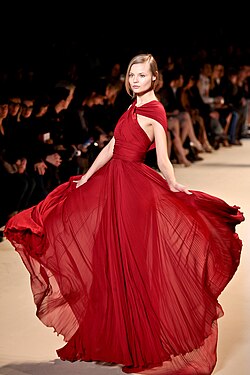
Saab's global breakthrough occurred in 2002 when he became the first Lebanese designer to dress an Academy Award winner, Halle Berry. This moment catapulted him into the American spotlight. Shortly after, in 2003, he was invited to join the Chambre Syndicale de la Haute Couture (the governing body of Parisian high fashion), debuting his first haute couture collection in Paris that July.
Expanding the Brand Portfolio
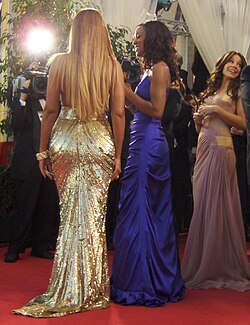
Throughout the 2000s, Saab diversified his offerings. He collaborated with Pronovias to launch the "Elie by Elie Saab" bridal line and introduced his first Paris ready-to-wear collection in 2006. His influence extended into the music industry, contributing designs for Beyoncé's 2007 "The Beyoncé Experience" tour.
In 2011, the brand entered the beauty sector with the launch of Le Parfum, a fragrance created by Francis Kurkdjian. By 2013, the brand's leadership evolved as his son, Elie Saab Jr, stepped in as brand director.
A Legacy of Red Carpet and Royal Elegance
Elie Saab is perhaps most famous for his presence on the world's most prestigious red carpets. His gowns have been worn by a staggering array of A-list celebrities, including Jennifer Lopez, Sandra Bullock, Nicole Kidman, and Taylor Swift. One of his most legendary pieces—a burgundy gown worn by Halle Berry in 2002—was later voted one of the greatest Oscar dresses of all time.
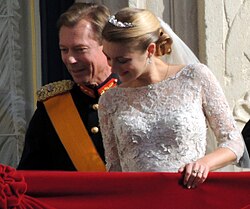
Beyond Hollywood, Saab has become a favorite of royalty. His clients include Queen Rania of Jordan, who wore his designs for her enthronement in 1999, and the Duchess of Cambridge, who wore a Saab gown to Royal Ascot in 2019. He has also designed wedding gowns for Princess Claire of Luxembourg and Rose Leslie.
Diversification into Interior Design
Expanding beyond apparel, Saab has applied his aesthetic to luxury residential architecture. He has designed interiors for high-end projects in the Maldives, the Caucasus region, and beachfront properties in Dubai.
Resilience and Philanthropy
The fashion house faced a significant crisis on August 4, 2020, when the Beirut explosion severely damaged Saab's headquarters and completely destroyed his home. Despite the devastation, Saab and his team remained committed to their craft, working tirelessly to complete their September collection.
In the wake of the tragedy, Saab launched a philanthropic initiative in April 2021, donating a portion of his sales to UNICEF's program dedicated to the education and well-being of vulnerable girls in Lebanon.
Summary of the Elie Saab Fashion House
| Category | Details |
|---|---|
| Founded | Early 1980s (Label established 1998) |
| Key Markets | Paris, London, Beirut, New York, Dubai, Hong Kong |
| Major Accolades | Member of Chambre Syndicale de la Haute Couture |
| Notable Collaborations | Pronovias (Bridal), Beauté Prestige International (Fragrance) |
| Recent Milestone | "The 1001 Seasons of Elie Saab" 45th Anniversary (Nov 2024) |
Frequently Asked Questions
Who was the first Oscar winner dressed by Elie Saab?
Halle Berry was the first Oscar winner dressed by Elie Saab in 2002, wearing a burgundy gown that helped bring the designer international recognition.
What makes Elie Saab's designs unique?
His designs are characterized by the use of opulent materials such as lace, crystals, pearls, and gemstones, combined with intricate embroidery and a focus on feminine, flowing silhouettes.
Is Elie Saab only known for haute couture?
While famous for haute couture, he also operates a successful ready-to-wear line distributed through 160 retailers, a fragrance and cosmetics line, and a luxury interior design business.
How did the 2020 Beirut explosion affect the brand?
The explosion badly damaged the company's main headquarters and destroyed Elie Saab's home. However, the team continued working to finish their upcoming collections and subsequently launched a UNICEF initiative to help girls in Lebanon.
Has Elie Saab dressed members of the British Royal Family?
Yes, the Duchess of Cambridge wore an Elie Saab gown to Royal Ascot in 2019, marking the first time a British royal wore one of his designs.