Electrical Engineering: Core Subfields and Applications
Electricity is a versatile force, serving as a primary medium for both energy transmission and the movement of information. These two fundamental capabilities formed the basis of electrical engineering. As technology has evolved, the field has expanded into numerous specialized subdisciplines. While some engineers specialize in a single area, many integrate multiple disciplines to solve complex problems. In some academic and professional contexts, fields like electronic and computer engineering are treated as distinct disciplines entirely.
Key Facts
- Power Engineering manages the generation and distribution of electricity via on-grid and off-grid systems.
- Telecommunications relies on modulation to encode information into carrier signals for transmission.
- Control Engineering uses feedback loops and algorithms to manage dynamic systems and robotics.
- Electronics evolved from radio engineering to include the development of integrated circuits (ICs).
- Microelectronics involves fabricating components at the microscopic level, with nanoelectronics scaling further below 100 nm.
- Signal Processing manipulates analog and digital signals for applications ranging from audio to missile guidance.
- Instrumentation focuses on measuring physical quantities like pressure and temperature.
- Photonics deals with the generation and analysis of electromagnetic radiation, including lasers and fiber optics.
Power and Energy
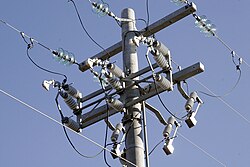
Power and energy engineering focuses on the generation, transmission, and distribution of electricity. This field encompasses the design of essential hardware such as electric motors, generators, transformers, and power electronics, as well as high voltage engineering. Most regions utilize a power grid—a network connecting various generators to consumers, allowing users to purchase energy rather than generating it independently.
Engineers in this field work with two primary types of systems: on-grid power systems, which can both draw from and supply power to the grid, and off-grid power systems, which operate independently of the main network.
Telecommunications
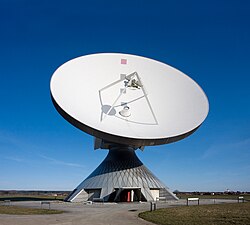
Telecommunications engineering is dedicated to transmitting information across channels such as optical fiber, coaxial cable, or free space. When transmitting through free space, engineers use modulation—the process of encoding information into a carrier signal to shift it to a suitable frequency. Common analog methods include frequency modulation and amplitude modulation.
Engineers design the transmitters and receivers for these systems, which are sometimes combined into a single transceiver. A critical design factor is power consumption; if the transmitted signal is too weak, it may be corrupted by noise (static) by the time it reaches the receiver.
Control Engineering
Control engineering involves modeling dynamic systems and designing controllers to ensure they behave as intended. This is achieved using microcontrollers, digital signal processors, programmable logic controllers (PLCs), and electronic circuits. Applications range from industrial automation and cruise control in cars to the propulsion systems of commercial aircraft.
A central concept in this field is feedback, where a system's output is continuously monitored and used to adjust the input. For example, cruise control monitors a vehicle's speed and adjusts motor power to maintain a set limit. In robotics, control algorithms interpret sensory feedback to operate actuators in autonomous drones and vehicles.

Electronics
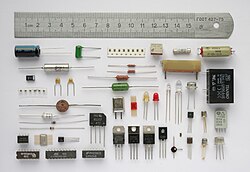
Electronic engineering focuses on the design and testing of circuits using components like transistors, diodes, inductors, capacitors, and resistors. An example is the tuned circuit, which allows a radio to isolate a specific station. Historically known as radio engineering before World War II, the field expanded post-war to include audio systems, computers, and microprocessors.
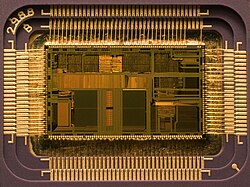
A pivotal shift occurred in 1959 with the invention of the integrated circuit. Before this, circuits were built from discrete components that were bulky and power-hungry. Integrated circuits allowed millions of tiny components to be packed onto a single small chip, enabling the creation of modern high-speed computing.
Microelectronics and Nanoelectronics
Microelectronics deals with the microfabrication of tiny components, primarily semiconductor transistors, for use in integrated circuits. Nanoelectronics takes this further, scaling devices down to the nanometer level; processing below 100 nm has been standard since approximately 2002.
These components are created by chemically fabricating semiconductor wafers, typically using silicon, though compound semiconductors like indium phosphide or gallium arsenide are used for higher frequencies. This work requires expertise in material science, chemistry, and quantum mechanics.
Signal Processing
Signal processing is the analysis and manipulation of signals, which are categorized as either analog (continuously varying) or digital (represented by discrete values). Analog processing involves filtering and amplification, while digital processing focuses on error correction, detection, and compression.
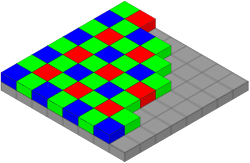
Digital Signal Processing (DSP) is a mathematically intensive field integrated into a vast array of devices, including mobile phones, noise-canceling headphones, GPS systems, and radar. DSP is responsible for tasks such as speech synthesis, image processing, and noise reduction.
Instrumentation
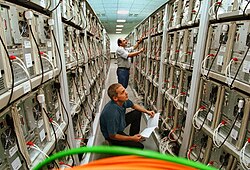
Instrumentation engineering involves designing devices to measure physical quantities such as temperature, flow, and pressure. This requires a deep understanding of physics; for instance, thermocouples utilize the Peltier-Seebeck effect to measure temperature differences.
Instrumentation often serves as the sensory input for larger control systems. For example, a thermocouple may act as a sensor to help a control system maintain a constant furnace temperature, making instrumentation the natural counterpart to control engineering.
Computer Engineering
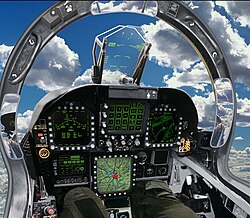
Computer engineering focuses on the design of computer systems and hardware. While computer engineers may work on software, the design of complex software systems is typically the domain of software engineering. Beyond desktop PCs, computer engineers develop embedded architectures for devices like DVD players and video game consoles, as well as robotics.
Photonics and Optics
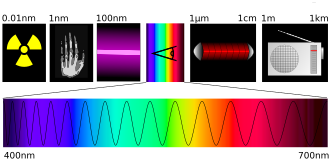
Photonics and optics involve the generation, detection, and analysis of electromagnetic radiation. Optics focuses on instruments like telescopes, microscopes, and lenses. Photonics expands on this with optoelectronics, laser systems, and the use of metamaterials and optical amplifiers.
Common applications include fiber-optic communication systems, electro-optical sensors, and optical discs such as DVDs and CDs.
Summary of Electrical Engineering Subfields
| Subfield | Primary Focus | Key Technologies/Examples |
|---|---|---|
| Power & Energy | Electricity generation and distribution | Power grids, Transformers, Motors |
| Telecommunications | Information transmission | Modulation, Fiber optics, Transceivers |
| Control Engineering | System behavior and automation | Feedback loops, PLCs, Robotics |
| Electronics | Circuit design and testing | Integrated Circuits, Transistors |
| Microelectronics | Micro-scale component fabrication | Semiconductor wafers, Nanoelectronics |
| Signal Processing | Signal analysis and manipulation | DSP, Noise reduction, Compression |
| Instrumentation | Physical quantity measurement | Thermocouples, Pressure sensors |
| Computer Engineering | Hardware and system architecture | Embedded systems, CPUs, Robotics |
| Photonics & Optics | Electromagnetic radiation | Lasers, Lenses, Fiber optics |
Frequently Asked Questions
What is the difference between on-grid and off-grid power systems?
On-grid systems are connected to the government-maintained power grid, allowing them to either draw power from or supply power to the network. Off-grid systems operate independently and do not have a connection to the main electrical grid.
What is modulation in telecommunications?
Modulation is the process of encoding information into a carrier signal to shift it to a frequency that is suitable for transmission across free space.
How did electronic engineering evolve from radio engineering?
Before WWII, the field was known as radio engineering and focused on radar, commercial radio, and early TV. After the war, the development of consumer electronics, computers, and microprocessors led to the adoption of the term electronic engineering in the late 1950s.
What is the role of feedback in control engineering?
Feedback involves continuously monitoring the output of a system and feeding that information back into the system to adjust the input, ensuring the system behaves in the desired manner (e.g., maintaining a constant speed in cruise control).
What is the difference between microelectronics and nanoelectronics?
Microelectronics deals with the design and fabrication of very small components for integrated circuits. Nanoelectronics is the further scaling of these devices down to the nanometer level, specifically processing below 100 nm.
What are the primary differences between analog and digital signals?
Analog signals vary continuously according to the information they carry, whereas digital signals vary according to a series of discrete values that represent the information.