Electric Blues: The Evolution of Amplified Sound and Its Global Legacy
Electric blues is a transformative genre of music defined by the use of electric amplification for musical instruments. While the blues began as a predominantly acoustic tradition, the introduction of amplifiers allowed musicians to be heard in louder, more crowded urban environments, fundamentally changing the sound and reach of the genre. This shift not only birthed new regional styles but also laid the critical foundation for rock and roll and heavy metal.
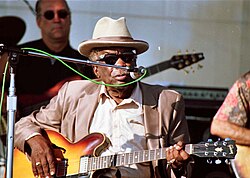
The guitar was the first instrument to be popularly amplified, pioneered in the late 1930s by T-Bone Walker and further developed in the 1940s by figures like John Lee Hooker and Muddy Waters. Over time, other instruments followed: the harmonica (or blues harp) was fed into guitar amplifiers via hand-held microphones, and the electric bass guitar gradually replaced the upright bass by the early 1960s. Later, electric organs and pianos added further depth to the electric blues palette.
Key Facts
- Origins: Emerged in the late 1930s in the United States.
- Pioneers: T-Bone Walker is widely recognized as the first star of electric blues.
- Core Instruments: Amplified electric guitar, bass, drums, and amplified harmonica.
- Major Hubs: Chicago, Memphis, Detroit, Texas, and the West Coast.
- Legacy: Directly influenced the creation of rock and roll, blues rock, and hard rock.
Early Development and the Chicago Scene (1930s-1940s)
The transition to amplification began in the late 1930s. T-Bone Walker, a Texan who moved to Los Angeles, blended blues with swing and jazz, becoming the genre's first major star. By the late 1940s, the movement shifted toward Chicago, where artists like John Lee Williamson and Johnny Shines began adopting electric sounds.
Muddy Waters perfected the Chicago blues format, utilizing strong rhythm sections and powerful harmonica. This style was heavily influenced by the Mississippi blues, as many musicians—including Howlin' Wolf, Willie Dixon, and Jimmy Reed—migrated from Mississippi to Chicago during the Great Migration. The era was characterized by the innovative use of slide guitar and the deep, "gravelly" vocals of Waters and Wolf.
Bassist and composer Willie Dixon was a central figure, writing standards such as "Hoochie Coochie Man" and "Spoonful." Most of these artists recorded for influential labels like Chess and Checker Records.
Post-World War II Urban Expansion
Between 1946 and 1960, amplified blues spread rapidly across American cities, including Memphis, Detroit, and St. Louis. This expansion was driven by the migration of African Americans from the South to urban centers. The move to electric instruments was partly practical; musicians needed to be heard over the noise of lively rent parties in small venues.
As the music moved into the city, lyrics shifted to reflect urban themes. This period also saw the birth of rock and roll. In 1951, Ike Turner's "Rocket 88" became one of the first rock and roll records, and Chuck Berry's 1955 hit "Maybellene" established the blueprint for rock lead guitar.
Regional Developments (1950s-1960s)
Memphis and the Sun Records Era
In the early 1950s, Memphis developed its own electric sound. Sam Phillips' Sun Records captured the work of B.B. King and Howlin' Wolf. Musicians like Pat Hare introduced distorted and power chords, anticipating the sound of heavy metal. After the discovery of Elvis Presley in 1954, Sun Records shifted its focus toward the expanding white rock and roll audience.
Detroit and New Orleans
In Detroit, John Lee Hooker developed a unique "guitar boogie" style, characterized by a rough voice and a single electric guitar. Meanwhile, in New Orleans, Guitar Slim's 1953 recording "The Things That I Used to Do" utilized distorted overtones, contributing to the eventual development of soul music.
The British Blues Boom
British electric blues grew out of the folk and skiffle scenes of the late 1950s. A pivotal moment occurred in 1958 when Muddy Waters visited London, inspiring musicians like Cyril Davies and Alexis Korner to form Blues Incorporated. This group served as a training ground for future legends, including members of the Rolling Stones and Cream.
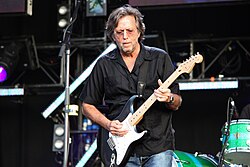
Another central figure was John Mayall, whose band, the Bluesbreakers, featured Eric Clapton. The 1966 album Blues Breakers with Eric Clapton became a seminal recording, popularizing the combination of a Gibson Les Paul guitar and a Marshall amplifier. This high-gain, distorted sound shifted the focus to the guitar as the primary instrument, leading to the hybrid genre known as blues rock.
The Evolution of Blues Rock and Texas Electric Blues
By the 1970s, blues rock became heavier and more riff-based, exemplified by Led Zeppelin and Deep Purple. While the genre eventually moved out of the mainstream in favor of heavy metal, it was kept alive by artists like George Thorogood and later by roots-oriented acts like The White Stripes and The Black Keys.
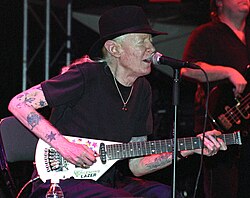
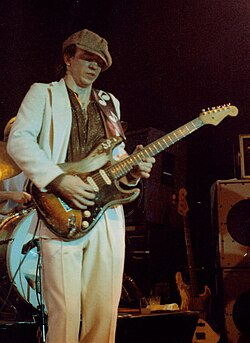
In Texas, the electric scene flourished in Austin during the late 1960s and 70s. This style blended country music and blues rock, emphasizing powerful lead guitar breaks. Key figures included Johnny and Edgar Winter, and later, the virtuoso Stevie Ray Vaughan and the Southern rock band ZZ Top.
Contemporary Electric Blues
Although its mainstream popularity declined after the 1960s, electric blues remains influential. In the 1980s, Robert Cray achieved crossover success with a soul-influenced sound. Bonnie Raitt has also been a leading figure, promoting the work of older blues artists. The late 1980s and 90s saw a resurgence of interest, with veteran John Lee Hooker finding renewed success with The Healer (1989), and Eric Clapton returning to his roots with From the Cradle (1994).
| Region | Key Characteristics | Notable Artists |
|---|---|---|
| Chicago | Strong rhythm sections, amplified harmonica, slide guitar | Muddy Waters, Howlin' Wolf, Willie Dixon |
| Memphis | Early distortion, power chords, transition to rockabilly | B.B. King, Ike Turner, Pat Hare |
| Detroit | "Guitar boogie," deep vocals, minimal instrumentation | John Lee Hooker |
| Texas | Country influences, powerful lead guitar breaks | Stevie Ray Vaughan, T-Bone Walker, ZZ Top |
| British | High-powered amplification, distorted Les Paul/Marshall sound | Eric Clapton, John Mayall, The Rolling Stones |
Frequently Asked Questions
Who is considered the first star of electric blues?
T-Bone Walker is generally recognized as the first star of the genre, blending blues with jazz and swing elements after moving to Los Angeles in the mid-1930s.
How did the Great Migration affect the music?
The Great Migration of African Americans from the Mississippi Delta to cities like Chicago brought rural blues styles into urban environments, where they were adapted using electric amplification to suit louder city venues.
What is a "blues harp"?
A "blues harp" is a term used by musicians to refer to the harmonica, which in electric blues is often played through a microphone and amplifier to create a louder, more sustained sound.
What is the difference between electric blues and blues rock?
Electric blues is the broader genre of amplified blues music. Blues rock is a hybrid form that emerged later (particularly in the UK), incorporating heavier rhythms, louder distortion, and elements of rock music.
Which equipment defined the British blues sound?
The combination of a Gibson Les Paul guitar and a Marshall amplifier became the classic setup for British blues guitarists, providing the driving, distorted sound heard on seminal recordings like those of Eric Clapton.