Election History from the 1880s to 1915
The political landscape between the 1880s and the early 20th century was marked by a shifting tug-of-war between the Conservative and Liberal parties. This period saw a transition from closely contested battles to eras of dominance, characterized by significant swings in voter sentiment and varying levels of public engagement.
Key Facts
- The Conservatives held the seat for much of the late 19th century, including several unopposed victories.
- The highest recorded turnout occurred in the 1910s, reaching 89.2%.
- The Liberal Party achieved a notable gain in the 1900s with Alfred Paget Hedges.
- The largest majority recorded was 3,210 votes in favor of Herbert Spender-Clay.
The Late 19th Century: Conservative Ascendancy
In the 1880s, the competition was fierce. Robert Norton of the Conservative Party secured a new seat with 4,533 votes (51.8%), narrowly defeating Frederick Verney of the Liberal Party, who garnered 4,210 votes (48.2%). This victory was decided by a slim majority of 323 votes, with a high turnout of 81.7%.
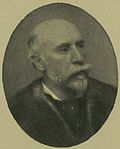
Following this initial contest, Robert Norton maintained control of the seat, eventually running unopposed to secure a Conservative hold.
The 1890s Transition
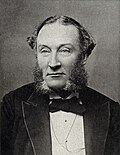
By the 1890s, Arthur Griffith-Boscawen took the mantle for the Conservatives. In one contested election, he defeated Frederick William Pavy of the Liberal Party with 4,821 votes (55.4%) against Pavy's 3,888 votes (44.6%). This resulted in a majority of 933 votes. Like his predecessor, Griffith-Boscawen later secured a hold on the seat by running unopposed.
The Turn of the Century and Liberal Gains
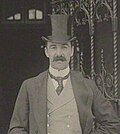
The early 1900s began with continued Conservative strength. Arthur Griffith-Boscawen won a significant victory against C Cory, securing 5,576 votes (61.5%) and a substantial majority of 2,082 votes.
However, the political tide shifted. In a subsequent election, Alfred Paget Hedges of the Liberal Party managed a Liberal gain from the Conservatives. Hedges received 7,170 votes (54.9%), while Griffith-Boscawen fell to 5,887 votes (45.1%). This shift represented a positive swing of 16.4% for the Liberals, accompanied by a surge in turnout to 84.2%.
The 1910s and the Outbreak of War
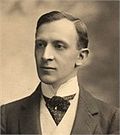
The Conservative Party reclaimed the seat in the 1910s through Herbert Spender-Clay. In a decisive victory, Spender-Clay earned 9,240 votes (60.5%), defeating Alfred Paget Hedges, who received 6,030 votes (39.5%). This result marked a 15.4% swing back to the Conservatives and a peak turnout of 89.2%.
Spender-Clay maintained his hold in a later contest, though with a slightly reduced majority of 2,127 votes (57.4% of the vote). As the decade progressed toward 1914–15, preparations for another General Election were underway. By July 1914, Herbert Spender-Clay had been selected as the Unionist candidate, while the Liberals were in the process of selecting their representative.
Election Results Summary
| Period | Winning Candidate | Party | Votes | % Share | Turnout |
|---|---|---|---|---|---|
| 1880s | Robert Norton | Conservative | 4,533 | 51.8% | 81.7% |
| 1890s | Arthur Griffith-Boscawen | Conservative | 4,821 | 55.4% | 69.7% |
| 1900s (Early) | Arthur Griffith-Boscawen | Conservative | 5,576 | 61.5% | 67.1% |
| 1900s (Late) | Alfred Paget Hedges | Liberal | 7,170 | 54.9% | 84.2% |
| 1910s (Early) | Herbert Spender-Clay | Conservative | 9,240 | 60.5% | 89.2% |
| 1910s (Late) | Herbert Spender-Clay | Conservative | 8,286 | 57.4% | 84.4% |
Frequently Asked Questions
Who was the most successful candidate in terms of total votes?
Herbert Spender-Clay achieved the highest number of votes in a single election, receiving 9,240 votes in the early 1910s.
When did the Liberal Party gain the seat?
The Liberal Party gained the seat in the 1900s when Alfred Paget Hedges defeated Arthur Griffith-Boscawen with 54.9% of the vote.
What was the highest voter turnout recorded?
The highest turnout was 89.2%, occurring during the election where Herbert Spender-Clay first won the seat in the 1910s.
Did any candidates win without a contest?
Yes, both Robert Norton and Arthur Griffith-Boscawen were returned unopposed in separate instances, securing Conservative holds.
What was the political situation in July 1914?
By July 1914, preparations for a General Election were underway, with Herbert Spender-Clay selected as the Unionist candidate.